
When Self-Help Wasn’t
Giab ‘Dear Genie” prompt #2: forgiveness
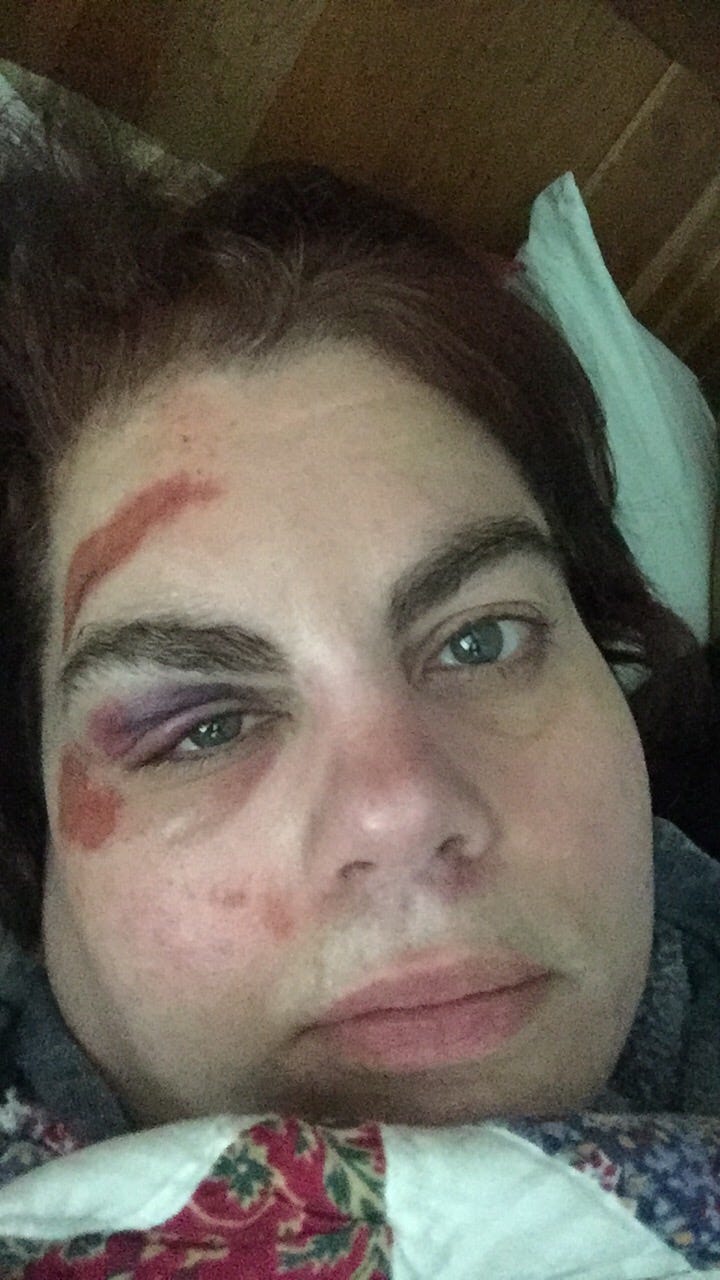
A little over two years later, all that’s left is a pale pink and white parenthesis over the edge of my left eyebrow. If you run your fingertip gently over the scar, you can feel the indentation.
After a lifetime of only occasional social drinking and just one hangover, I discovered the joy of using alcohol for its assault on sobriety. I used it to relax at a wedding reception where I knew almost no one and the few people I did know wanted to catch up with other people. Then I used it at night when I couldn’t fall asleep. And then, I used it when I came home from work to forget about the shitty day I’d had, working for a boss much younger than I was, who also happened to be — in my opinion — a dopey, ass-kissing jerk.
It worked. There was even an added benefit: drinking killed my appetite, so the more I drank, the less I ate. The pounds started coming off with no broccoli consumption necessary. A dream come true.
On the surface, this was the perfect self-help tool. I hated what my job had become and I resented the time I wasted at the office, doing work I no longer enjoyed for people I had no respect for. At the same time, I was terrified of leaving my job and no longer being able to provide for my family. I missed my parents, who had died within a few weeks of one another. Drinking every night was the perfect way to forget about the burdens of the day.
Eventually, the price of drunkenness began to increase. I broke three fingers. I broke my nose, twice. I woke up with rug burns, fat lips, bruises. Black eyes. I woke up to texts from Facebook friends asking me if I was okay… because my 3:00 AM post didn’t make any sense. I woke up with sore knees and hips and no memory of what had happened to make them ache.
I tried to abstain, but the lure of mindlessness was too strong. My friends called alcohol liquid courage, but I had no need for courage. I wanted oblivion. I wanted to escape my life. And alcohol gave me exactly what I wanted; just what I thought I needed.
It took a long time to understand that this was a mistake, that alcohol was not the effective self-help tool I needed. It took a heartbreaking and traumatic loss for me to see that the self-help tool I had chosen was anything but helpful. I had to go careening past rock bottom and into the abyss to understand this.
Eventually, though, the understanding came. One hundred days ago, I stopped drinking.
Now, it is time for me to forgive that frightened and unhappy girl. It’s time for the clearheaded and much-less-frightened me to step up and forgive.
I forgive myself for the broken bones, the bruises, the drunk texts, the falls.
I forgive myself for all the abuse I heaped on myself in the morning-after entries in my journal.
I forgive myself for lying and for keeping my fear and pain a secret from the people who love me, because I didn’t want them to think I was weak.
I forgive myself for sleeping on the sofa and forgoing my lovely comfy bed with my awesome husband, just so I could drink in peace.
I forgive myself for every moment I spent drunk and unaware of the beautiful soul of my spirit animal, my dog Rafe, sleeping beside me on the sofa.
I will tell myself all of this as many times as it takes for these words to become beliefs, and for the beliefs to take root and blossom. What an incredible flower that will be.
Thank you to Shaheena Chowdhury for this writing prompt. I know that many awesome writers have submitted already, but I’d like to tag Agnes Dodge, Jay Squires, Jenine Bsharah Baines, Dan Lee, Carlos Garbiras, Amy Culberg, Adelia Ritchie, PhD, Chloe Paulina Hawes, Connie Song, and Mark Sagarin. I look forward to reading your stuff!


