
When Self-Editing Is Challenging
How to pull the plug on phrases you love when they just don’t work
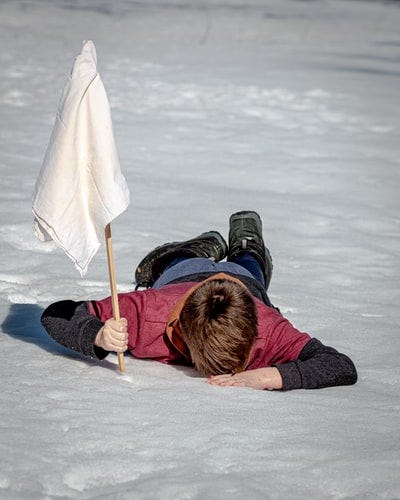
Have you ever really, really, REALLY adored something you wrote? Feeling bubbles of pride chuckling through every one of your cells as you read and re-read it? Even when it didn’t quite fit, you wrestled with it, trying to keep that fabulous phrase somewhere in your piece?
Knowing when to backspace and leave something out – no matter how irresistible it seems – can feel more gut-wrenching than a sit-up after Taco Tuesday.
Sometimes I become really attached to a sentence or a joke that maybe only I laugh at. Brilliant, I determine. Until I realize it isn’t. And yet highlighting it all and clicking delete feels as though I just fed my newborn to a crocodile.
Why do I tumble so in love with certain things that saying goodbye is almost as emotional as a Shakespearean tragedy? How do I know when to let them go? What can I do to make saying goodbye to unnecessary phrases easier?
Here’s what’s worked for me.
1. Reminding myself that editing is necessary and important.
I did not arise one morning, slip on ratty runners, and run 42.2 kilometers (26.1 miles). It took many painstaking months of crack-of-dawn runs through rain, hail, wind, and at least one blizzard where even snowplows refused to leave the refuge of their township garage.
Similarly, I can’t expect that I will arise one morning, snap fingers across the keyboard, and produce the first draft more widely renowned than any work of Alice Walker or Tatyana Tolstaya.
I think of Ernest Hemingway and wonder how many times he wrote and re-wrote Santiago and that damn marlin in The Old Man and The Sea?
“‘Wherever he was, Hemingway started by rewriting the previous days’ work, then moving forward, always going until around noon, at which time he was done entirely, both mentally and physically.’” Sarah Stodala in Kelton Reid
2. I read it out loud. To myself.
Although it feels very awkward putting your physical voice to your written words, I find that it can be extremely helpful. Often, I catch errors, discern an ineffective word choice, or realize that something doesn’t make sense.
Peter Elbow, in RightSource, explains that “[w]hen we revise, we come at our words from the outside, but reading aloud takes that outside perspective and puts it inside us.”
Because my mind focuses more on puzzling together the meaning of what I am writing, it often skips over errors and blatant typos (RightSource). Reading in my head, then, isn’t nearly as effective as vocalizing.
3. I read it out loud. To my family.
After I have voiced a piece for my own ears, I take it to the next level by reading it out loud to my family. I watch for their reactions and listen to their comments and suggestions.
“When you read your draft out loud or listen to someone else read it, your brain gets the information in a new way, and you may notice things that you didn’t see before.” The Writing Center, University of North Carolina at Chapel Hill
When my daughter, scrunches up her nose like she’s sniffing her brother’s farts, I take the hint. “Too confusing,” she will say, occasionally attempting to add in half an ounce of grace to her teenage recommendations. She has been my main catalyst for examining, and improving, my love affair with run-on sentences.
I listen when my husband shivers a little in his favorite chair, sunlight slapping his face, and exclaims “I don’t really get it.” Though, with Alzheimer’s snacking on his brain he doesn’t get much these days.
4. I listen to editor comments.
I tend to take it seriously when an editor types “I don't quite get this”, with or without the thinking emoji.
Yes, the yellow face that appears to be considering why it’s Monocle just tumbled into the outhouse and required a dramatic 911 call. Or is it just shamefully covering its goatee that’s been shaved by college buddies into the shape of a penis and balls? (See: I probably should have fed that last line or two to the crocodile. But even if only I chuckle, I adore these prose bambinos of mine.)
It isn’t always easy to take the editor’s suggestions. Pang nibbles at my ego browbeating myself about being relentlessly untalented. Another part sympathetically pats me gently on the back like we are at my turtle’s funeral and it’s reassuring me that I’m fine, just fine. Sometimes I drown in emptiness for a few moments before making the edit suggestions. But I make them.
Editors know what they are doing. They have experience. My work always sounds smoother and more professional when I make the suggested alterations.
“Editing someone else’s work is a sensitive task. …a good editor will always be honest with you too, and point out areas of weakness or grammatical errors. A good editor will guide you through your work, show you areas where you can express yourself better, more succinctly, and help you to look at your work from a distance. We will never change your voice or style.” Anna Yeadell-Moore
Remember
- Editing is critical and as painful as it may be it needs to be done.
- Reading your work aloud to yourself and others helps you grasp content and typo errors.
- Accept editor comments and suggestions. Dropkick the idea that needing improvements equals personal inadequacy or lack of writing skill.
And, as you edit-edit-edit, don’t forget to laugh just a little at your own pithy creation — right before tossing those ingeniously written words at some toothy, scaled wetland creature.