
When “Queer” Was a Slur: My Early Brush With Transgender Identity
The other day I referred my wife to an op-ed I’d just read in The New York Times that highlighted distinctive differences between people like me, who were born on the early end of the Baby Boomer spectrum, from 1946 to 1953, and people like her on the younger end, from 1954 to 1965. Social Commentator Jonathan Pontell, it turns out, had coined the term “Generation Jones” in 1999 to distinguish the latter group as a temperamentally aggrieved cohort who never experienced the invigorating, unbridled freedom and idealism of their immediate predecessors and thus were left feeing cynical, bitter and overshadowed, at a perpetual disadvantage in the race to keep up with the Joneses among their older brothers and sisters.
When I pointed out to my wife that the author of the story, New York Times contributing writer Jennifer Finney Boylan, was a transgender woman, she informed me that she’d read Boylan’s memoir, “She’s Not There: A Life in Two Genders.” Suddenly, a memory from the formative years of my early Baby Boomer journey came rushing back to me: my first brush with what was then a rare and taboo topic: transgender identity.
An Unusual Assignment
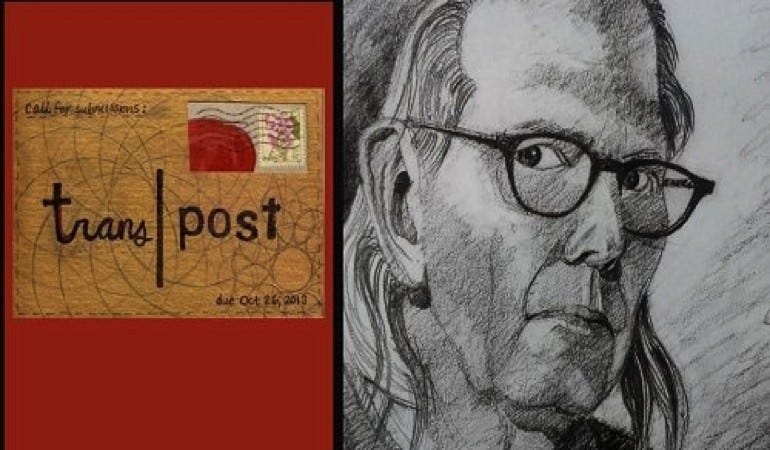
As a freelance writer for an alternative newspaper in Philadelphia in the mid-1970s, I was assigned to cover a transsexual art exhibit staged at a sex paraphernalia shop. There I was to meet and interview an artist named Robert Dickinson, a middle-aged man in the process of becoming a woman, who sought to convey his internal and external transition in a series of charcoal drawings.
What qualified me to cover this subject? What qualified anyone in those days? Although German doctors had completed a couple of “sexual reassignment” surgeries in the ‘20s and ‘30s, the phenomenon was pretty much unheard of in the United States until George William Jorgenson Jr. from the Bronx underwent hormonal replacement treatments and a series of operations in Denmark in 1952. George made the transition to Christine and returned to America, becoming an instant celebrity. I recall seeing her on the talk show circuit when I was young, charming audiences with her feminine good looks, poise and theatrical bearing, as she forged a trail as an ambassador for the then-widely unknown and generally shunned transsexual (as it was known then) community.
Not until the early- to mid-1970s did another transgender person gain notoriety in the United States: Renee Richards, an ophthalmologist and tennis player who competed as a woman in the 1976 U.S. Open.
I had heard of both of them, but neither was more than a fleeting curiosity in the totality of my life experience with human sexuality and gender identity. A couple of effeminate boys in high school had crossed my path; kids called them “sissies,” or “fags” — the word “gay” didn’t even come into conventional usage in the mainstream media until the mid 1980s. When I graduated from high school in 1969, same-sex attraction was still considered a mental illness by the American Psychiatric Association.
One time when I was watching figure skating on TV with my father back then, I vaguely recall him commenting that Dick Button, a former Olympic and world champion of the sport and highly regarded analyst, was “a bit of a queer.” That was no doubt because of his so-called “gay lisp” — the exaggerated pronunciation of sibilant consonants commonly associated with homosexual men — and the persistent rumors that male figure skaters were often homosexuals.
I never gave my dad’s offhand comment another thought until writing this story, when I googled Dick Button and learned that he was among five men attacked with baseball bats by a gang of teenagers in Central Park in 1978 that left him with serious nerve damage and permanent hearing loss in one ear.
Out of My Depth
When I walked into the Philadelphia sex shop at a moment that could not have been very far removed from that attack, my ignorance of the topic at hand could not have been more vast. A quintessentially cisgender, binary, gender-normative male at a time long before you needed to resort to the LGBTQ Glossary of Definitions and Meanings or choose a preferred pronoun before completing a standard medical form at the doctor’s office, I was about to dive into a discussion of sexuality that was way over my head.
Roberta Dickson was not what I’d expected. At 6 foot 4 and over 200 pounds, her head shrouded in an obvious gray wig and her formidable male body cloaked in a gray pull-over sweater and a dark wool, below-the-knee skirt, she offered me a huge masculine hand in greeting. When we began to talk, her speech did not betray the tiniest feminine affect.
Her charcoal drawings, depicting in gauzy figures the progression of a male body transmogrifying into a female one, were displayed on one side of the shop and separated by a stanchion with velvet ropes from the whips, chains and other assorted sex paraphernalia on the other side. I remember writing that it felt like some sort of line of demarcation between the simply intellectually prurient and the downright depraved. My great awakening, like America’s, was still decades in the distance. But on that day, Roberta Dickinson gently guided me in my first baby steps toward the light.
She explained the sense of deep inner conflict that had tortured her since childhood: she couldn’t shake the sense that she was a little girl who’d somehow emerged from her mother’s womb as a boy. She lived with those painful psychic knots within her identity, never feeling comfortable in her skin, or her body. Yet she plodded through life, studying art and architecture and through the inexplicable hand of fate winding up in the U.S. Army.
Upon Robert’s discharge, he found a woman partner willing to take the dominant sexual role in their relationship, and they ultimately married. But that didn’t quench Roberta’s desire to go further, and to become the female she felt she truly was. Anything else would leave her in psychological bondage.
Both Robert and his wife, Meg, were upstanding members of the Friends community — a Quaker religious society. After their separation and my story, havoc ensued for both of them in their community, and especially for Meg, who was mortified to see herself described in the press as a “dominant woman.”
But it was all part and parcel of the hormonal, physical, psychic and total existential ordeal that Roberta Dickinson had committed herself to in order to become who she truly was. She went on to use her talent as an artist to convey her transformation from male to female, to teach art at Drexel University, and to live as a woman.
What, exactly, that meant, was a mystery to me. It did not mean becoming more feminine in the commonly understood sense. In a brief interview with Terry Gross of the program Fresh Air on National Public Radio in 1977, the broadcaster noted that Roberta’s voice had certain male characteristics and asked if she planned to do anything about that. Roberta responded that she might get some “voice training,” but pushed back that she considered any cosmetic changes in her face to be “secondary.”
I asked a psychologist who’s counseled transgender people to help me understand what core aspects of womanhood a transgender man would so desperately desire, if not femininity. “Think of it as being permanently trapped in the wrong place,” the psychologist said. “It doesn’t matter how perfect a woman you become. As long as you’re no longer trapped in a man’s body and forced into being a man, you feel freed and out of your imprisonment.”
At the close of the NPR interview, Roberta Dickinson asked if she could add one last comment. “I would just like to say that I’m sure there will be a few people in your audience who have transsexual children,” she said, “and I hope they will really help them enter transsexuality in a gracious way, because it’s quite tough, especially for young people.”
We’ve Come a Long Way, Baby
What a difference a couple of generations make! Today, some parents resort to puberty blocker drugs, sanctioned by respected medical institutions such as the Mayo Clinic, to delay the hormonal changes in adolescence that can cause intense distress for gender-nonconforming young people. Puberty blockers give them additional time to decide for themselves what gender they want to be. Imagine — a queer pill for gender-questioning young teens.
How many milestones had to be logged before the word “queer,” voiced as an off-hand remark by my father to disparage an accomplished athlete as a homosexual, would transform into a proud and defiant umbrella term embracing all sexual and gender identities outside the straight norm?
Going back to my generation, the bona fide Baby Boomer years, the Stonewall Riots might be a good place to start. The police raid at the famous bar in Greenwich Village on June 28, 1969, became known as the impetus for the gay civil rights movement in America.
In 1978, artist Gilbert Baker designed and created the first rainbow flag as a symbol for the LGBTQ+ community. The following year, the first National March on Washington for Lesbian and Gay Rights drew an estimated 75,000 to 125,000 people.
It still took almost another whole decade, until 1997, for Ellen DeGeneres to famously come out as gay on her prime-time TV show, “Ellen.” And after that it still took another 15 years, until May 2012, for a U.S. president, Barack Obama, to publicly support the freedom for LGBTQ couples to marry.
Just this summer, Sports Illustrated included the first transgender woman in its 2020 Swimsuit edition. And a raft of popular TV series, from Billions to The Chi to Pose, feature transgender or gender-fluid characters.
My mother used to say, “If you live long enough, you’ll see everything.” If he’d lived long enough, Yogi Berra — who came from the Silent Generation, the one before mine — might have said something like, “You can transform a lot just by changing your mind once in a while.”
Jennifer Finney Boylan, the successful transgender author and columnist whose story opened this piece, is a Generation Jonser. Her revealing recollection of coming out to her mom when she was already in her late-30s, appears right next to similar stories from fellow queers of multiple generations in a New York Times series called “Transgender Today.”
One of them comes from Declan Nolan, a Generation Z transgender teen who “transitioned from an anxious girl who didn’t want to be alive to a boy who loves himself and appreciates every part of life.” Instead of suffering in silence through decades of early life, as Boylan and so many others did, Declan made a successful film on his transgender experience, became a public speaker at high schools and colleges and is a mentor for other LGBTQ youth, helping them feel comfortable with who they are.
Not My Generation, But Maybe Yours
Neither half of my Baby Boomer generation was up to that task, nor have the several generations since. In this improbable Summer of Disruption, when we’re questioning why we as a society have remained silent for so long in the face of so much hateful, painful and destructive discrimination, maybe we can finally place hope on the shoulders of today’s and tomorrow’s generations to finally put their foot down. Think of a thundering herd of Millennials, Gen X-ers and Z-ers and Alphas, audaciously stepping up as Alexandra Ocasio Cortez just did on the floor of the House of Representatives, rhetorically locking Rep. Ted Yoho, R-Fla., in an internationally publicized pillory for demonstrating his sexist disrespect for her in public. “I am here to say, that is not acceptable,’” AOC proclaimed.
A world where you can’t do that anymore seems graspable at this turbulent moment; a world where it’s not acceptable to discriminate, denigrate and brutalize Black people, nor punish people for feeling alien in their biological bodies; nor fall back on revered “norms” that were maintained for numerous generations, no matter how damaging, because people believed they were right, were too ignorant to see they weren’t, or knew they were wrong and remained silent.
There’s something happening here, and what it is is pretty clear. If only we know how to make it happen for good.


