
When Negative Flattery Threatens Your Creative Well-Being
How to recognize and manage these tough forms of flattery
As a creative, it is almost impossible to separate that which we create from that which we are. So when people criticize our work, it is very personal.
Is “negative flattery” a thing? If not, I coin the term.
If you have a valid point, if you speak the truth, if you are bold in your approach, if you begin to exhibit signs of success in your creative endeavors, you will likely experience impassioned, jealous, and often unfair responses to your work.
People are noticing you, responding to you, being moved in some way by you. Negative attention is practically inevitable if you make a mark in your field at all. Is “negative flattery” a thing? If not, I coin the term.
How we handle these people and situations can do as much for our growth as much as the creative process can, both personally and professionally. If you are a writer, this friction can help to prepare you for the rough ride of rejection and for the “fan management” aspect of your writing.
While we may create in a bubble that we have control over (for the most part), we lose the ability to control what happens when that finished product is released and the public views our painting, reads our book, or responds to our self-exposing article that we held our breath to post. As complex as the receiving audience, the responses can often be as varied.
Dealing with Negative Flattery
Handling uncomfortable flattery can be exhausting, limiting to our creative mind, and destructive to our emotional well-being. How do we manage this, keep perspective, and carry on unashamedly?
I spoke with some fellow writers about these negative forms of flattery.
Here are some of their experiences to help you deal with this type of attention and to help you stay focused on what matters to you.
Being Trolled
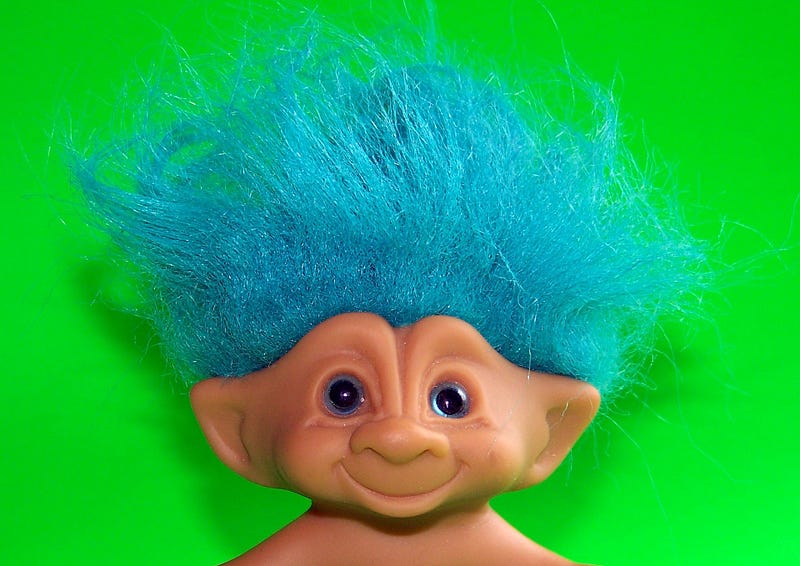
Ugh, trolls. They sure start showing up on your articles when your work starts to get noticed, don’t they? Respond and risk inflaming the situation, delete their comments and ignore, or have an all-out battle with them, we all have to decide how to react to these inflammatory, often ridiculous commenters.
The rule of thumb for trolls: do not engage.
Deborah Christensen shared with me about her husband’s experience with climate change deniers trolling climate change websites. Sciencealert.com released an article about trolling to address the issues they were having. They took a strong stand concerning trolling behavior and advised their members not to engage, to report the behavior, and to move on.
This seems, to me, to be a productive way to manage trolls, although the emotional damage of their attentions can be very difficult to endure. Try, as hard as it may be, to consider these comments as a testimony of your effectiveness as a writer.
After all, they won’t waste their time on you if they don’t think anyone would see it. Accept that as a compliment and send their actual words to the trash bin in your mind. Trolling behavior reflects negatively on them, not on your value or the value of your work.
Reporting is a viable option available on most platforms. Use it and that oh-so-empowering block feature.
Being misinterpreted
Sometimes the intent of your work can be misconstrued and the backlash painful.
Just this past week another writer wrote a scathing poetic response to a semi-rant style article I wrote entitled Poetry is Not Your Therapist, which addresses that fine line between writing for cathartic release and creating relatable, publishable poetry that others can enjoy. I meant to challenge poets to take their journal-style and emotionally-charged free writing and refrain from just titling it and calling it poetry, but to do the next phase of work which involves siphoning out the valuable parts, editing, and shaping their work into a polished final form.
Some took this as a criticism of using emotional writing in your poetry. It was not my intent, of course, to criticize anyone’s art, or to diminish them in any way as a creative, but the snark of my tone in my article may have been a bit abrasive. I still feel the material of the article to be valuable so I have had to appreciate the feedback, both positive and negative.
The negative response did not offend me. It means that my writing moved someone, made them think about poetry and what it means to them, and it moved them to write. Any impassioned and honest response is a compliment, in my opinion, on the strength of your writing voice.
Being copied / Plagiarized / imitated
Plagiarism is an issue that as you gain more success in any creative field, can rear its ugly head. From people copying your style to outright stealing your work, the reaction is fierce and personal.
Jun Wu and I were discussing this (as she’s recently had to deal with her work being plagiarized) and she showed me a great article by Aphinya Dechalert on thought plagiarism that really resonated with me.
This is your chance to truly be you. People can try and mimic you, but they can never be what you are. — Aphinya Dechalert
As intrusive as the experience may be, you can be prepared for this by keeping your eyes open. Recycling of thought or trends of thought can lead to very similar material being released. Be careful not to adopt a mindset of paranoia, which could be counterproductive and downright unhealthy.
Having others mimic our work can grate on us and make us question our own ability to deliver unique and valuable material. But rather than dwell in the outright offensiveness of the unethical and lazy work ethic of others, you can “turn the kaleidoscope” as Aphinya Dechalert describes so eloquently in her article.
If you suspect that you have been plagiarized, or that there is another individual(s) out there attempting to ride your coattails or cash in on your originality — gather evidence and report clear abusers, and then focus on your own creative talent and move on as best you can.
“Imitation is the sincerest form of flattery that mediocrity can pay to greatness.”
― Oscar Wilde
When criticism gets personal
A fellow writer and friend of mine, Jenny Justice, often writes about social justice issues. She holds nothing back in her views of the world and this has worked both to her favor in the form of a quick rise in popularity on Medium, and also by opening her up to unfair judgements of her personally based on her body of work.
She has faced criticisms on her character for posting umpteen Haiku. No, she is not attempting to override the algorithm by flooding the platform with her profile icon — she simply eats, sleeps, and breathes out tons of poetry. Her social perspectives have made her particularly vulnerable when it comes to the opinions of other people who feel threatened by her perspectives — from criticizing her involvement in the field of sociology, to name-calling, and being accused of being “too angry.”
Jenny solves this in a very productive manner by just writing more poetry.
A quick rise to popularity and having a fierce, firm voice, as well as having something important to say can be difficult for the envious to understand or accept without criticism. The difficulty here is separating honest criticism of her work, and actual judgements of her character that are more rooted in the insecurities of the few. Jenny takes it all in stride, avoids the loudest voices against her, and presses forward with renewed fervor in the face of opposition. How else to be a voice for justice?
Harassment and bullying
Some writers deal with outright harassment and bullying behavior when readers (or trolls) (or stalker-like creatures) decide that they do not like what they have to say, how they say it, or who they are as a person — and they say so on a regular basis. Both Emma Austin and Shannon Ashley have had extensive experience with this type of malicious treatment.
It is difficult watching a fellow writer struggle with that hazy grey area between the vulnerability of writing and the required strength to ward off the creeps. Shannon has been both vocal about her experiences with bullying and harassment, as well as a supportive energy for other writers that are coming along behind her on the Medium platform.
As much as I know that I “shouldn’t” let certain comments or reactions get to me, there are times when it absolutely guts me. Maybe it’s because humans are hardwired to dwell on the negative, or maybe it’s because I’m excessively sensitive. Either way, I have to be very careful about how much time I give to reader comments simply because it becomes a serious mental health issue. — Shannon Ashley
I feel, in a way, that these fearless ladies are paving the way for others to boldly speak their own truth, and for that, I thank them.
The takeaway:
Ask yourself if you can use negative attention to your advantage?
Attention is, in fact, attention. Perhaps the ratings go up, or the controversy generated brings more attention to your work? Perhaps it gives you the opportunity to recognize weak spots in your work that need clarification. Perhaps it reveals an area of inner growth that needs to occur? (When you are called out for racism, for example, maybe this is an opportunity to listen or learn something.)
When you are called out unfairly by a bogus and unhelpful perspective, however, it is hard to see the value in that. You can opt to keep the comments there to generate more interest — even arguments — for the sake of bringing attention and reads or ratings. In the creative world when you compete highly with other creatives to get your work noticed — negative attention can help to boost your personal objectives. Consider your purpose over your emotional response and try to decide how best to manage the negative attention — to your own benefit.
My mother always said to “consider the source” when someone upset me — this perspective can be quite useful.
When is enough enough?
We all have a breaking point. A threshold of tolerance. A limit. Where is my line in the sand? This is a very personal decision. When the negativity is overriding your creativity or causing harm to your spirit — do not hesitate to remove it, disassociate yourself from the person or person(s), ignore, block, step away — whatever you need to do to repair and refocus.
Keep in mind, you do not owe anything to them. A thank you for their “help”, a knee-jerk reaction that leads to a well-thought out and thrice-typed response, (one you’ll delete later anyways), or even a moment of your time. You owe them nothing. Honor your inner vision and purpose and stay true to that. Keep that your focus and set the limits that keep you emotionally, mentally, and creatively well.
How can I protect myself from creatively and personally destructive attention?
Sometimes action needs to speak louder than hateful words. Block. Report. Repeat. Stay harsh and swift with the buttons that sever contact by hateful (possibly dangerous) people. Working for yourself in an online forum, or presenting your art pieces at a fair — vulnerability without a staff of people protecting you means that you have to be your own security.
Most websites and places of business, or at least local law enforcement, have laws, rules, regulations in place for your protection. Use them when you know that your personal well-being is being endangered. Lean on your creative community for support. Call up that therapist you haven’t seen in awhile and have a conversation. Avoid ruminating over what has been said and done to you — you know it wasn’t fair, it wasn’t right, and it hurt, but moving forward, empowered, stronger, wiser, will lend to your success in the face of adversity; in my opinion, the most admirable kind of success.
Thank you to the creative writers, poets, and essayists who helped me to prepare this article. In the spirit of community, wellness, art and creativity we come together to share our experiences to help others.
For anyone reading this — if you are struggling, you are not alone. I hope that you will reach out and reach up to others who have been through what you are now facing.
Christina Ward 🍁🌲 is a poet and essayist from North Carolina. Follow and become a fan at ~*~ Fiddleheads & Floss Poetry ~*~.
This story was posted on An Injustice! A new publication geared towards voices, values and identities. Check here for how to input your perspective!


