
THE NARRATIVE ARC
When My Deaf Ballet Classmate Taught Me to Feel the Music
And how she undermined our intimidating teacher with signs
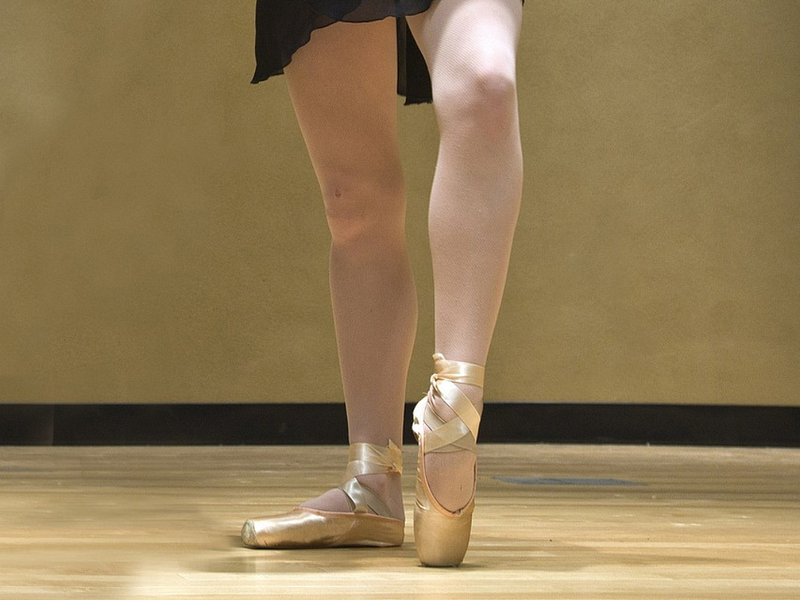
The pianist strikes the first notes, and the young woman standing in front of me at the barre lifts her right arm through first and second positions. I frown as I do the same, because we aren’t facing the piano, so we can’t see the pianist’s movements.
Denise is deaf, so how does she know when the music began?
“Wake up, everyone! Sloppy port de bras, slow feet. Snap to it!”
Our ballet teacher claps his hands behind me, and I flinch, but Denise moves confidently through pliés and tendus as I fall behind. It’s our second morning of the semester, and I’m not sure if I belong here.
Returning to ballet in college after a struggle with eating disorders in my teens might not have been the best idea, but I missed dancing, and it was easy enough to add a second major. Denise smiles at me as we turn to the other side, distracting me from my concerns.
My body knows these movements, and while I’m out of practice, I don’t have to think much as I follow the teacher’s instructions. As long as I don’t look in the mirror, I’ll be fine, I tell myself, but I can only avoid it for so long.
Denise taps my shoulder when the music ends, and we stand at attention, waiting for the teacher to demonstrate the next combination. She wrinkles her nose and sticks out her tongue as she flicks her right hand near her chin, her middle finger the only one touching her face.
When she drops her hands, palms up in front of her body, letting them sag, I frown, and she smiles at the woman sitting in front of the mirror along the front wall. Her interpreter is stony-faced, and I wonder what Denise is saying.
My experience with sign language is non-existent, and Denise is the first deaf person I’ve ever met. She pats my arm as I stare at her, bewildered.
“You must already know the combination, Maisie, since you’re not paying attention. Let’s see it.”
I can’t demonstrate, since I was watching Denise’s signs.
“I’m sorry, I don’t know it.”
Students behind him roll their eyes at me, and I catch sight of myself in the mirror. Before I can start to silently detail my physical faults, Denise flashes a set of signs quickly beside me, and the teacher ignores her, turning to her interpreter as if Denise isn’t there.
“I was asking for help. It’s not her fault.”
When the interpreter speaks, she doesn’t refer to Denise. She responds as if she was Denise herself, and there is something disjointed about the effect. It’s as if Denise is somehow controlling her, like a marionette.
At least until the teacher walks away, waving to the pianist without answering Denise, and the interpreter stares at Denise wide-eyed. A few students watch us curiously, but they move back to their positions, and we work through the rest of our barre.
The last combination is predictable, as the practice of ballet movements are standard, but I dread the final one as I did growing up. Grand battements showcase my lack of flexibility, and I don’t look forward to the verbal and physical pressure that I suspect is coming to push my body beyond its limits.
As the teacher shows us the combination, Denise taps my elbow. As soon as she has my attention, she squats down and presses her left hand to the floor. She holds her right hand as she did earlier, but instead of touching the middle finger near her chin, she moves it upward in front of her chest.
I have no idea what she’s telling me. When the teacher claps to tell the pianist to begin, it’s too late to check with the interpreter, but it only takes a few beats of the familiar music for me to understand.
The Dance of the Knights from Prokofiev’s Romeo and Juliet thunders through my feet and legs, pulsing into my body like a jolt. As sweat trickles over my collarbone, I realize that Denise doesn’t need to hear the music. She feels it.
When the teacher walks by, he presses his finger into the small of my back, and I shift, straightening up taller as I press my foot along the floor and into the air as high as I can. The music gives me a boost in a new way as if the beat has gained another dimension within my bones.
Returning to ballet is one of the most damaging decisions of my life, but I don’t know it yet, so I revel in what feels like a secret between my new friend and me through the rest of class. When class is over, Denise picks up her dance bag and follows me to the bench where I’ve left mine. She pulls a small notebook and pen from a pocket on the side.
The teacher steps around us, and I look up, only to look away quickly because he’s too close, and so is what he has squashed inside his dance belt. Denise laughs, the sound high and pure like a child’s, and I can’t help joining in.
She hands me the notebook as she repeats the first signs she showed me an hour and a half ago, and I read the two words she’s printed there.
Gross testicles.