
When Music Doesn’t Fit Into Typical Genres, We Sometimes Make The Mistake Of Ignoring It
Gomez has been making brilliant, genreless music for decades and the world is better because of it
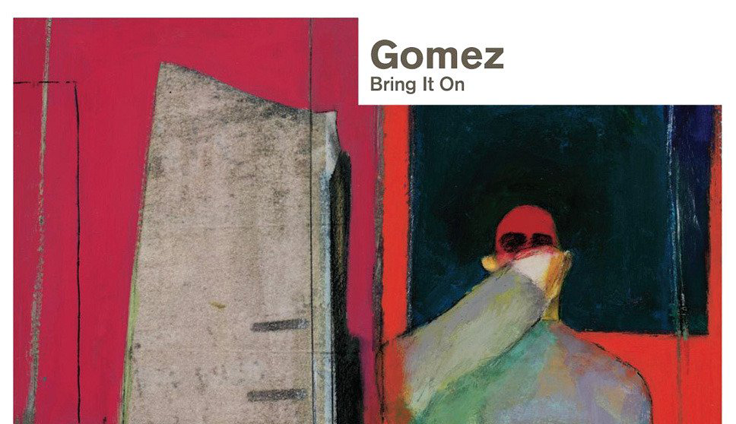
I’m one of the lucky ones. I was introduced to the British band Gomez with their debut album (pictured above), Bring It On, when it was released in 1998. It’s always a good idea to befriend people several years younger than you on the music scene for reasons such as this.
As the Seattle explosion from the early 90s had fizzled out and we inched closer towards 2000, a new sound was creeping through the British underground. It was quite different from what I had been used to listening to and I still wasn’t ready to wrap my arms around anything without sludgy guitars and soul-searching lyrics.
Lucky for me, the youngest brother of one of my best friends and most compatible musical companion, had always stayed on top of what was happening in the indie music scene. He’s the reason I learned about and fell in love with Gomez.
Music has played a massive role in human beings since the dawn of time. Commercial music has been and will be with us as long as people are roaming the earth. We need it, but why do we need it.
“Our brains love patterns. Music is a pattern. Coincidence?
Studies have shown that when we listen to music, our brains release dopamine, which in turn makes us happy. In one study published in Nature Neuroscience, led by Zatorre, researchers found that dopamine release is strongest when a piece of music reaches an emotional peak and the listener feels “chills” — the spine-tingling sensation of excitement and awe.” — The scientific mystery of why humans love music/Vox.com
Pop music is so popular because it generally follows patterns. It’s easily digestible, memorable, and it becomes our companion. Another bit from the article listed above explains it this way:
“Music is a pattern. As we listen, we’re constantly anticipating what melodies, harmonies, and rhythms may come next. “So if I hear a chord progression — a one chord, a four chord, and a five chord — probably I know that the next chord is going to be another one chord, because that’s prediction,” Zatorre says. “It’s based on my past experience.” — The scientific mystery of why humans love music/Vox.com
With that in mind, listening to and falling in love with a band like Gomez is a bit tricky. Beginning with their debut album, Bring it On from 1998, through today, this band follows no patterns, doesn’t fit into a genre, and in today’s musical landscape, is a bit of a mystery.
Here’s a great description about Bring It On and Gomez as a band from Elbow’s Guy Garvey:
“No other record captures that period so perfectly,” says Elbow’s Guy Garvey. “The concerns of the songs. The stories, the experimental sounds. It was so brave for a band to record themselves at that time: it allowed a direct and undiluted account of the band as aspirational, big-hearted friends in love with making music and each other. It dared us to record ourselves. But they did it first. It’s the most deserving recipient of the Mercury Prize in its history: a breathlessly ambitious and lovingly crafted masterpiece. It should be called Bring It ‘The Fuck’ On.” — Guy Garvey/Elbow
It’s difficult to expect a band that utilizes three singers and four songwriters to create music with influences including blues, rock, indie, alternative, electronica, jazz, folk, experimental, and world to be something you can immediately understand and love. But that’s exactly what happens when someone listens to Gomez for the first time.
Listen to any Gomez album from start to finish and you’ll hear as many different styles as there are songs on the record. They’re wildly inconsistent with their sound and it’s one of their strongest attributes as a band. You can hear bits of artists such as Tom Waits, Neil Young, Led Zeppelin, Prince, Portishead, Johnny Cash, The Chemical Brothers, and many more. I know that’s an odd grouping of sounds and doesn’t quite make sense, but when you listen, it will.
This is possible because of how inclusive the songwriting is among the band members and the fact that all three vocalists sound nothing like each other. The gravel and gruff of Ben Ottewell’s vocals give way to the plush and clean sound of Ian Ball, and eventually the pop sensibility of Tom Gray. Bands who want to become household names simply do not do this. I know The Beatles had two vocalists but are we really expecting another Beatles? The Eagles, among several others, had success with alternating singers, but it’s not a recipe for commercial success.
For some, it may take a few listens to digest all that Gomez has to offer. They were so far ahead of their time in 1998 and many fans and bands alike haven’t caught up yet. Listen to “Chasing Ghosts With Alcohol” (below) off of their album How We Operate, and tell me it doesn’t make you feel something deep inside. If you feel this one, even though just about everything they’ve done sounds different, you’ll feel Gomez.