
When Italy Almost Made Me a Foodie
How a circular train trip awakened my tastebuds
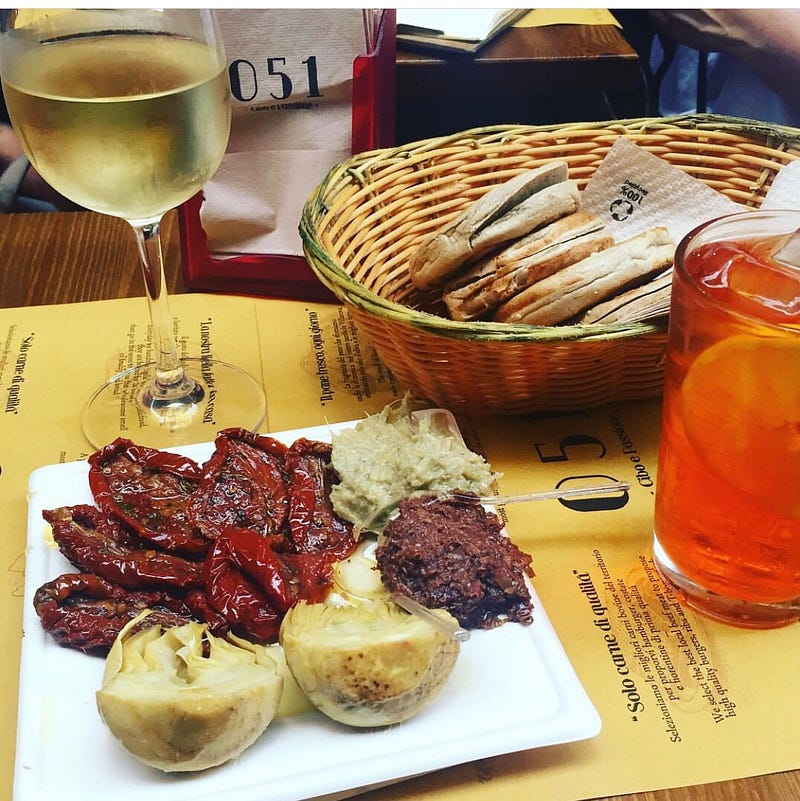
Disclosure: I’m not a foodie. I eat to live, not the other way round. I forget to eat if I’m engrossed in writing. But when a friend asked about the food on my trip around Italy, I was surprised at how much I had to say.
I love Italy for the leisurely way of life, the landscapes and the sense of standing on the roots of Western civilisation. And best of all, it’s easy to get around without hiring a car. Driving and parking in the narrow, cobbled streets? No thanks!
I used trains the entire way, from London to Milan in a day via Paris, and from Turin back to London, again in a day. Italy’s super-fast trains are comfortable, but I saw much more from the slower Regionale trains that require no booking.
My circular route took in some of the best of northern Italy. And because almost everyone (except me) is a foodie these days, I’ve matched each destination to one of Italy’s famous dishes.
Risotto in Milan
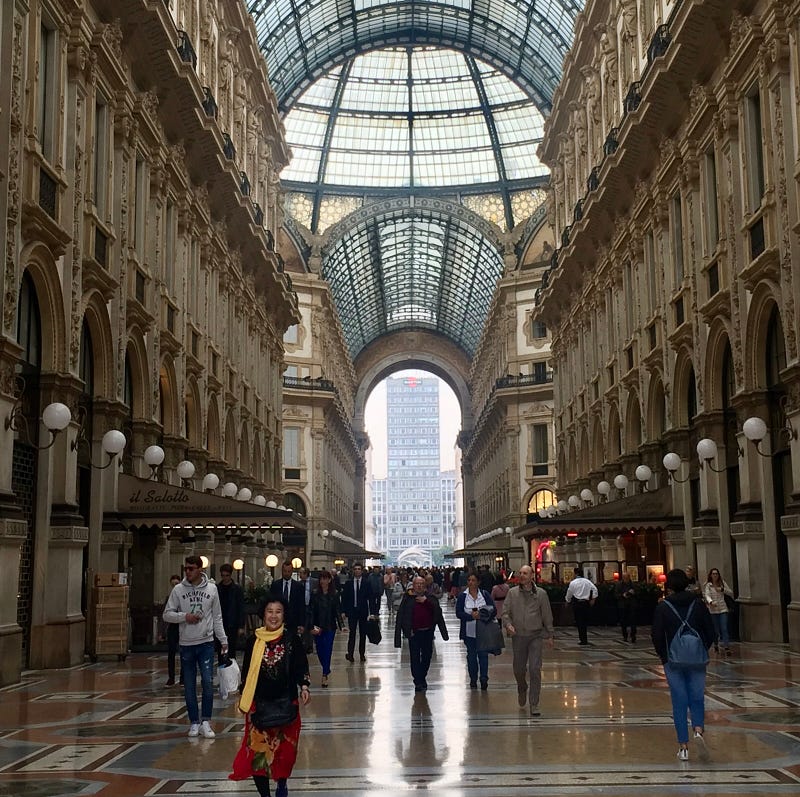
Milan is a technology hub and centre of creativity, where the modern world sits comfortably alongside the layers of history. Milan’s extravagant pink marble cathedral (Duomo) dominates the centre, and if you’ve always wanted to see Leonardo da Vinci’s The Last Supper, make sure you book in advance. I avoided the queues and took a canal boat ride instead. Risotto alla Milanese — a creamy arborio rice dish made with meat stock and cheese — originated here. It’s an easy dish that even I can make, by toasting arborio rice with butter and onion and adding stock, along with vegetables. But a true foodie could follow the Italians and add meat, seafood, or sausage.
Aperol Spritz on Lake Como
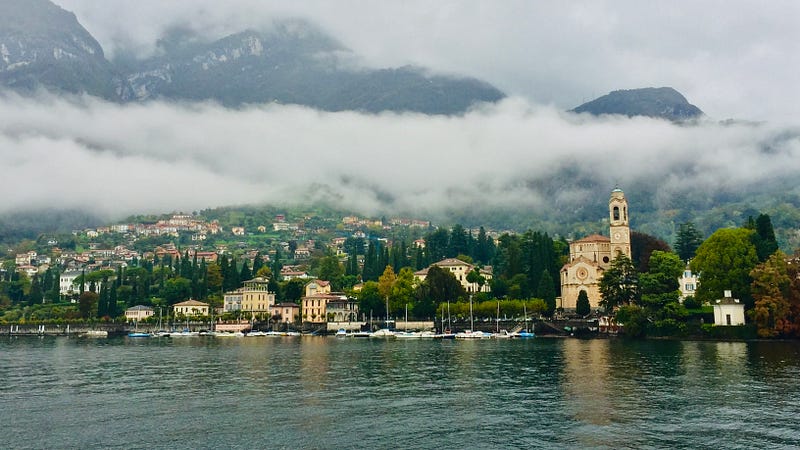
Lake Como is an easy day trip from Milan in less than an hour. Como is an elegant city at the foot of the lake, hemmed in by steep green hillsides, although that day the low cloud concealed the Alpine summits.
People sat sipping Aperol Spritz by the lake shore. I joined them to see what I was missing with Italy’s favourite pre-dinner drink. A mix of sparkling Prosecco wine and a dash of orange-flavoured Aperol, I found it too bitter for my taste. And the colour reminded me of Lucozade.
Gnocchi in Verona
I opted for slow travel with no pre-booking on a Regionale train to Verona, and arrived only half an hour later than the fast express.
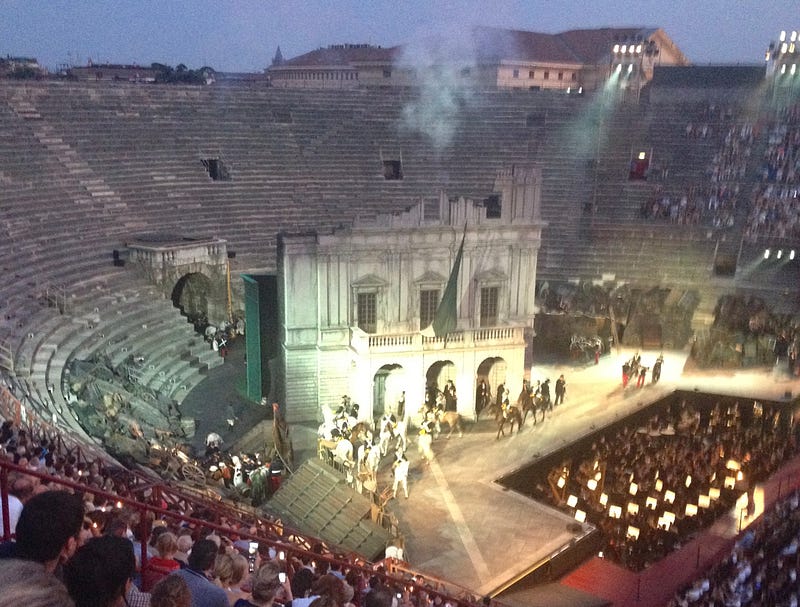
It was easy to spot Juliet’s House — tourists swarm at the base of the stone balcony that supposedly inspired Shakespeare. I abandoned that for a more authentic experience at Verona’s gigantic amphitheatre, a Roman antiquity from the 1st century. It happened to be Verona’s annual summer opera festival, and you don’t need to be an opera lover to watch a performance and feel overwhelmed by the experience as the sun goes down.
In Verona the Friday of Carnival week is known as Gnocchi Friday. Potato gnocchi, a kind of dumpling, looks similar to pasta, but they’re made with potato. It’s quite easy to make gnocchi and I have a wooden paddle-shaped gnocchi board at home. One day I’ll use it!
Lasagna al Forno in Bologna
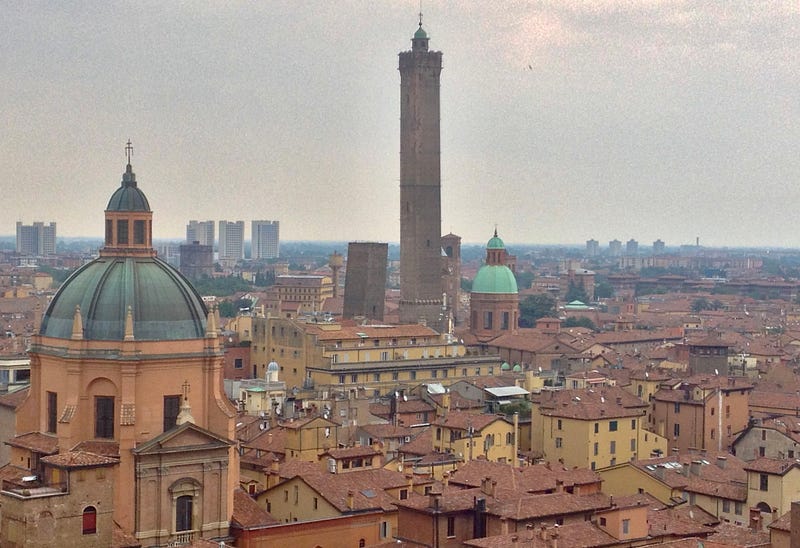
People salivated when I told them I’d be visiting Bologna. It’s regarded as the culinary capital of Italy, being the source of the famous tomato and meat-based sauce. But don’t ask for bolognese, because it’s actually known as ragù in Italy. Bologna’s side streets are a wonderful place to people-watch among drapes of ham and sausage hanging from the delis. One of the best things about this city is the way tourism merges into the background. Tall thin towers, built in the 12th century for defence, rise everywhere. And the porticos! Bologna has miles of arched covered walkways, including the longest in the world, via Saragozza. 664 arches later, I stood on the hilltop Sanctuary of the Madonna of San Luca, thankful for the shade these arches provide.
Wild Boar (Ragù di Cinghiale) in Florence
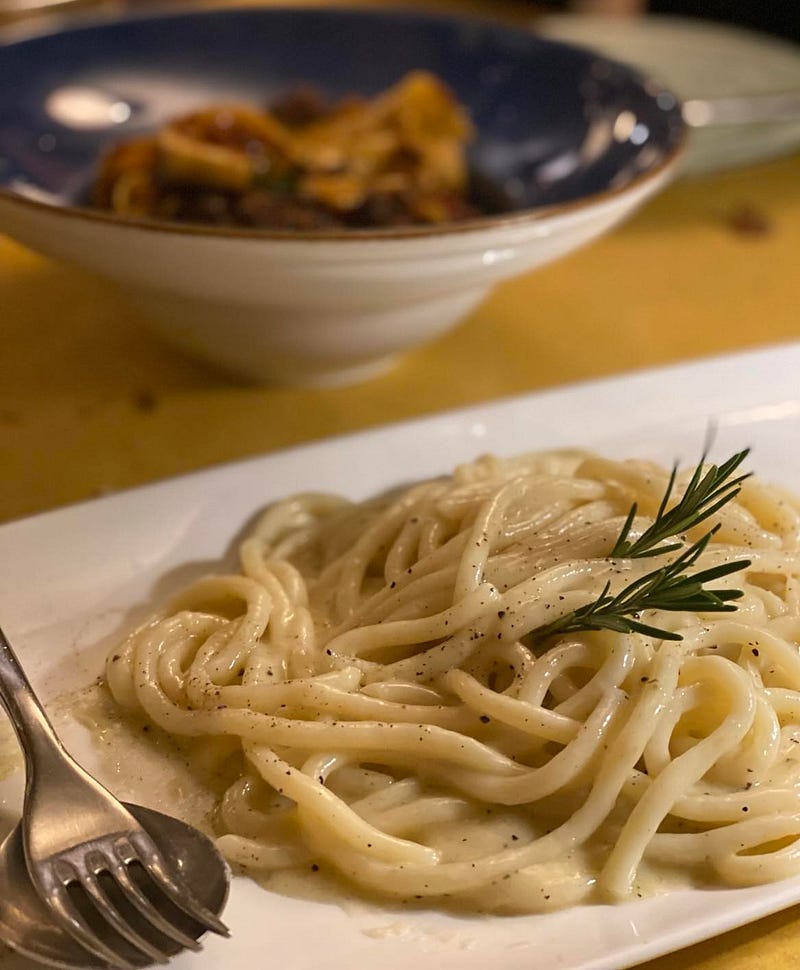
Ragù di Cinghiale is an extravagant wild boar dish that my daughter served at her wedding. It originates from Umbria and Tuscany, so it made sense to sample it in Tuscan Florence. Diced boar meat is marinated and then cooked in red wine, along with tomatoes, carrots, celery and onions. I ate it with pici, a rope-like spaghetti much thicker than what I buy at home.
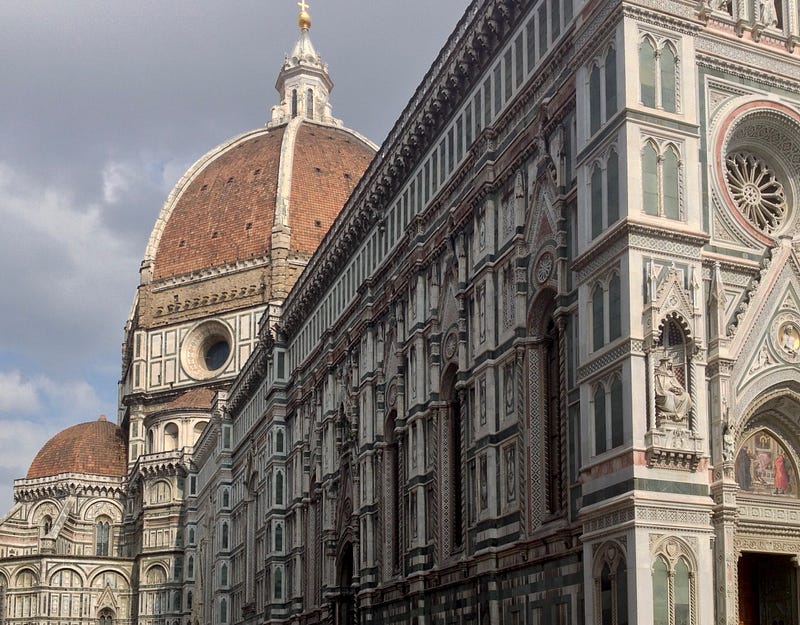
Renaissance Florence is little more than half an hour away from Bologna. Crowds plagued the ancient Ponte Vecchio bridge and the stupendous Duomo, but they thinned out up the hill to the Piazzale Michelangelo, with the classic view of the red cathedral dome rising against the wooded Tuscan hills. And as the day ended, the lowering sun set ablaze the Florentine pinks and terracottas.
Pizza in Pisa
Okay, I’m not a foodie, but I actually made Pisa a lunch stop between Florence and the Cinque Terre. More fascinating than the monument itself was the line of tourists pretending to hold up the famous tower — one man jumped into the air a dozen times so his partner could get the perfect Insta shot.
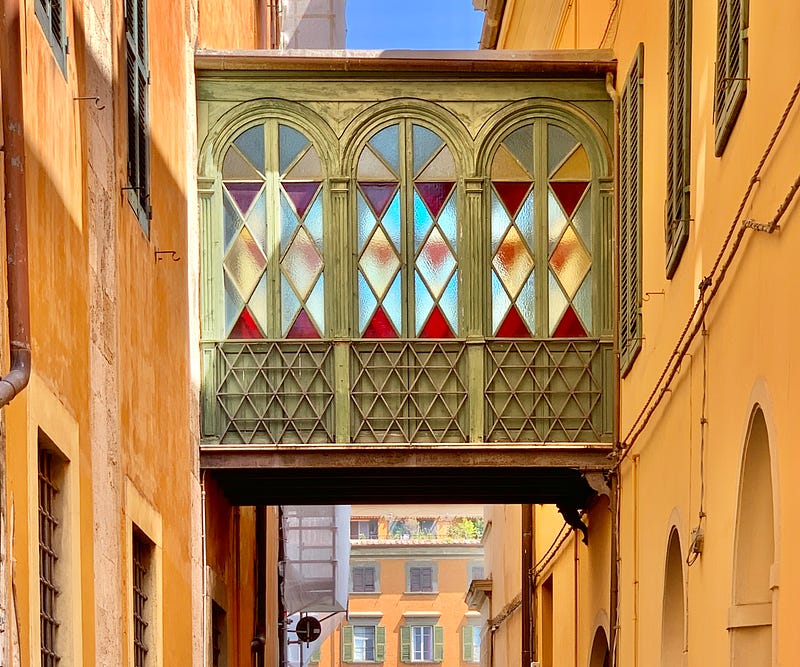
Although Naples is the true home of pizza, I lunched on Naples-style pizza in Pisa: soft, light and cooked in a wood fired oven in a backstreet taverna. My best memories of Pisa have nothing to do with that tower. On the walk back to the station, I stopped on the bridge to capture the yellow and terracotta riverside buildings reflected in the turquoise River Arno. And just further along was the most beautiful covered stained-glass walkway above a backstreet.
Pesto with Pasta in the Cinque Terre
The train from Pisa travelled along the coast to the Cinque Terre of Liguria. These five former fishing villages are a UNESCO World Heritage site. Strung like jewels along the coast of Liguria, each village is a tiny mosaic of colour.
The Cinque Terre are a victim of their own beauty. Steep mule tracks rose from the villages and took me away from the crowds. As did the backstreets.
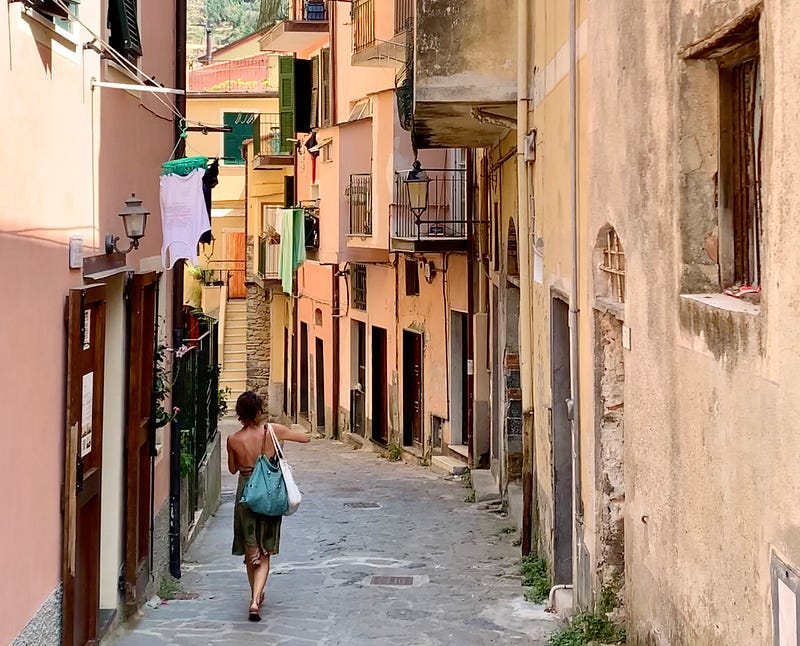
Fortunately I was visiting on day trips from Sestri Levante, a laid-back beach town north of the Cinque Terre. In Sestri’s restaurants I ate fritto misto, a platter of fried seafood, with carafes of Prosecco. I get through a lot of pesto at home, but the stuff I buy in jars is nothing like the traditional pesto of the Liguria region. Fresh basil leaves and fragrant olive oil are ground in a pestle and mortar, with the option to add pine nuts, garlic, and cheese. Perhaps I’ll try making it at home.
Pinsa in Turin
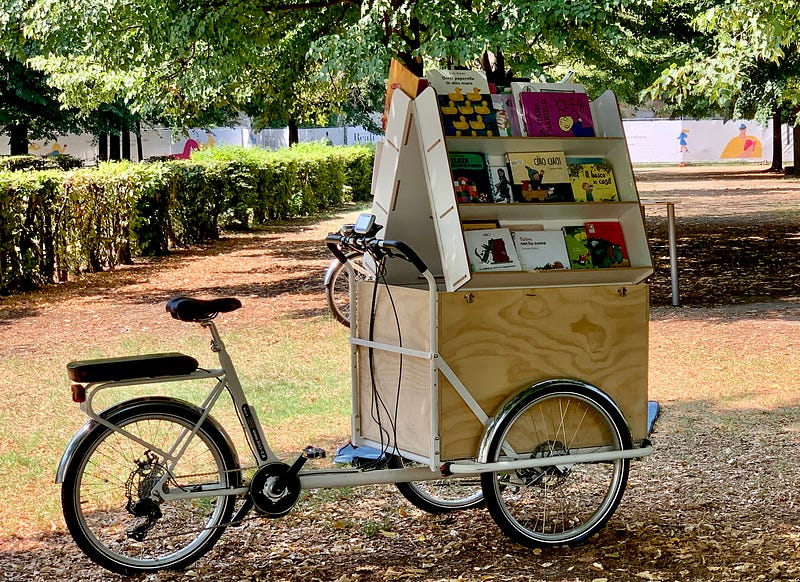
The first part of the journey to Turin was a scenic ride up the coast past Genoa. Like Milan, Turin has its share of elegant architecture — including porticos — and historic monuments. And a park where a mobile children’s library rolled up with bookshelves on tricycles.
Monday must be closing night in Turin, because it was almost impossible to find an open restaurant — and it was August. Even non-foodies need to eat. In the end I found a small bar serving pinsa. I had no choice but to order it. But what would I be eating?
Pinsa turned out to be an oval bread, a healthy alternative to pizza heaped with prosciutto ham. It’s made with a dough of soya, rice, and wheat flour that’s fermented for 2–3 days. Although pinsa is associated with Rome, Turin has several ‘pinserias’ that serve it.
Italy is a mosaic of sights and sounds — and tastes — that erupt around every corner. I still don’t regard myself as a foodie, but on that trip I came as close as I’ll ever get to being one.
Thanks for reading this far! You may enjoy my other travel articles, such as this one: