
When it Comes to Your Health, Are You an “Ounce-of-Prevention” or a “Pound-of-Cure” Kind of Person?
Modern medicine has achieved miraculous results, but it’s also becoming a major threat to public health
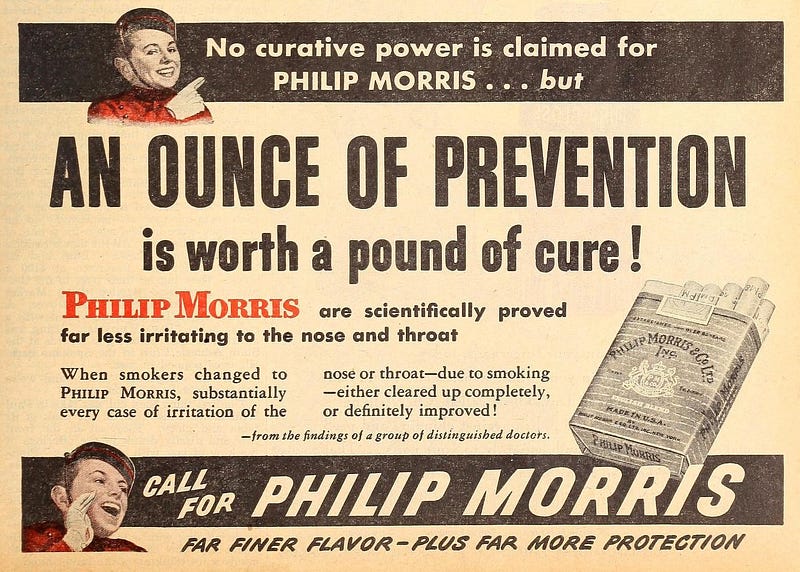
We’ve all heard Benjamin Franklin’s famous quote; “An Ounce of Prevention is Worth a Pound of Cure”, which happens to be wonderfully applicable in every area of our lives, but nowhere is it more so than our health, because we’ve become conditioned to look for a cure to a problem they we very often could have prevented.
According to Dr. Peter Gøtzsche, co-founder of the reputable Cochrane Collaboration, the three most common causes of death on a global scale are in this order:
- Heart disease
- Cancer
- Prescribed medications
Surprisingly, or not, most Americans start their day with a cup of coffee and a handful of pills. According to a 2016 Consumer Reports national survey of nearly 2,000 adults, more than half take a daily prescription medication (4 on average), over-the-counter drugs and dietary supplements because we’ve been led to believe that health can be achieved (or at least maintained) through chemistry.
Where did this idea come from?
The drug companies! In 2016, total spending on drug ads targeting American consumers reached $6.4 billion, which represents a mind-blowing 64 percent increase over 2012, but it gets worse. In 2012 alone, drug companies spent an astonishing $24 billion in direct marketing to American doctors.
A couple of years ago, I came across an article in Consumer Reports about a 55-year-old man named Jeff who served as a classic example of the “fruits” of all those advertising dollars.
When Jeff was in his early 40’s he was running a successful deli as well as a snow-plowing business during the winter months. In 2009, Jeff felt that he was feeling a little more tired than usual, so he went to his doctor who prescribed AndroGel®, a drug containing the male hormone testosterone. Jeff says he didn’t know then that testosterone drugs are approved by the FDA only for men with hypogonadism, or men with very low levels of testosterone. Jeff also claimed he wasn’t warned that prescribed testosterone can also increase the risk of heart attack and stroke.
Four days after Jeff began taking AndroGel®, he suffered a stroke.
Jeff is now part of class-action lawsuit of more than 6,000 other people who are suing six testosterone manufacturing companies for claims that they suffered a heart attack, stroke or other cardiovascular event after using one of their drugs.
But that “run-of-the-mill” story is the inevitable result of the pound-of-cure culture we live in. Far too many people — and their physicians — have come to think that every symptom or hint of a disease requires a drug.
More than ever before we need to acknowledge that we cannot medicate our way to health. When it comes to our health we need the mindset of problem avoiders rather than problem solvers.
If you look at the world of pharmaceuticals and medicine, much of it is devoted to correcting poor health choices. It’s no longer uncommon for us to blindly accept our deteriorating health as a natural result of ageing, when it’s often nothing more than failing to proactively take charge of our health.
Most of us have no problem focusing on building our careers, investing in our homes or working endless hours to build a retirement nest egg while we irrationally overlook the one thing that truly matters … our health.
Making health a priority requires a slight shift in thinking. In fact, when you practice living an “ounce-of-prevention” lifestyle you will reap untold benefits in every way imaginable.
By simply taking personal responsibility (our health is on us), you will almost immediately enjoy increased energy and vitality, your confidence will soar, and you’ll make better decisions in every area of your life. In fact, the more you practice an “ounce-of-prevention”, healthy lifestyle the less stress and anxiety you’ll experience, and your quality of life will not deteriorate as you age.
So, what’s required to be an ounce of prevention kind of person?
Make small, simple, daily investments into your most valuable possession. For example, did you make some kind of investment (exercise, real food, good night’s sleep, actively reducing any levels of stress) in your health today? What about yesterday and the day before that?
If you honestly answered “yes” then good on you, you’re an ounce-of-prevention kind of person.
If you couldn’t say “yes” I urge you to give your priorities a serious rethink.
Each of us needs to develop an “ounce-of-prevention” mindset when it comes to our health, which means being proactively responsible. If you’re waiting for a problem to arise (and it will) before taking charge of your health you’ll almost certainly live long enough to regret it!


