
When I Was a Young Boy, I Played with Barbies
My sister and I created a warped universe of eccentricity and intrigue, which I’ve carried with me into my adult years.
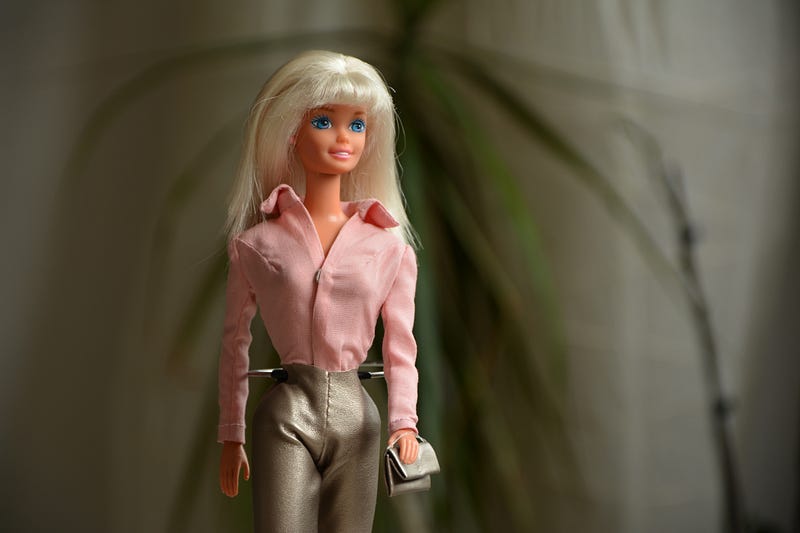
In the spirit of full disclosure, I’ll admit that I haven’t yet seen Greta Gerwig’s Barbie movie. This isn’t due to any reluctance or aversion on my part.
I really want to check it out — especially with each new review I read. Barbie sounds like it explores many layers of gender relations and power dynamics in our society.
Unfortunately, there’s no cinema complex in my rural community. I don’t drive — and nobody in my life has the spare time to transport me one hour away to a big city with a theater.
I may have to wait until the DVD release or if a streaming option becomes available.
Still, just from absorbing the buzz that Barbie has created, it harkens back to my childhood. Yes, I was a boy who played with Barbies.
And although I didn’t realize it at the time, that exercise of imagination spoke volumes about where I would be headed in life.
Our colorful minds
As a kid, I never socialized with classmates outside of school hours. My sister, being three years younger than me, was close enough in age that it was convenient for us to play together with our toys on the weekends.
In addition to extensive collections of stuffed animals, we accumulated a handful of Barbies over the years. I was in the Third or Fourth Grade when we began to create our Mattel-inspired universe.
My sister had Barbie, Skipper (Barbie’s younger teenage sister), and Courtney (Skipper’s best friend).
My dolls were Ken (obviously Barbie’s boyfriend), Scott (Skipper’s teenage boyfriend), and Kira (Barbie’s friend of Hawaiian descent).
Seeing how I was approaching puberty, my vocal cords allowed me to do less of a range of unique doll “voices” compared to my sister. As a result, she concocted much more lively and distinctive personalities for her dolls than I was able to for mine.
My sister’s Barbie was a self-centered bimbo who always thought her ridiculous schemes were brilliant. She was sort of loosely modeled after Dorothy Lyman’s character of Naomi Harper on the sitcom Mama’s Family.
Courtney, meanwhile, was an oversexed seductress. Despite being an adolescent, she was always flirting with Ken and Scott in only the way a nymphomaniac would.
Skipper, on the other hand, was “the sane one.” She provided a snarky-but-rational voice in the room, always rolling her eyes at everyone’s antics (especially those of her older sister, Barbie, and her best friend, Courtney).
By contrast, the personalities I came up with for my Ken and Scott and Kira dolls were pretty vanilla. Although I did have Ken and Scott engaging in a clandestine romantic affair together…
We also supplemented our Barbies’ universe with several of the Cherry Merry Muffin dolls and the Quints.
Remember them?
A reflection of society
At the time, I didn’t appreciate the nuances and implications of this shared play world that my sister and I had created. Looking back on it, I’m amazed at how we managed to be progressive and regressive at the same time.
First, I was the owner and caretaker of the two male dolls out of our six Barbies. The fact that I specifically wanted to play Ken and Scott was an echo of traditional masculinity on my part.
Of course, I also played Kira — so it wasn’t as though I was 100% tied to gender-rigid roles when determining who got to play with which doll.
Gazing through a Wikipedia listing that documents Mattel’s inventory of discontinued or special-release Barbie dolls, it’s striking how few options were sold in our town’s local toy aisles or through our family’s mail-order catalog.
I wanted Kira because I thought it was neat that Barbie’s extended social group wasn’t just limited to other White or blonde people.
Had we been of a higher income level, my family would have been in a position to buy my sister and me more of the Black, Latine, and Asian Barbie dolls in circulation.
If Gerwig goes on to direct and supervise additional sequels and offshoots from this successful 2023 film of hers, I can foresee a lot more synergy relating to the present day.
It won’t be long before there are same-sex Barbie couples (the way I’d secretly devised for my Ken and Scott dolls) or nonbinary Barbie characters.
As an elementary school boy, I didn’t even know what gender-fluidity was. Barely anybody in the 1990s did. But, if I had, I would have embraced those realities in the vein of “Variety is the Spice of Life.”
For example, I’d initially thought the two boy Quints were just girl babies with short hair. The patriarchal formula of “Three female quintuplets would all have long hair while the other two male quintuplets would both have short hair” was lost on me.
And, when it came to our Barbie’s “plotlines,” my sister and I were never shy about venturing beyond what society considered G-rated. Exhibit A was the teenage Courtney breathlessly throwing herself at any guy with a pulse (this trait was my sister’s brainchild).
A recurring gag that sticks out in my memories involved our sets of Quints.
Even though they were infants, they could somehow speak in full sentences — and were cognizant of all kinds of trouble that they took delight in creating for the grownup Barbies who were inexplicably forced to babysit them.
My sister’s set of Quints — the redheaded ones — were bratty little monsters who defied authority at every turn. They craved breastmilk. Every time they felt the urge to breastfeed, they would gang up against one of the female Barbies (usually Barbie or Courtney) and yell: “Charge!”
This was 100% via my sister’s twisted mind. My set of blond Quints were the angelic and well-behaved ones.
Say what you will about the clichés I and my sister embraced…but we were far more creative than the little girls in Mattel’s TV commercials who would bop their Barbie dolls back and forth like zonked-out drones.
Foreshadowing the future?
Earlier this year, Gabriela Garcia — a contributor to The Everymom blog — recalls how her visiting grandmother reprimanded Garcia when she’d witnessed her great-grandson (Garcia’s son) playing with dolls.
Garcia tried to explain how her son was emulating the times he’d watched Garcia herself take care of his baby sister.
But, given how Garcia’s grandmother is a Traditionalist (member of “the Silent Generation”), that rationale was lost on her.
Garcia reflects upon how comfortable she is allowing her son to play with “girls’ toys” when her own parents had rejected consumerism and wouldn’t let her enjoy such playthings as a child.
She also expresses sadness at watching her son feel as though he needs to hide his dolls from male classmates when they come over for playdates.
These taboos have shown Garcia that her son is having to learn, from a young age, some tough lessons about how “gendered” our society is. How absurd these stigmas are toward seeing boys “feminized” in any way, shape, or form.
By comparison, my own parents didn’t have a problem with how I played with Barbies. Or, at least, they never expressed those reservations to me out loud.
Meanwhile, my Grandma Eichberger would buy me “manly” action figures for Christmas — because, as much as she bragged about how well she knew me, she truly didn’t.
Writing for The Cut, Louis Staples reminisces about being attracted to the pizzaz and glitz of Barbies and other girl-oriented toys during his own boyhood. As a gay Millennial, his past shame mirrors that of Garcia’s Coronial son in the present: Hiding those salacious dolls from friends, panicking to come up with a lie if one’s playdate somehow discovers them.
Seamus Kirst of The Huffington Post had similar experiences to those of Staples. He wishes he could go back and reassure his childhood self that there’s nothing wrong with him — that there was no need for him to pretend to be living a lie.
By the time I reached middle school, we had grown out of playing with our Barbies. I don’t remember for certain, but I imagine we probably garage-sold them.
However, our “Barbie days” will always be enshrined as a preclude to our adult personalities.
Was my sister’s willingness to play Barbies with me a foreshadowing of her pro-gay stance? Even as a Millennial Republican, she is far more favorable toward the well-being of LGBT+ people than some older Democrats are.
And she never intends to have children. Maybe that’s why the idea of her Quints forcibly “breastfeeding” on her Barbies didn’t faze her?
For my part, the sexuality of my adult years was definitely teased amidst my fondness for Barbies. Even though Ken and Scott had no genitalia, I loved seeing them naked (or even in just swim trunks). I privately engaged in these fantasies, far away from my sister’s eyes.
The Barbie franchise has a solid place amidst the recollection of America’s youth. Yet, for some of us, the experience retrospectively may provide a Freudian window into our innocent souls.
Click here to subscribe to my stories.


