
When I Took Meditation a Step Too Far
A grim discovery alters my perspective
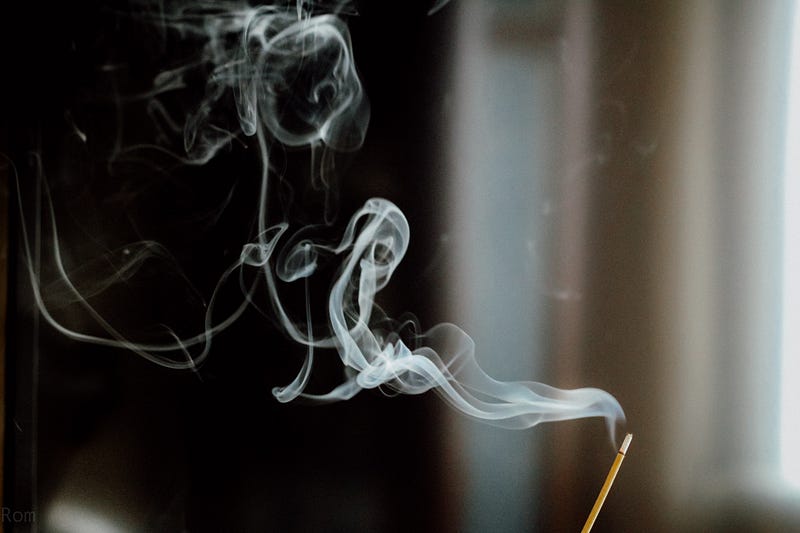
I am sitting cross-legged on the floor in my foyer, facing a wall. Next to me is a Mason jar of dry rice, a stick of incense propped up.
The timer is set for forty-five minutes, an inordinate amount of time. I do this because I’ve been reading a manual on meditation; an informative book on the brain written by a detail person who, I would guess, frowns on skimming. But I did skim, right away, to the benefits of meditation because I needed some incentive. Four words amidst long swaths of text without pictures kept me going: complete freedom from suffering.
Why, I wanted to know, in my two decades of working on meditation, did I still suffer? And feel impatient about getting to the next moment of each day in every single moment I experienced? I skimmed some more to find out.
The answer, according to this author, seemed to be my lack of sustained time in meditation.
My ten minutes here and there were not adding up in the same way of a daily forty-five-minute practice. The book was written by a neuroscientist with a Ph.D.
These three letters were enough to convince me of his validity. Which also proved my father’s point about why I should have gone to law school. I didn’t, of course, because I knew law students don’t skim.
The manual suggests I watch my thoughts but always return to my breath. I already know this.
It also suggests that I will likely feel an itch, or a cramp, for example, in my thigh. And I know this, too. Because of my right knee. It will ache, five or so minutes in, and when it does, I will think about whether or not I am damaging the cartilage somehow. Or the meniscus.
The sensation of my knee, and whether or not I should make a slight adjustment, will make me think of Tao Porchon-Lynch, the yoga teacher who lived to be 101 — teaching up to the very end — and also had four hip replacement surgeries. Was it from excessive meditation? Or her high-heeled shoes? I’ll probably go back and forth on this before I readjust, just slightly.
And I also know, before I start, that my legs will fall asleep and I will wonder about nerves and permanent damage. I know that I am supposed to look at the pain from a curious perspective. And breathe into it. Or through it.
One or the other.
Today, however, I am prepared. I am not messing around; I have a slew of pillows.
I’m sitting on one and also have one propped under each knee.
I start the timer. Light the incense. I breathe. My 120-pound dog wanders in. I feel her tower over me and pause. I feel her sniff my forehead, my cheek, and my hands which are pressed palm down on my thighs. I feel that she is now satisfied because she lies down in a heap, the length of her back pressed against me.
Soon, a slight sensation tickles my neck. I resist the urge to scratch because I have committed to forty-five minutes no matter what without fidgeting. I was warned from the book about fidgeting. It’s probably a strand of my hair. I should have put it up, my flyaway, tickly hair. Just a second it would take to sweep that one piece of hair out of the way. But that’s failing. I think this must be why monks shave their heads.
I am full of doubt that this is worth it. I remember the story of the Zen master who sweats in the cold of winter because he concentrates so hard as he sits. It seems impossible. But I do now feel a struggle that could indeed make me sweat with this strand of hair moving around.
I have this idea, sitting here, that I will prove something if I push through without fidgeting. That I will leave the faulty me behind. That I will achieve this higher plane. That I will be as wise and non-petty as the robed monks who wear gentle smiles. That I will be patient and not rush, that I will stop skimming through the moments of my life instead of giving them my full attention.
The tickle is all of it.
There are those of us that notice all the people doing better and those of us just at peace with who we are; the non-strivers who have what the strivers want. Not looking outward or inward but engaged in the task. It does not come easily to me. I’m always looking around, trying to improve myself. To think positively like Tao Porchon-Lynch, “there’s nothing that you cannot do.”
Even as a child, I noticed others. I saw myself in relation to them, as I see myself in relation to the monk, to Tao, to other writers and teachers. To humans.
The tickle moves. I think it is alive. But no. Of course not. Just my brain testing me, playing tricks. I use all my strength to not brush it away.
My meditation timer has rung.
I’ve made it. Though I can’t stand up immediately. My legs are frozen, consumed with an achiness that takes time to resolve. Do I need to do this more or less?
I’m proud of my effort, my staying power, my straight forty-five minutes of success.
I brag to my family and then remember gently smiling monks don’t brag. They hold space, the wind does not blow them over. They are not looking around, telling people what to do.
As a teacher and mom, I’m always trying to say too much, give advice. Pass on what I’ve learned. Prevent heartbreak. Recently, a student of mine was in tears. A minute before she’d been happy, galloping along on her illustration of a fairy tale garden.
Her acceleration into despair over the comparison of flowers was rapid. She was able to name the problem when I asked her what was wrong.
“I’m jealous,” she said, pointing to the flowers her tablemate had drawn. “Her picture is better than mine.”
The words came out in segments, between heaping breaths. Her nose ran.
I wanted to save her life. And I don’t mean literally but I do mean literally.
That is, how not to consider yourself in the context of someone else.
Even if I stated all that is true — her own perfect flower, her essence, her irreplaceability —
I knew she could not un-see her friend’s flower. Words would not matter.
It is night, on the day of my long mediation. I wake out of sleep. I feel a sharp pain in the back of my head. My hands touch the nape of my neck. They reflexively find the spot of pain.
A second later, I know what it is. Only the size of a tip of a pen, the deer tick, so common in my New Jersey suburb, has embedded itself in me. I jump out of bed, turn on the light. My husband asks, “what are you doing?”
I scramble for tweezers. I think back, when could this have happened? I hadn’t even been outside.
My husband puts on his glasses, I hold up my hair.
My tickly, flyaway hair.
Of course, now I remember.
That strand of hair, that one I powered through, the one I thought was something alive.
I didn’t trust my instinct. I was too busy trying to overcome myself, to reach an arbitrary measurement.
Next time, I’m wearing a hat.


