
When I Started Hating The Power of Money
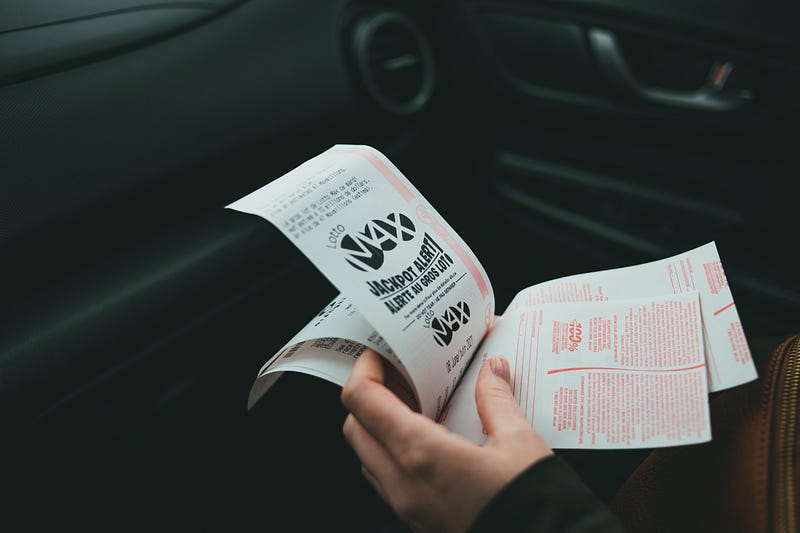
I was 16 when I worked behind the service desk at Stop & Shop. For those who don’t know, Stop & Shop is a grocery chain in New England, America.
My parents made me start working when I was young to make me appreciate the value of my own, hard earned dollar. I’d later go out with friends after work and spend my own money on menial things teenagers spend their money on, like trips to McDonalds.
During my time behind the desk, there was a range of to-be expected customers:
Powerball players, customers returning items, and customers who mostly did not speak English cashing their paychecks for a $1 fee. I’d give out up to $500 in cash to these customers who I, after some time, realized they did not have a bank account of their own.
There were a small number of lottery ticket scratchers who spent my entire shift’s time at the desk buying scratch tickets. They’d cash their social security check, and spend their afternoon with me in conversation between the bulks of dollar scratches they’d ask for. I once had a customer spend an entire 8 hour shift with me.
This was enough to start making me realize the hypnotic power money has on people. To spend upwards of $400 from a social security check on lottery tickets seemed so irrational to me.
But what broke my heart the most, and what made me realize the desperation of some people, were those customers who sent overseas Western Union payments.
Western Union allows people to send large amounts of money anywhere in the world. In order to send the money at the transaction station I worked, there was a fee added to the amount. There was a maximum transaction amount of $5k. The fee increased as the sum increased. In ~2006, I recall fees for $3k transactions being around $100 to send.
There became a pattern with a small group of people who cashed their checks with me and them sending money to countries like Brazil, Mexico, and Guatemala. I started asking myself questions like, “Is this person here in this country by themselves? Are they sending money to their family, where it might be harder for someone to find work at as good of a pay rate as this? What value does this amount of money for those they’re sending it to, are they able to obtain it themselves? If this money is being sent to their family, how often does this person get to go and see them, if at all?”
Those transactions still hold a place in my memory, amplifying my level of celebration in moments like Massachusetts preserving the legal right for anyone to obtain a driver’s license.
For some, there may be real deep levels of pain, struggle, and distance behind the decisions they’ve made for themselves. I still don’t know if any of what I wrote is the exact truth, but I’ve had to wonder about it enough to make it feel real.
If you enjoy reading my work, please consider becoming a member by clicking this link! I get a portion of the profits from each referral made.


