
When Hollywood Loyalty Defies Conviction: Mila Kunis and Ashton Kutcher’s Unusual Stance on Danny Masterson
When Hollywood Loyalty Defies Conviction: Mila Kunis and Ashton Kutcher’s Unusual Stance on Danny Masterson
- *Shedding Light on the Complex Defense of Danny Masterson** *Subtitle: The Troubling Support from Mila Kunis and Ashton Kutcher*
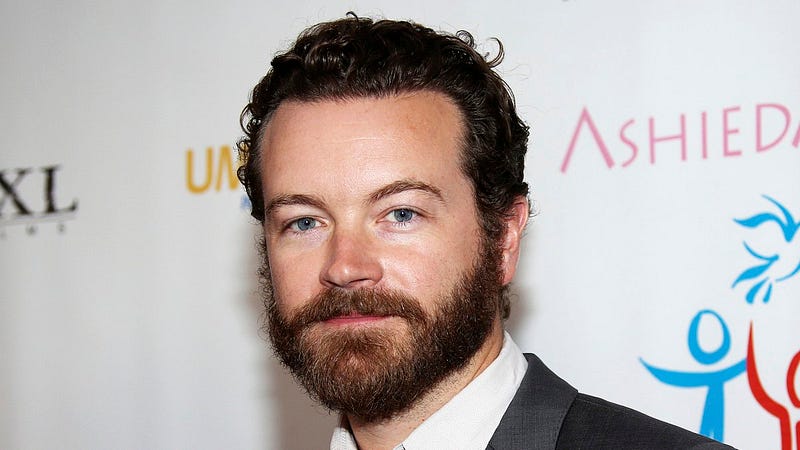
In a world of shocking revelations, the defense of Danny Masterson by Hollywood stars Mila Kunis and Ashton Kutcher raises eyebrows and concerns. The support for a man convicted of drugging, raping, and assaulting multiple women challenges our understanding of justice and the power dynamics in the entertainment industry.
**The Shocking Revelation** At the pinnacle of his fame, Danny Masterson was found guilty of heinous crimes that shook the foundations of trust and morality. Women who encountered him often found themselves helpless and violated, their lives forever scarred. Masterson’s modus operandi was to drug his victims, rendering them powerless. If they awoke during these horrifying ordeals, he would resort to violence, even brandishing a gun as a means of control. The gravity of these crimes cannot be overstated.
**A Troubling Defense** What is even more unsettling is the defense that followed Masterson’s conviction. Mila Kunis and Ashton Kutcher, his former co-stars from “That ’70s Show,” penned letters to the judge requesting leniency for their friend. These letters, when read in isolation, paint a picture of Masterson as a stand-up individual. He is portrayed as a great role model, a friend who discouraged drug use, and a ‘kind of brother’ others would be fortunate to have.
The letters describe Masterson as an ‘extraordinarily honest and intentional human being’ with ‘innate goodness and genuine nature.’ Ashton even recalled an incident where Masterson defended his girlfriend in a pizza parlor. This narrative starkly contrasts with the heinous acts he was found guilty of, leaving many bewildered.
**The Enigma of Real Monsters** In the world of crime, real monsters often do not fit the stereotypes depicted in fairy tales. In the movie “8MM,” Nicolas Cage’s character, an investigator, unveils the identity of a killer who looks like an ordinary person. The killer, when confronted, asks, “What did you expect? A monster?” This thought-provoking question challenges our perceptions of evil.
Violence is regrettably not rare in society. Statistics reveal shocking numbers, with a significant portion of women suffering from intimate partner violence and non-partner sexual violence. This issue transcends borders, affecting countless lives globally. Abusers are not confined to stereotypical molds; they could be among your acquaintances, co-workers, or even someone you consider a friend.
**The Complexity of Justification** We are often adept at justifying the actions of those we know and trust, even in the face of evidence to the contrary. People tend to downplay the wrongdoings of individuals they are close to, attributing them to one-off instances. Admitting we were wrong about someone can be challenging, leading us to rationalize their behavior.
Social identity theory further complicates our perception of individuals within our ‘community.’ Studies indicate that we view actions more favorably when they come from within our social circles. Mila Kunis and Ashton Kutcher, both advocates for women’s rights, might view Masterson’s crimes differently because he is part of their community.
Cognitive dissonance, the mental discomfort stemming from conflicting beliefs, values, or attitudes, plays a role as well. It is often more convenient to classify someone as entirely good or entirely bad. However, reality is seldom so black and white. Notable cases like Jimmy Saville, who raised millions for charity while committing unspeakable acts, highlight this complexity.
**The Apology and the Contradiction** After the public backlash that followed the release of these letters, Kutcher and Kunis issued an apology. They claimed that the letters were not meant to undermine the victims’ testimony and expressed support for survivors of sexual assault, abuse, and rape. Yet, they had also advocated for leniency in Masterson’s sentencing.
This contradiction highlights a fundamental problem: advocating for both victims and perpetrators is incongruous. Sexual abusers are not hapless individuals but calculated offenders who plan and execute their crimes. They often use their power and influence to silence their victims. It is the survivors who deserve support and advocacy, not the aggressors.
**The Culture of Justification** Sexual abuse often thrives as an open secret in many societies. Secrets like those surrounding Russell Brand, Harvey Weinstein, Jimmy Saville, Jeffrey Epstein, and various institutions like the Boy Scouts and the church persist because people turn a blind eye or find ways to justify the unjustifiable. Real change can only happen when society shifts its focus from the comfort of criminals to the lives affected by these crimes.
In a world where we readily excuse the actions of our friends and struggle to acknowledge their wrongdoings, where we prioritize criminals’ comfort over the well-being of survivors, sexual violence continues to persist. To truly support survivors and enact change, we must break free from the culture of justification and confront these uncomfortable truths.
*In a world where monsters often wear ordinary faces, let us remember that support should be unwaveringly reserved for the victims, not the perpetrators. Advocacy must be steadfast, unswayed by personal connections or cognitive dissonance. It’s a stark truth that can no longer be ignored.*
#JusticeForSurvivors #SupportNotExcuse #EndSexualViolence #StandWithVictims #BreakTheSilence #CultureOfJustification #NoMoreExcuses
Visit our blog at http://www.TheWetWhale.com