
When Gabbie Petito Meets Britney Spears
A Social Phenomenon
A few weeks ago, I watched a two-hour-long BBC special on the events surrounding Gabbie’s last days. The program scrutinized the subject under multiple lenses; the Petito’s side, the Laudrie’s side, some expert investigators’ insight, and reporters’ observations on the drama. Then, these random persons, scanning social media posts searching for clues to help the authorities solve the case, were interviewed to share their experiences. As reported, the online detectives were growing in numbers, organizing and gathering on social media to expose their hypotheses and debate about them. They would share their videos and snaps that they believed would contain information. Some would compare Gabbie’s hair color to establish the dates she took the pictures. These worldwide Sherlocks were pinning the late couple on maps and validated their itineraries.
We were part of a movement. — Redditor
This statement got me to think.
This phenomenon was not an isolated case. I remembered Britney Spears’s conservatorship’s coverage in the news and the fierce energy occurring on social media. People scrutinized the pop star’s Instagram pictures and extrapolated hidden messages from the candles’ position in her posts.
Really? — Me after reading this on a news outlet.
Again, the internet gathered around a cause where Justice failed, and they ought to make their voice heard as they sought the restore her liberties. Sociallings (Kids of the social era — I’m coining the term) felt the icon’s pain, and they created the Free Britney movement to require Justice (who’s ever in charge of it) to end the slavery afflicting the signer. It may not surprise you since the judgment has fallen, but this group of activists has succeeded at speeding up the conservatorship dissolution.
“Is it a trend?” I asked myself.
To me, it was not a weird bump in the social fabric. No. My observations led me instead to think that our social model evolved along with our relationship with technology and the changes it forced on us. Only 20 years ago, we didn’t have the internet, and I could not have access to you all 650K Medium members. The most people I could interact with would be a few dozen. If we wanted to make our voice heard, we had to storm the street and make the news. In contrast, a single Medium post could reach hundreds of thousands of people.
The ever-growing choices we face in our daily life, the speed at which events occur, and the democratization of information have led, in my opinion, to the strengthening of a modern phenomenon: Slacktivism.
Slacktivism
You’re lying in your bed, and you scroll your Facebook feed waiting for mister sandman to visit you. Suddenly, you fall upon a Facebook group calling to save a historic fountain that the city proposes to demolish. You feel disgusted by the idea that someone dared to suggest the removal of the landmark, and as an active citizen, you click the Join button in support of the unofficial petition. You drop your phone on the night table, close the light, and shut your eyes with a feeling of contribution.
This story was, in fact, an experiment that Evgeny Morozov used to study critical components of slacktivism. The Facebook group staging a fictitious page gathered over 27K followers over two weeks.
“When communication costs are low, groups can easily spring into action.” — Evgeny Morozov
Slacktivism term was coined in 1995 by Dwight Ozard and Fred Clark where they referred to activities aimed to change our society with small personal actions. Such activities are characterized by low effort actions such as ‘liking’, ‘sharing’, ‘signing online petitions’ and ‘commenting on posts’.
Before digging deeper into our analysis of the usefulness of slacktivism, let’s define a subjective baseline and ask ourselves how activism has contributed to social change.
Activism
Activism is the act of vigorously fighting for either your political views or bringing change on the societal level. Vigorous efforts are not accomplished with your fingertip but rather require physical effort, strength, and energy. Remember the Arab Spring in 2010 or the latest protests in Hong Kong? These protestations were not quiet. They showed high levels of energy, and participants faced physical harm, prison, or death.
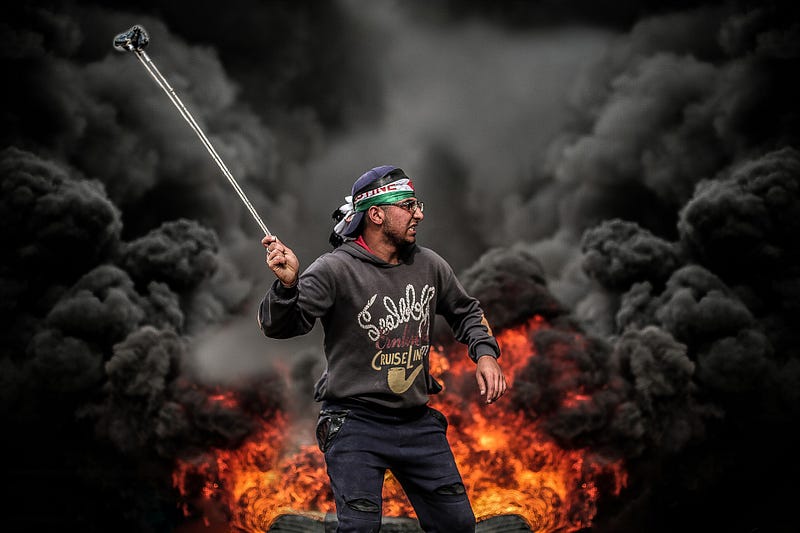
Closer to us temporally, the Black Lives Matters riots of summer 2020 saw their share of casualties and destruction. The Kyle Rittenhouse trial is a reminder of the dangers activists face on both sides of a gun.
Of course, manifestations don’t have to be violent to be impressive. Many of them saw hundreds of thousands of people marching the street and asking for change without killing a fly.
Are violent protests more effective than peaceful ones to promote change?
Did any protestation have led to change? If so, which one did and why?
Earth Day
Apollo 13 launched ten days earlier, Miriam Hargrave obtained her driver’s license after her 40th attempt, and Paul McCartney had announced that Let It Be was the Beatle’s last album. April of 1970 was indeed a charged month. The first Earth Day saw 20 million Americans “out into the spring sunshine for peaceful demonstrations in favor of environmental reform.” One of the biggest crowds to hit the streets after the Goerge Floyd protests from 2020–2021. Every year since then, people gather for this event and reestablish their expectations regarding climate change. In 2017, Earth Day attracted more than 1 million people worldwide when we are crossing the 1.5 degrees above pre-industrial levels.
Did activists achieve what they aimed for?
March on Washington
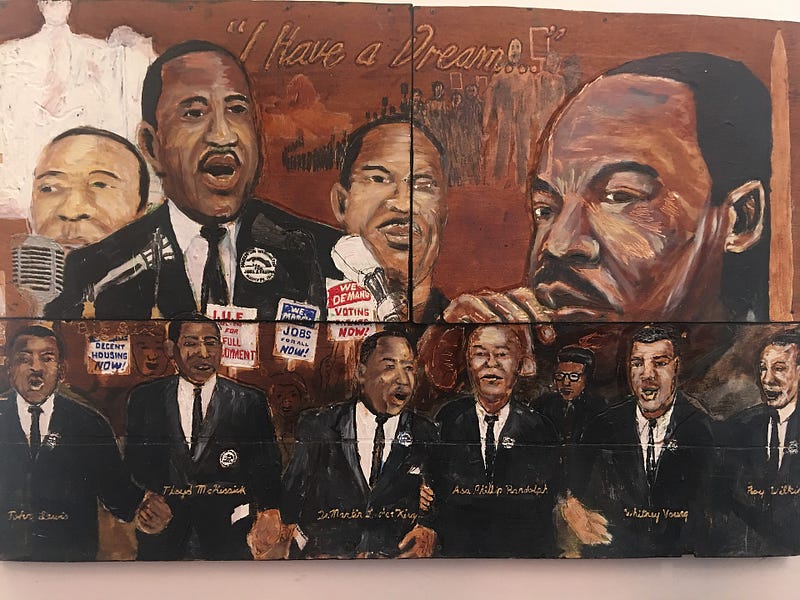
On a sunny afternoon in August 1963, Martin Luther King preached to over 200k protestors where he talked about his dream of racial equity. Although it may have led to incremental changes, we must recognize that there’s still work to do. Again, the Floyd tragedy is a reminder of the work left to do.
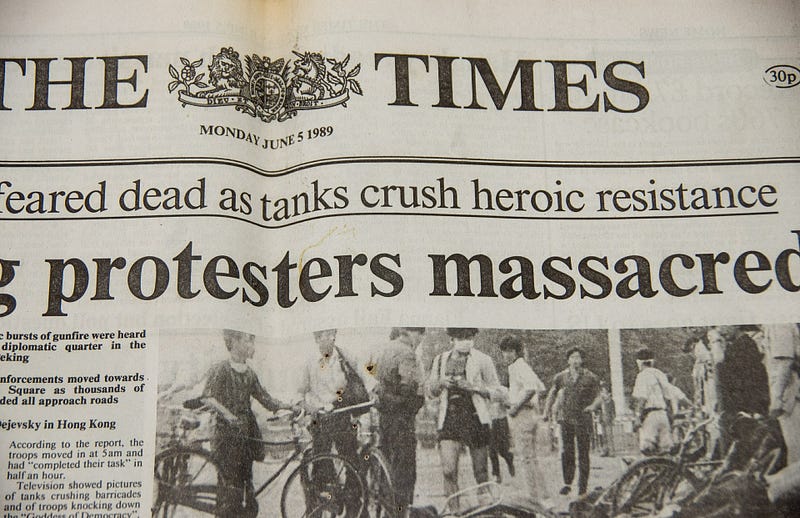
Tiananmen Square
Over seven weeks, more than one million students took the streets and protested peacefully in a request for democratic changes. When the Panda had enough, it cleared the road with tanks, squashing anything standing before them. The youngsters did not achieve their goals in this authoritarian land, but they also faced significant casualties.

Arab Spring
Following more significant concerns over the economic crunch and corruption in many Arab countries, the Tunisian Revolution took the streets of Tunisia, Libya, Egypt, Syria, and Bahrain. Riots, blood baths, and uprising surprised the international community and made the news for several weeks. While some battles led to power change, many of these victories opened the door to other authoritarian figures who grabbed the opportunity to seize power. Only Tunisia succeeded in transforming its governance into a democratic constitution. We are ten years into this revolution as the taste for change has spread to other Arab countries. How good a result was this approach?
What is triggering these unrests?
- Short term triggers:
These triggers could be pictured as flashing events. They could be protests in another part of the world, political changes, allegations of corruption.
- Long term triggers:
Like an elastic bending until snapping, these triggers are the result of mounting pressures, growing tensions, and shrinking trust in the establishment.
Are they successful?
Apart from Tunisia and Egypt, no Arab countries have made significant changes to their authoritarian regime. The Iranian Green Movement has failed. The Ukrainian Orange Revolution somewhat succeeded. Tiananmen failed, Martin Luter King partly failed, and Earth Day did not deliver. Societal changes are easy to provoke but hard to materialize.
How about the lazy activist?
Slacktivists can perform their social pressure for different purposes.
- Promoting:
The digital activist may promote organizations, charities, or political groups by clicking a ‘Like’ button, reposting a charity's social status, posting their view on a topic, or campaigning for representatives.
- Supporting:
Fans and supporters may like the social posts from their idols, create fan pages and groups, or create donation pages to support those in need.
- Changing:
Many movements have been born to change the status quo. You can think about the Hashtags as the activist’s swiss army knife. #FreeBritney, #BlackLivesMatter, #MeToo , #EndFathersDay, and much more. They are calls for your siblings to regroup, gather and make a common block against the oppressor.
Are these modern activists holding higher ground?
Of course, there are no metrics to extract a clear picture from this novel phenomenon. But I’d argue that the power of social media outreaches what we can comprehend about it. Think of the cancel culture that followed the #MeToo movement. And the books that outcry the masses because the writing seem not to fit our sterile views anymore.
We found Gabbie. We freed Britney. We saved the cats from the pharmaceutical industry, bent the Coronavirus curve, prayed for Paris, and walked for the women. Although we can appreciate these advancements, can we support the idea that low-effort actions can transform what high-risk endeavors have failed to deliver?
What are your thoughts?
Want to know more about me?