When Fictional Technology Comes to Life
From Prediction to Addiction
There are some people who believe that our technology is too far advanced. There are others who believe that we are being subjected to predictive programming to accept massive leaps in technology by showing us such ideas in movies and TV shows first.
Personally, I don’t buy into any of that, but if predictive programming was to be true, it would be nice to be able to enter an alternative universe for some me time, just like in 2018’s ‘Ready Player One’, directed by Steven Spielberg. Just saying.
With the idea of advanced technology being something that has developed from Movies, I wanted to take this opportunity to link past predictions to our improved normality.
The Self Driving Car
In 1968, the world fell in love with the first Autonomous vehicle, ‘The Love Bug’. For all the Millennials out there, you may know him as ‘Herbie’. Either way, the imagination of creators from the sixties, helped shape our eyes for the first self-driving car. - The love bug (1968), Directed by Robert Stevenson
A few Years later, in 1982, another great self-driving vehicle made its way into our hearts. David Hasselhoff, takes the wheel (or rather he doesn’t) to fight crime in this American entertainment franchise with the help of ‘KITT’, a High performing car capable of running the shots. - Knight Rider (1982), Directed by Glen A. Larson
Auto driving, voice command cars then made an appearance 11 years later. In 1993 ‘Demolition Man’ came to the big screen, with more future predictions than you can shake a stick at. In fact, the movie got so many future predictions correct, it’s made its way into this list more than once. - Demolition Man (1993), Directed by Marco Brambilla
The next Sci-Fi film that predicted a vehicle with attitude, or at least the option to converse with its owner, was developed from the short stories written by Issac Asimov. In 2004’s ‘I,Robot’, Audi became the car manufacturer of the future. There was even a moment where the idea of a manual car would be a ridiculous thing of the past. - Asimov, I., 1950. I, Robot. New York City: Gnome Press. - I,Robot (2004), Directed by Alex Proyas
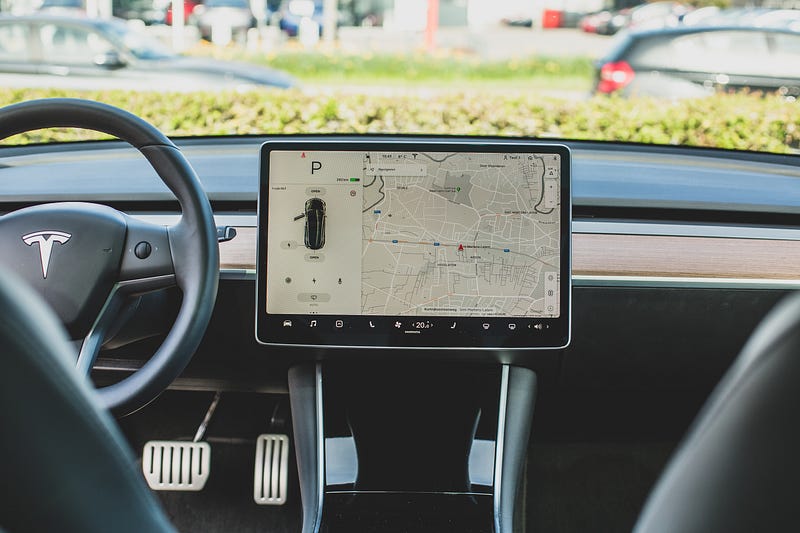
Today we get Tesla’s real life version of a self-driving car. Although in its description, driver supervision is always required so it cannot be given the title of autonomous just yet, but Elon musk gives the impression that this goal is achievable. Tesla cars already steer, accelerate, brake and change lanes, so it can’t be long, right?
Autopilot advanced safety and convenience features are designed to assist you with the most burdensome parts of driving. Autopilot introduces new features and improves existing functionality to make your Tesla safer and more capable over time.
Autopilot enables your car to steer, accelerate and brake automatically within its lane.
Current Autopilot features require active driver supervision and do not make the vehicle autonomous. — Tesla Website: https://www.tesla.com/autopilot
Video Calling
‘2001: A Space Odyssey’ was released in 1968 and depicted that the future would hold a new form of communication. A communication platform that would allow the user to make video calls instead of just plain old, boring voice calls. A concept that blew the minds of its viewers at the time. - A Space Odyssey (1968), Directed by Stanley Kubrick
Fast forward 52 years and video-telephony is something that we use on a daily basis. Skypes initial release date was 2003 and allowed individuals to video call for free across the globe.
Skype knows that video is essential to maintaining personal connections with those who matter most to you — whether they’re down the street or on another continent. See the faces of those you love, enjoying spontaneous get-togethers with friends from any device, all with group video chat. — Skype Website: https://www.skype.com/en/features/group-video-chat/
The future of video-telephony has advanced so much, we are now capable of using such a feature on our mobile devices, whilst roaming through the wilderness, or at least as far as your Wi-Fi will allow it.
Microchipping
As promised, ‘Demolition Man’ makes another appearance in this list, for its farfetched idea of microchipping. The sole purpose of these chips is to be able to track and trace a person’s whereabouts. Although we do not have any claims at present that represent our modern day microchips are for use of tracking, the 1993 film’s ridiculous claim of implanting microchips has still become a reality. Although not quite normality just yet. - Demolition Man (1993), Directed by Marco Brambilla
Of course, when we mention implanting microchips, our main focus is directed to the co-founder of Microsoft Corporation, Bill Gates. Although this was a false claim that has been debunked by the man himself.
The rise of biotechnology has however, become popular in Sweden with thousands volunteering to have microchips inserted into their hands. This then allows it’s users to access buildings, confirm Identification and even make payments. Imagine, not having to leave the house with your keys or wallet. Well thanks to the Swedish company Biohax, founded by Jowan Osterlung, that has now become a reality.
Biometrics
Biometric: Adjective Using measurements of human features, such as fingers or eyes, in order to identify people — The Oxford Dictionary
Using a body part to confirm identification has been used many times in movies and TV shows, and goes back as far as 1966. In ‘Star Trek: The original Series’, we see for the first time, futuristic Retina scans and face recognition systems being used to access data. - Star Trek: The Original Series (1966–1969), Created by Gene Roddenberry
‘Blade Runner’, shows of retina scans again, this time it was used for dating, voting and to test if a person was indeed human. - Blade Runner (1982) Phillip K. Dick
In ‘The Fifth Element’, police vehicles have face recognising software built into their vehicles. I wonder if Elon Musk will cotton on to this idea. - The Fifth Element (1997), Directed by Luc Besson
‘I,Robot’ makes another appearance in this list, with its idea of using Voice ID software to gain access to files. - I,Robot (2004), Directed by Alex Proyas
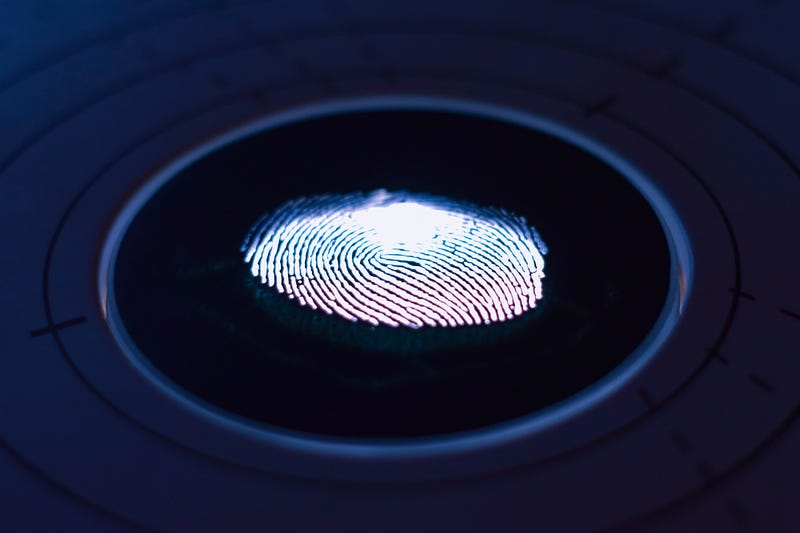
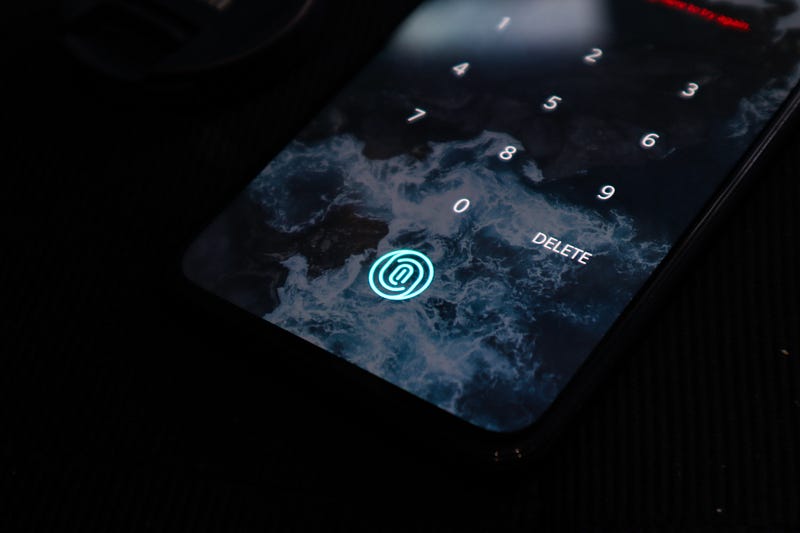
Modern day life now sees us using biometrics to gain access into our everyday routines. Most mobile phones and some Pc’s now have built in fingerprint and retina scans. This allows the user to log in to their desired devices without the need to remember any of their personal passwords. A piece of technology that is very much relied upon for its convenience.
The Smart Watch
‘Knight Rider’ makes another appearance with David Hasselhoff using an everyday watch to be able to communicate with his tech savvy, too advanced for its time, vehicle. - Knight Rider (1982), Directed by Glen A. Larson
The movie ‘Spy Kids’, shows what our life would be like as a spy. Imagine the idea of not only being able to use your watch as a cell phone but also as a way of gaining access to the internet. An idea that seemed so bazaar at the time has once again made its way into our everyday lives. - Spy Kids (2001), Directed by Robert Rodriguez
The announcement of the apple watch was first revealed in September 2014, and became available to purchase by consumers in April 2015. Now everyday consumers can message, phone, email, connect to the internet and track their fitness, all through a tiny little screen attached to their wrist, and of course it tells you the time.
Wherever the ideas may come from for today’s technology, it has most definitely made our lives more convenient. Maybe, one day in the near future, we’ll be able to take fully self-driving vehicles, with our entire life literally imbedded into our hands.
For now, let’s just sit back and relax. Who knows, someone out there may very well be working on another crazy, movie inspired tech gizmo. For any scientists and tech geniuses looking for inspiration, teleportation would be useful right about now. I could do with a quick trip from the UK to the Bahamas for some sunshine and Margaritas.


