
When Experts Bungle, Societies Pay the Price
Expertise without accountability is a threat to human progress
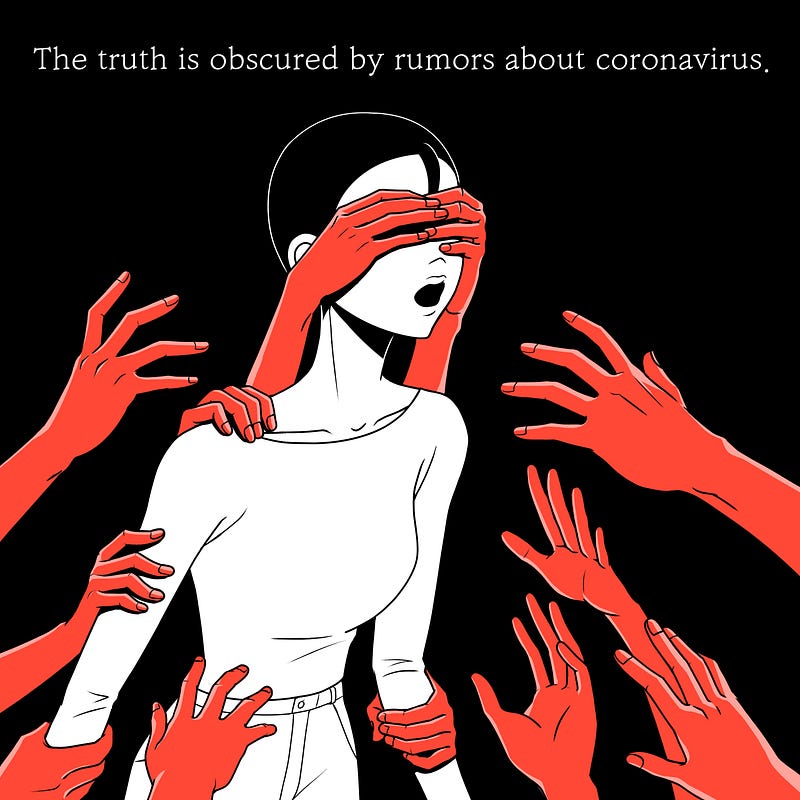
It’s easy to grasp why the public, and even the heads of state and other politicians trusted public health experts in a perceived public health emergency. But what of those experts? They created predictive models which are at best complex conjectures about future events as if they were data. And then, when the models flopped, they began to massage the data. To get past this catastrophe, we will need to forgive, but we should not forget. We should do whatever we can to dismantle such experts’ unchecked power over public policy.
(Jay W. Richards Ph.D., William M. Briggs Ph.D., Douglas Axe Ph.D., in “The Price of Panic: How the Tyranny of Experts Turned a Pandemic into a Catastrophe.”)
It is said the expert is one who knows more and more about less and less. The pandemic has exposed the low credibility of many experts. They underestimated its lethal nature, proffered banal and simplistic advice, and made people suffer needlessly.
Humility is never a strong point with experts. One rarely sees an expert admitting that they have committed a mistake.
Experts tie their identities to their domain knowledge. It makes it difficult for them to reconsider and reevaluate what they said earlier in the light of fresh evidence.
They seek certainty in an uncertain world. In doing so, they flout the fundamental principle of scientific enquiry which is the falsifiability of theories.
Science is more than a body of knowledge, It is a way of thinking; a way of sceptically interrogating the universe with a fine understanding of human fallibility, (Carl Sagan)
Outstanding scientists never shy away from saying, “I don’t know”, when they stare at uncertainty.
The expert international body on health, the World Health Organization (WHO) stands discredited today for several reasons. Its most serious failure was its delay in warning the world about the outbreak of the epidemic in China. The WHO acted as China’s accomplice in suppressing information about the outbreak of the Coronavirus epidemic in Wuhan.
The WHO Director General’s political beliefs reportedly aligned closely with those of the Chinese regime.
It is rudimentary knowledge that wearing face masks protects people from infectious diseases. When the pandemic broke out, some experts confidently proclaimed that face masks were unnecessary to protect ourselves against the virus.
The US Surgeon General’s March 2, 2020 statement in an interview:
One of the things [the general public] shouldn’t be doing is going out and buying masks. It has not been proven to be effective in preventing the spread of coronavirus amongst the general public … Folks who don’t know how to wear them properly tend to touch their faces a lot, and actually can increase the spread of coronavirus. You can increase your risk of getting it by wearing a mask if you are not a healthcare provider.
To his credit, the US Surgeon General later changed his view and advocated universal mask-wearing. He relied on the ambivalent recommendations of the WHO and the CDC when he spoke against wearing masks.
When experts express contradictory opinions in matters of public health, and that too in an emergency, they lose credibility and endanger people’s lives and livelihoods.
Experts have no skin in the game
If you give an opinion, and someone follows it, you are morally obligated to be, yourself, exposed to its consequences, (Nassim Nicholas Taleb, in his book “Skin in the Game”)
Skin in the game is about accountability for what one says or does. Many experts lack skin in the game. For example, economic experts advocate their preferred economic policies to governments. Nobody holds them accountable when their policies go terribly wrong and inflict suffering on the people.
What public health officials say and do will affect the lives of millions of people. They gain enormous powers in public health emergencies. They should have an arms-length relationship with experts who advise them.
Experts want the rewards but do not share the risks. This asymmetry exposed societies to unwanted and unexpected harm.
The experts who questioned the utility of wearing facemasks got away with their wrong advice.
Overconfidence is the curse of expertise
Experts get overconfident about their knowledge. This makes them overvalue their expertise and undervalue their blind spots. Overconfidence amplifies their cognitive biases.
Some experts thought the coronavirus was like the virus causing the seasonal flu. They extrapolated knowledge in one domain to another without first- hand knowledge of the second domain.
Experts’ obsession with models and studies
Models are guesses riding on the legitimacy of science. They can never approximate to predictable reality. The map can never become the territory.
“If you torture data long enough, it will confess to anything.”
(Ronald Coase, French economist)
The WHO favoured the untested apocalyptic model from Imperial College of London. The White House favoured the model of the Institute of Health Metrics and Evaluation(IHME) which exaggerated the fears of millions of deaths.
Why did experts prefer doomsday models? Experts like to save their jobs and reputations. According to co-authors, Jay W. Richards Ph.D., William M. Briggs Ph.D., Douglas Axe Ph.D.,:
“History shows that you will rarely lose your job making predictions if you’re wrong in the right direction. On the other hand, you may well lose it if you’re right in the wrong direction. Neither rulers nor subjects welcome the bearer of bad, but true, news.
Experts quote various studies to bolster their arguments. They ignore the fact that most studies cannot get replicated in subsequent studies.
“The facts suggest that for many, if not the majority of fields, the majority of published studies are likely to be wrong.”
(John Ioannidis, Stanford researcher of scientific studies)
Wrapping up
Always listen to experts. They’ll tell you what cannot be done, and why. Then do it. (Robert A. Heinlein, American science fiction writer)
The US and the world learned the hard way how contradictory and muddled expert advice can mislead rulers into framing measures that caused more harm than good to the people.
The media played a dubious role by amplifying expert opinions and whipped up hysteria about disaster scenarios. The American media was more interested in going after Trump than demanding accountability from the experts.
The people must think for themselves without being influenced by theories peddled by experts. They must be wary of media’s sensationalism and political biases and question the false prophets who made questionable predictions about the pandemic’s likely course.
People must demand that experts have skin in the game before acting as proxy public health managers. When expertise enters the public domain, it should subordinate private glory to public welfare. Expertise without accountability is a moral hazard for human civilization and an existential threat to humanity.
Thanks for reading!