
When Evangelicals tore books out of the Bible
The story of the “Apocrypha”
When you grow up Evangelical, you vaguely know about some “bad” books that Catholics and Orthodox and Eastern believers put in their Bible.
As the story goes, we were the good Christians, and only read whatever came straight from God. Now I’m looking up facts about some texts called the ‘Apocrypha’ that are typically dismissed by Protestants.
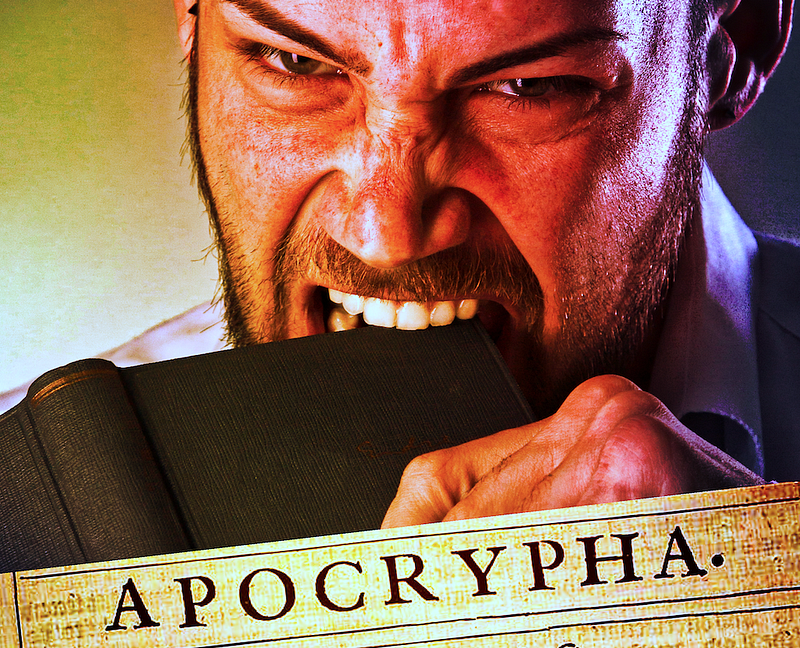
Even the name is misleading.
‘Apocrypha’ is from the Latin word for ‘hidden’ — which these texts have never been. Deeply rooted in Christian history, they are found in many early Christian copies of the Bible (Vaticanus, Sinaiticus, Alexandrinus, etc.).
How did later Christians realize they were ‘bad’? It’s not a story anyone will tell you in church. As the scholar Matthew J. Korpman puts it in a recent study: “There has remained for a long time now a presumed narrative about these books, one that is repeated with little contention.”
What you’d hear is that the great leaders of Protestantism—starting with Martin Luther—started getting messages from God that a few Bible books that Catholics had included were…suspicious.
They were called the ‘Apocrypha’, and after awhile, got booted out.
The reality is: Luther liked the ‘apocryphal’ texts.
He called them them “useful and good to read,” and included them in a section at the end of his Old Testament. That’s how they were handled, as well, in the Geneva Bible of 1557 and the King James Bible of 1611.
For the next two hundred years, Protestants widely considered them to be part of the Bible. The Bible for all Christians wasn’t that different.
To talk about the ‘Protestant Bible’ as having dropped the ‘Apocrypha’ is to refer only to a listing of books that was created in 1832.
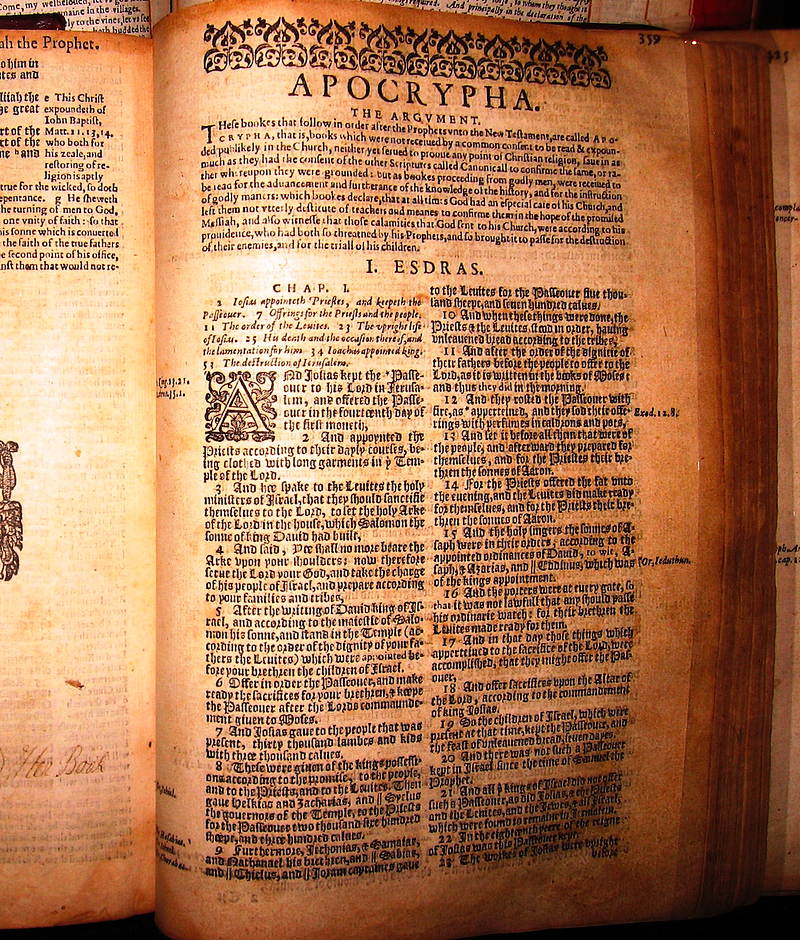
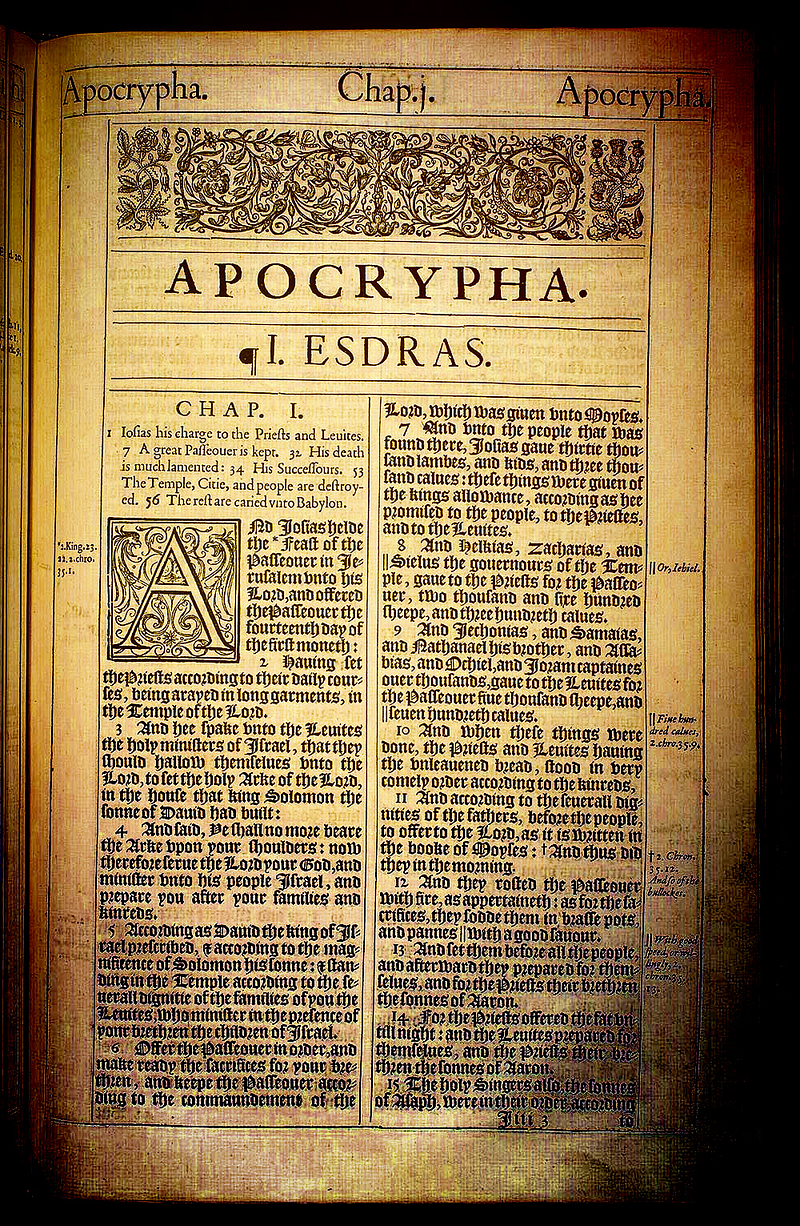
The ‘Apocrypha’ has a lot of stories about women.
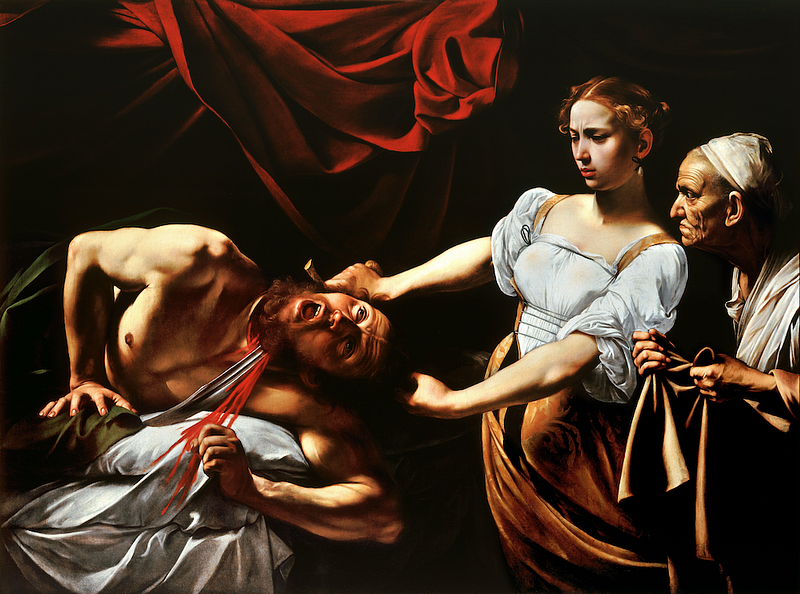
That was a bit surprising. Wasn’t the Bible mostly about men? But here was the book of Judith, about an Israelite woman who used her beauty to capture an enemy combatant and cut off his head.
The story has been a favorite of Christian painters. An empowered and dangerous female was just the type that God—and Caravaggio—liked.
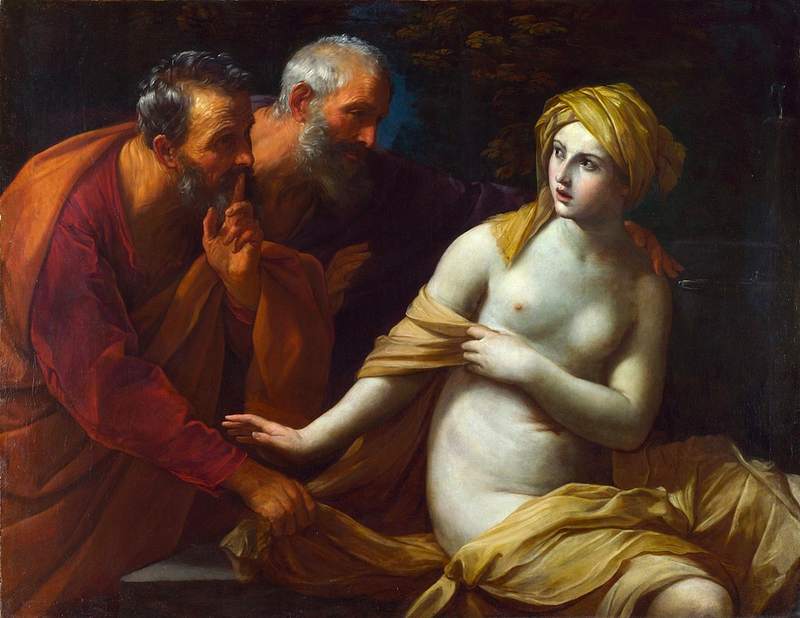
There was a story about a woman named Susanna.
Included in the book of Daniel, she was a beautiful woman bathing naked. This was a purification ritual, not her spa day. She’s observed by two Israelite guys who then pressure her to have sex with them.
She refuses, as they try to get her executed for adultery. Daniel, as an official of the king, shows up to demand the matter be investigated. Leave it to a eunuch to sniff out male sex evil!
The scene of Susanna being accused by the ‘Elders’ had been a favorite of Christian painters since the earliest days of the faith.
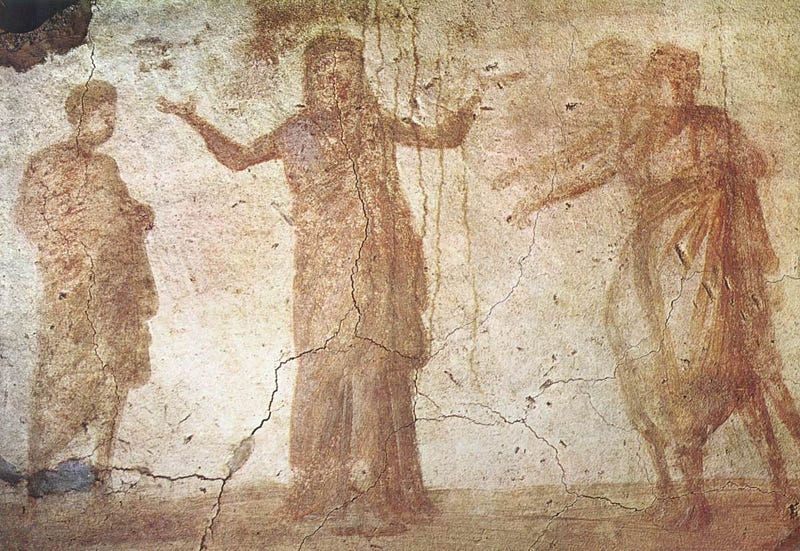
In Christian history there are many important paintings of Susanna.
As I looked over the depictions of a woman facing male obsession and injustice, I have to remind myself that Protestants might not even know who she was.
Then I began to wonder what the Protestant debate over the ‘Apocrypha’ was really about.
The ‘Apocrypha’ speaks of the woman named ‘Mother Earth’.
Back in church I didn’t realize that, in the Bible, the earth is seen as a woman. Now I can see this, for example, in Romans 8:18–23, where the Resurrection is described as the earth being in childbirth.
A female earth is found in many references throughout the canonical Old Testament, but Christian translations tend to remove them, as the scholar Terje Stordalen traces in a 2010 paper.
In the ‘Apocrypha’, however, a female earth is unavoidable. In Sirach 40:1–2, we learn that:
“…a heavy yoke is on Adam’s sons from the day of their exit from their mother’s womb until the day of return to the mother of all…”
Then there’s the woman named ‘Wisdom’.
When Christian readers see the word ‘wisdom’ in the Bible, they likely think about an abstract quality, a state of mind, likely gendered as male. But in the Bible, ‘Wisdom’ is one thing—and that’s a woman.
You might not realize it, when reading the ‘canonical’ texts, though it’s subtly there. When Wisdom is “loving” (cf. Prov 4:6; 8:17, 21; 29:3) or “embracing” (cf. Prov 4:8), as Annette Schellenberg notes in a 2018 study, the figure seems “erotically loaded.”
In the ‘apocryphal’ book of Sirach, the cues are unavoidable. The spiritual seeker moves from “loving” wisdom to being in her “inmost chambers” (4:14–15), where she is “revealed” or “uncovered.”
These are sexual terms. The seeker is having sex with Wisdom—who is seen as an aspect of God.
When the Dead Sea Scrolls were found in the 1950s, two copies of Sirach—in Hebrew—were found. There was also an alternate version that added an amazing scene: the seeker having sex with Wisdom, over and over.
“I burned with desire for her…”
Then there was ‘The Wisdom of Solomon’.
This might be the text in the ‘Apocrypha’ that’s most difficult to exclude. It is deeply attested in early Christianity since the first century. Ancient copies exist in many languages, from Greek to Syriac, Aramaic to Coptic.
Its ‘canonicity’ was affirmed in 1740 when an Italian historian published a document he’d found in a library. A single page of writing, to become known as the ‘Muratorian Canon’, described the Bible books that were read in Christian churches…around 100 A.D.
No Old Testament texts were even mentioned. But there was The Wisdom of Solomon, a long monologue by the Old Testament king about the great erotic pursuit of his life.
“If you really want Wisdom, then fall in love with her…” (6:17; CEV)
Solomon explains the whole Bible to you!
The core theological problem, we are told, is death.
“God created us to live forever, just as he himself does.” (2:23)
Death, Solomon says, is the key theme of biblical narrative since back in the Garden of Eden, when:
“…death entered the world because the devil was jealous, and so all his followers die.” (2:24)
This was startling to me. The language was so similar to Romans 5:12, where instead of “death,” we find the word “sin.”
Solomon re-tells all the stories of the Bible.
But it’s through an unexpected frame: a divine spirit of ‘Wisdom’ who was guiding humans. She’d guided Adam:
“She protected the first-formed father of the world, who was created alone, And delivered him from his own transgression…”
There is no idea here of a ‘Fall’ happening in Eden. There’s just Wisdom moving through the ages—ending up with Solomon himself.
Though Christians might then recall that odd talk about Jesus being the ‘wisdom of God’ (cf. 1 Cor 1:24, etc.).
‘The Wisdom of Solomon’ can seem to be a key to the whole New Testament.
Even Christian scholars suggest that it is quoted throughout the New Testament—allusions that Protestant readers would have no idea exist.
The book had incredible insights, like defining the strange word porneia, as is found throughout the letters of Paul. For Solomon it seemed to relate to idolatry, i.e. falling in love with the wrong gods.
“For the invention of idols was the beginning of porneia, and the discovery of them the corruption of life.” (Wisdom 14:12)
But Christianity said porneia meant ‘sexual immorality’.
Since the late 18th century, Bible scholars noticed Paul often references the Wisdom of Solomon. It’s particularly overt in Romans 1, a puzzling passage that seems to draw on another discussion of idolatry (cf. Wisdom 13.1–9).
But Christians said Romans 1 was about ‘homosexuality’.
Was Protestantism really about the Bible?
As far as I can tell, it was mostly about colonialism. The discovery of North America and the new idea that Africans could be enslaved meant that a vast amount of territory and wealth had become available.
Ergo…Martin Luther and a new, portable Christianity. Needed to keep everyone behaving properly, ‘Protestantism’ could be modified at will.
By severing all attachments to the Roman Catholic church, people who didn’t even disagree with it were able to spread out across the world, and govern new populations—while remaining ‘Christian’.
Protestants liked the idea of their own Bible, and the drive was to make it shorter. Martin Luther wanted to ditch many New Testament books, from Hebrews to Revelation. The epistle of James, he said, “has in it nothing of an evangelic kind.”
The ‘new’ Bible was intended to sign people up for the new religion.
Most Protestants did not wish to drop the Apocrypha.
As Matthew J. Korpman notes, the cut was made in 1832 by a British missionary group called the British and Foreign Bible Society. Their work was to print Bibles for colonized territories.
As a historian puts it:
“Although most British church people, including some evangelicals, found no fault with the inclusion of the Apocrypha, a vocal majority of the BFBS supporters insisted on its exclusion.”
The clincher arguments seems to have been that a new ‘Protestant Bible’, shorn of the Apocrypha, would be more easily distinguishable from the Catholic Bible, and cheaper to print.
That ‘the Bible’ would feel more male-centered, and lose references that would explain its basic terms—would just be gravy.
The emerging ‘Evangelical’ wing of Protestantism was taking over.
It seemed to be concerned with the great divine task of spreading the faith. The reality, however, was that this this put them in leadership of all Protestantism.
I look over the ‘apocryphal’ texts. The book of Tobit, as the scholar Richard Bauckham notes, seems to be “a parable of Israel’s story from exile to restoration.” Copies were found among the Dead Sea Scrolls.
The ‘Apocrypha’ seem to be texts that bridge the gap between what Christians call the ‘Old’ and ‘New’ Testaments. Unless the Bible was just a long, long story?
Protestants had no interest in the details.
They wanted you to sit, Sunday after Sunday, being told you’re God’s favorite—so long as you behave.
You were just another colonized subject. 🔶


