

When Dying Means Nothing To You
Every year a man tells me I am going to die.
Like every dutiful and guilt-ridden catholic boy, I went to Mass on Ash Wednesday. After the priest gave the sermon, he told the congregation to line up for ashes. Before Father Tim smeared a cross of ash on my forehead, he smiled and said,
Remember you are dust, and to dust, you shall return.
I have seen many Ash Wednesday services in my life. Those words should not be a surprise, but each time I hear them, I am shocked. I feel like a man on death row whose execution date was in an hour.
There is a finality to those words. A sense of desperation hangs heavy after being reminded of your mortality, but there is also wisdom in them.
Live your life now and be grateful for each sunrise, person you love, job, health, friendships, heartaches, and mistakes. Chase your dreams, start a business, go back to school, skydive, run a marathon, and make love on a baseball field, in an elevator, or a dressing room at Nordstrom’s. Don’t squander a minute. It is all yours.
While you’re living your extraordinary life, don’t forget you’re not the only one who will return to being dust.
When Your Life Doesn’t Matter
My daughter, Misha, was four months old when she was diagnosed with a malignant brain tumor. Her cancer wrapped in and out of her brainstem like the Loch Ness monster popping out of the water. It exploded from the pons region into the cerebellopontine angle and destroyed several cranial nerves. Before Misha turned one, scores of oncologists, neurosurgeons, and neuropathologists told my wife and me our baby would not live to see her first birthday. If by some miracle she did live, Misha will not be able to have babies of her own or be capable of caring for herself.
I was 27 years old when Misha had her first brain surgery. The day was June 9, and it was one of the worse days of my life.
My wife and I, family, and friends sat in the waiting room. The surgery was supposed to take two hours. It was three hours past later when the neurosurgeon and his physician assistant walked into the waiting room to discuss the surgery. When this world-famous doctor spoke, he could not, or would not, look at my wife or me. He just stared at the ground as he fumbled with the words.
“It is malignant. It’s worse than we thought,” the neurosurgeon said. He still could not look at us.
There was a silence that hung between the doctor and us. It stood like a mountain, impassable, frozen, and unrelenting. I did not have the strength to move beyond it, to ask the unaskable. But my wife was strong enough for both of us.
“Will my baby grow up? Will, my baby, live,” asked my wife.
No other question was more important except the one I asked next.
“Will Misha see Christmas?”
That was the first time in my life I bargained with God.
Please, God, give us six more months with our baby. Six months, 16 days to be exact. You can do anything. God give us that.
The neurosurgeon finally looked up, his eyes meeting mine for the first time. I can tell he had been crying.
“Take her home and make her comfortable.”

Remember You Must Die
Most people know the Latin phrase, Memento Mori. It translates to Remember Death or Remember You Must die.
The phrase is a solemn reminder to live a life of purpose and virtue.
The first time I read those words, I was 13 years old. Virtue and purpose meant nothing to me. Most days were a halfhearted attempt to survive the 7th grade, and if there were a God, He (or She) would have Michelle Woods (not her real name) think I was more than some skinny, big-headed dork who wore pants much too big for him and lost his ability to speak English whenever she was around.
This particular day was a Saturday morning. Like most weekends, I was in the library hiding from my parents. The night before, my mother thought beating me with a barbell expressed how she felt about parenthood and that I forgot to make my bed before going to school.
I lived in the library from morning to when it closed at 5 pm. While there, I challenged myself to read one book before the library closed. That day I read Muriel Spark’s novel Memento Mori.
The story is about a group of older, wealthy British aristocrats. One of the characters, Dame Lettie Colston, receives a series of phone calls in which the caller tells her, “Remember you must die.” The reader learns that all the characters get the same call, but each experience is different.
After finishing the book, I thought the title was appropriate to my life. I never believed I would grow old or live to any age beyond 13 or 14. Sooner my mother or father would abort the little experiment they called my life.
I made a promise to myself. If I were going to die, whatever the age, I would live as if there were no other moments. I drank each day like a man dying in the Sahara. Each drop of life was a blessing, and I chased each day like a demon possessing the innocent.
Where the average person would try to live a virtuous and purpose-driven life, I dived off the deep end. My days were drunken, loud, angry, and random. It was not the hero’s journey Joseph Campbell spoke of, but it was fun and dangerous.
Despite my parents’ best efforts and years of drunken runs to Las Vegas, 4 am parties, chasing women, fighting where I lost more than I won, I found a woman who loved me, who saw good in me. At night, as we lay next to each other, she would tell me, “I can’t wait to grow old with you.”
I was happy, but I forgot life’s one constant — the day we are born is when we begin to die, including the people we love.
There are only so many moments. Our lives are a line segment connecting two points, our birth, and death.
The stuff between the two points we call living. It is also our dying.
I had no problem with death. Then someone told me my daughter would die, and there was nothing I could do about it.
I didn’t care about my life, but hers was everything. Her dying felt like she was paying the price for my sins.
I wondered what Seneca meant when he wrote:
In the distribution of human life, we find that a great part of it passes away in evil-doing; a greater yet in doing just nothing at all: and effectually the whole in doing things beside our business. Some hours we bestow upon ceremony and servile attendances; some upon our pleasures, and the remainder runs at waste. What a deal of time is it that we spend in hopes and fears, love and revenge, in balls, treats, making of interests, suing for offices, soliciting of causes, and slavish flatteries! The shortness of life, I know, is the common complaint both of fools and philosophers; as if the time we have were not sufficient for our duties. But it is with our lives as with our estates, a good husband makes a little go a great way; whereas, let the revenue of a prince fall into the hands of a prodigal, it is gone in a moment. So that the time allotted us, if it were well employed, were abundantly enough to answer all the ends and purposes of mankind. But we squander it away in avarice, drink, sleep, luxury, ambition, fawning addresses, envy, rambling, voyages, impertinent studies, change of counsels, and the like; and when our portion is spent, we find the want of it, though we gave no heed to it in the passage: insomuch, that we have rather made our life short than found it so.
The great philosopher failed to explain one of life’s great injustices. What happens when death calls for a baby? How did the baby waste her hours away? Did she squander her minutes and hours on the frivolity of life?
Life’s Calculus
There is a simple kind of math to life, a calculus of addition and subtraction with the occasional differentiation and integration problem.
We add a friend or lose an employee. We differentiate our résumé from the other candidates or tell our clients the benefit of choosing our business model over the competition. Our children integrate into the social structure at their school as we try to be better members of society.
The calculus is not hard to understand, but finding solutions to our challenges, to juggle our wants and needs, commitments to friends and family, community, and job, is when life becomes difficult.
This unique sort of math hounds our motives. It weighs the cost of our relationships at work, in our cities, and families. It is easy to add more stuff. Life becomes more complicated when we lose who and what we care about.
When we waste our time in frivolity and matters of lesser consequence, pangs of regret shoot through our stomachs, and that’s when we try to bargain for more days and minutes. Even Lucius Annaeus Seneca, the wise Stoic philosopher, wanted more time.
I wish with all my soul that I had thought of my end sooner, but I must make the more haste now and spur on like those that set out late upon a journey “it will be better to learn late than not at all” though it be but only to instruct me how I may leave the stage with honor.
Our lives are frail, limited, and final. In so many ways, it is an exercise in cause and effect, of creating plans to fill up our bucket list, of loves found and lost, of regret begetting more regret. Sometimes in the midst of all of life’s crap, we win. But only sometimes.

Don’t Forget to Say Goodbye On Your Last Day
In the division of life, certain instances and stuff, or people will mean more to us in our remaining seconds than if we climbed Mount Everest, had 10 million followers on Twitter or Instagram, or wrote a hundred bestsellers.
Remember You Must Die is simple and less complex when only your goals matter, when it is only your life at stake.
What happens when someone tells you, Remember your daughter must die?
What then?
There are only so many moments. While figuring out the calculus to living an extraordinary and beautiful life, do not forget Memento Mori also applies to your family, coworkers, the barista at your favorite coffee shop, and friends.
Remember, they must die too. As awkward as it is to read, it is even harder to write.
Go ahead. Develop an app that will change the way we buy dog food. Travel around the world for two years. Write that bestseller. Fill up your bucket list. There is only so much time.
Remember, you will die, but so will the people you love.
Before it is too late, tell your husband you love him. Come out to your family. Live your truth. Adopt a child. Foster a dog from your local animal shelter. Record your baby laughing or film your parents holding her for the first time.
There are only so many opportunities to fall in love, make friends, or feed the hungry.
Don’t waste your precious few seconds on this planet waiting for the best time to live.
And Then One Day It Will All End
Misha grew up. Her cancer did not win. It was a struggle. She is deaf in one ear and cannot see out of her right eye. The tumor paralyzed the right side of her face. Her fight did not end with the brain tumor. When she was 20 years old, there was another bout of cancer. Misha won after 20 surgeries, tons of chemotherapy, and so much radiation that her skin fell off her face. She graduated from college, travels the world, and has a great life.
She lives.
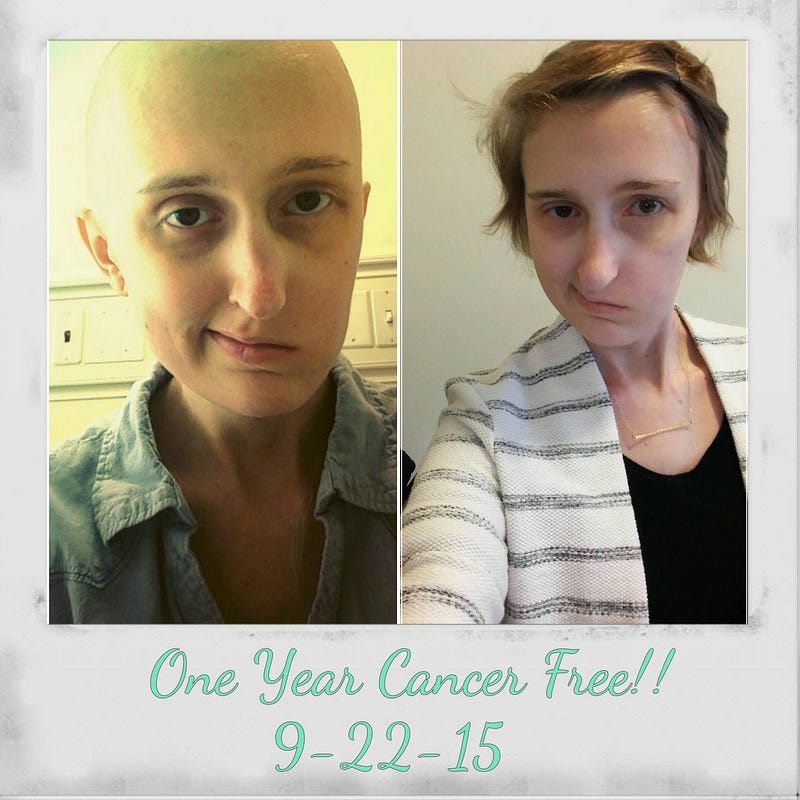
Once I believed knowing my child will die was a curse. I was wrong. It was a blessing of sorts, a reminder to celebrate her life, honor our memories together, and tell her I love her.
Every day I look at Misha and memorize every detail. I don’t forget. To paraphrase Ray Charles, I treat every day with Misha as if it were my last, ’cause one day I’ll be right.
So today, I remember I must die. But I cannot forget, so will everyone else.
What about you?
Do you know you’re dying?
Works Referenced
[1] Spark, Muriel. Memento Mori. McMillan. 1959.
[2] “The Project Gutenberg EBook, Seneca’s Morals of a Happy Life, Benefits, Anger and Clemency, by Lucius Annaeus Seneca, Translated by Sir Roger L’Estrange.” The Project Gutenberg EBook of Seneca’s Morals of a Happy Life, Benefits, Anger and Clemency, by Lucius Annaeus Seneca, www.gutenberg.org/files/56075/56075-h/56075-h.htm.