
When did covid first show up, outside of China?
The earliest proven covid case in China is Wei Guixian, a Huanan market vendor who got sick on December 10th, 2019.
She’s not patient zero, she’s just the first person that got sick enough to go to the hospital. Under the natural origin theory of covid, the first patient is probably a different market vendor who sold wild animals. They would likely have gotten sick in late November and some other people would have had mild covid cases before Wei Guixian got sick.
Under the lab leak theory of covid, the first patient would be a researcher at the Wuhan institute of virology and some early case then brought the virus to the Huanan market.
We do know that Wei Guixian is an early patient — the covid virus mutates, over time. The earliest covid cases had very little diversity and later cases had more genetic diversity. Genetic simulations tell us that there were likely only somewhere between 10 and 40 people infected with Covid around the time Wei got sick. If the virus started at the market, it had at most a few weeks to grow, before she got sick. If it was a lab leak, it quickly went straight from the lab to the market.
To disprove the market origin theory of covid, we’d want to see evidence of earlier cases who were infected before the market outbreak. Alternatively, we could look outside of China, to see if there are any signs that the virus had been in other countries before the market outbreak.
This search gets complicated, because every search for covid has a certain number of false positives.
It also gets complicated because this subject is political, both in the US and in China.
Perhaps you’ve heard that China is pushing the market origin theory to hide a lab leak?
That’s not true. The Chinese government actually claims that neither the market origin theory or the lab leak theory are true. They say that Covid started somewhere outside of China, and the virus is not their fault.
A 2022 Chinese paper suggested that Covid might have started in the United States, by pointing to a study on deer in the US:
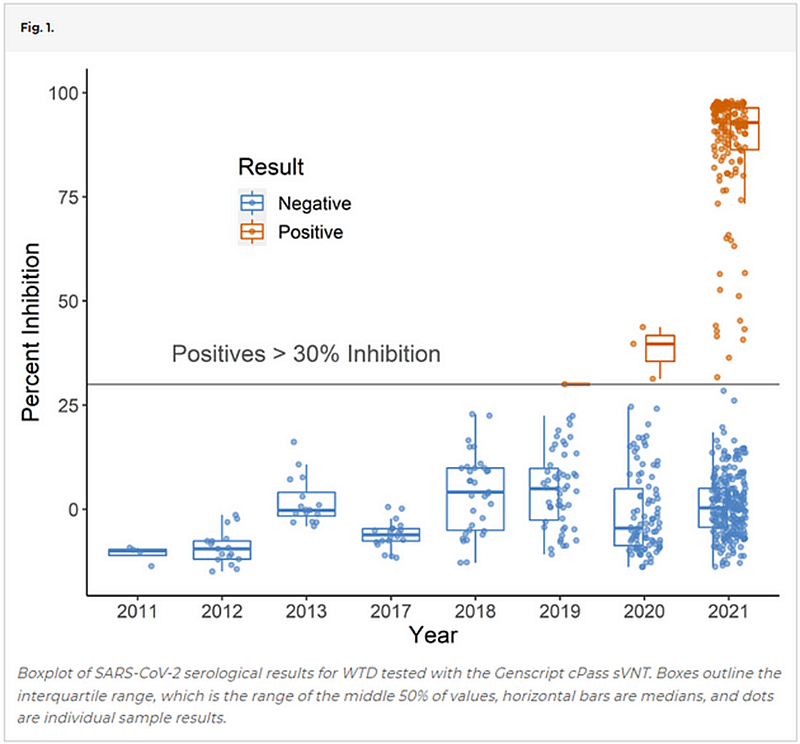
The study looked at whether US deer had antibodies which could neutralize covid. It defined 30% inhibition as a sort of arbitrary threshold above which a deer could be considered covid positive. Lots of deer in 2021 exceeded that threshold, as did several in 2020.
A single sample tested just barely at that positive threshold in mid 2019. That’s not good proof that covid was in the United States, but it did give China an excuse to blame other countries.
Many of the other studies aren’t quite this bad, but this is a messy subject. Every test has some inaccuracy, and some can be misinterpreted just like with that study on deer.
I’m of the opinion that Covid was not found anywhere outside of China before December 2019. But, as I said, it gets complicated. Let’s dive into the evidence from around the world..
Covid can be found in wastewater
Wastewater testing is a sensitive way to measure who is sick across a full population. Wastewater samples can show up positive before any patients do.
The earliest positive covid test I’ve found is from one sewage sample in Spain, from way back in March 2019:
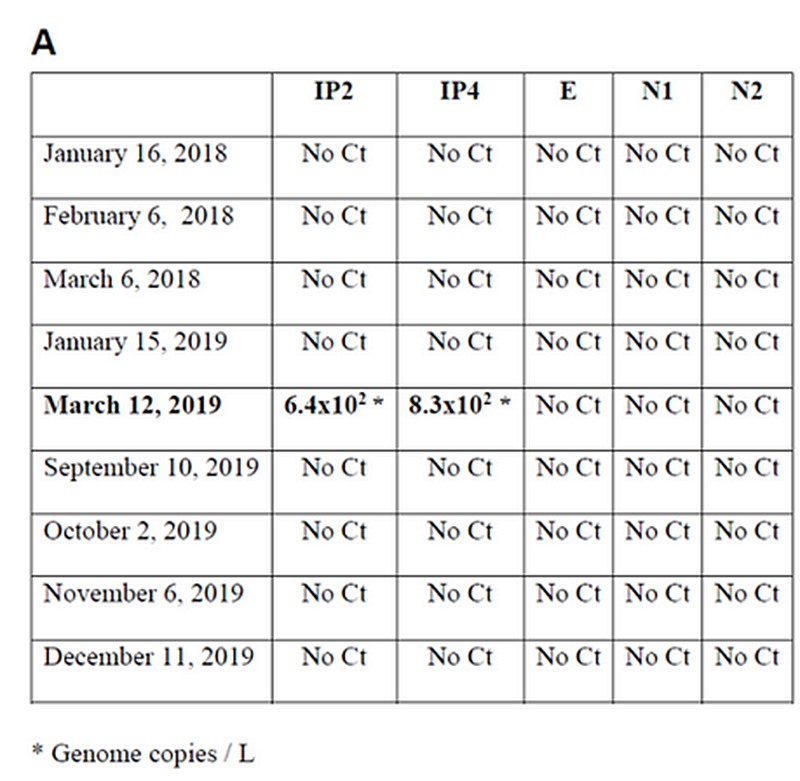
That doesn’t fit anyone’s covid timeline, so everyone on both sides of the covid origins debate agrees it’s a false positive. It only tested positive on 2 of 5 tests used, and all the other Spanish samples from 2019 tested negative.
The Spanish study did consistently find covid in sewage, after January 15th, 2020. That’s 41 days before the first diagnosed case in Spain. For many countries, that’s the pattern — the first hints of covid show up a month before the cases start.
A study in Italy found covid in sewage starting on December 18th, 2019 in Milan and Turin, and then on January 29th, 2020 in Bologna. It looks more likely that study is valid, they used a control group of October and November sewage samples, and those all tested negative. Italy started to report covid cases in February 2020. We know that covid made it from Wuhan to Beijing as early as December 17th, only a week after the first confirmed Covid case. It’s not impossible that Covid made it to Italy by then, but this seems a bit too early. Some scientists question the December 18th result, because the group invented their own test instead of using a standard one.
For other countries, it’s harder to say. In Iran, an early hotspot for covid, no one looked until June 2020.
The earliest studies for France didn’t look until March 2020 when there were already lots of covid patients. The wastewater tests were all positive.
Tests in Japan didn’t start until March. Most of the tests there were negative, except for one in April. Japan mostly controlled the virus:
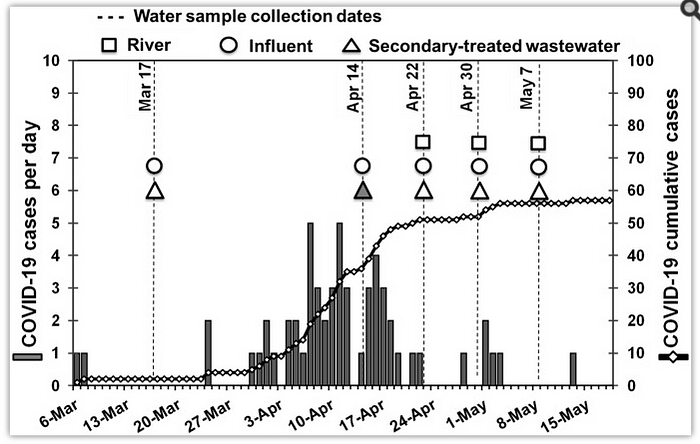
One study in Australia tested wastewater a few times between February and April. 2 out of 9 of those samples were negative, even though it was during the time that there were some diagnosed covid cases. Like Japan, Australia controlled covid so well that it was hard to find in the water.
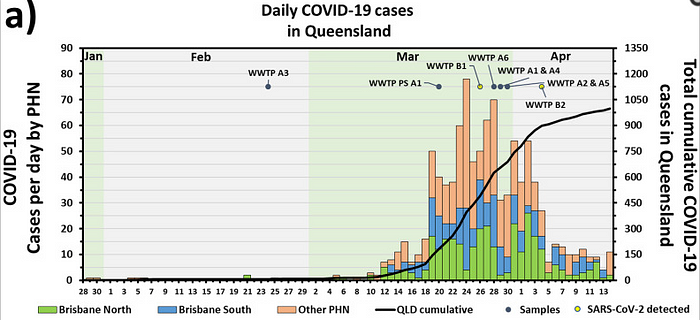
In one US study, wastewater in Louisiana tested negative in January, February, and March, before testing positive in April 2020.
So, covid was not everywhere in the world in early 2020. It had possibly made it to Italy by mid-December 2019, but it was not in every US state until spring.
Most of the results are consistent with a November origin in China.
There’s one wastewater study that stands out as surprising. A study in Brazil found covid RNA going back to November 27th, 2019:
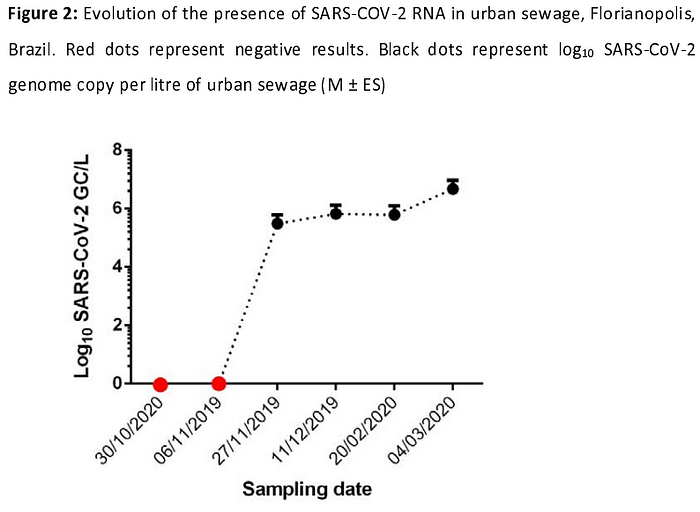
That’s 90 days before the first diagnosed case in Brazil.
At first glance, it seems like this can’t be a false positive, because every sample after November also tests positive.
In the US house GOP report, the Brazilian study is cited as proof that athletes from the military games in Wuhan spread covid all over the world in October 2019. But they’ve picked the one study that stands out, the Brazilian study is an outlier that’s not reproduced anywhere else in the world.
So, what went wrong here?
It turns out that the Brazilian result is a case of lab contamination — the covid RNA found shares mutations with strains seen later in the pandemic, strains that would have been prevalent at the time that the lab tested the sample.
Labs rarely make the effort to confirm that their lab is clean and covid free before running tests. I’ve seen one other example where a lab tried testing their lab, outside the samples, and discovered the lab was contaminated.
We can also look for covid antibodies in blood banks
There are positive antibody tests in Italy, from September 2019. A tabloid newspaper offers this timeline:
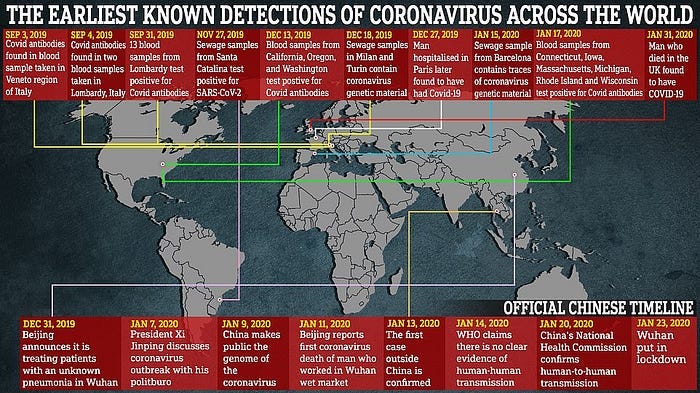
These tests also run the risk of false positives.
The September study in Italy looks highly questionable, just from a common sense perspective. Take a look at the graph and think about the patterns here:
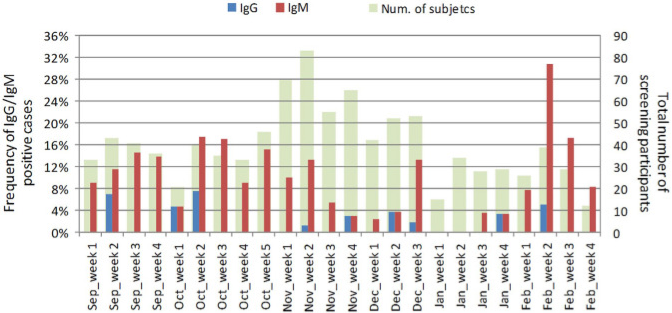
They think 8% of Italians were covid positive in September, 16% in October, 0% in January, 30% in February, and then only 8% again when covid really started to take off in Italy.
In reality, covid spreads exponentially. It starts at zero, then grows quickly after it hits a new city. Within a month or two, a lot of people die and that city usually goes into lockdown. Covid can’t just float around at 8% prevalence for months without growing.
Another group came along and did a more scientific critique for why that Italian paper may be wrong. Both the IgM and IgG tests they used are probably inaccurate.
Another paper from Italy tested saved samples from patients with morbilliform illnesses (i.e. measles). 11 out of 44 samples tested positive in the pre-pandemic period, the earliest one in September 2019:
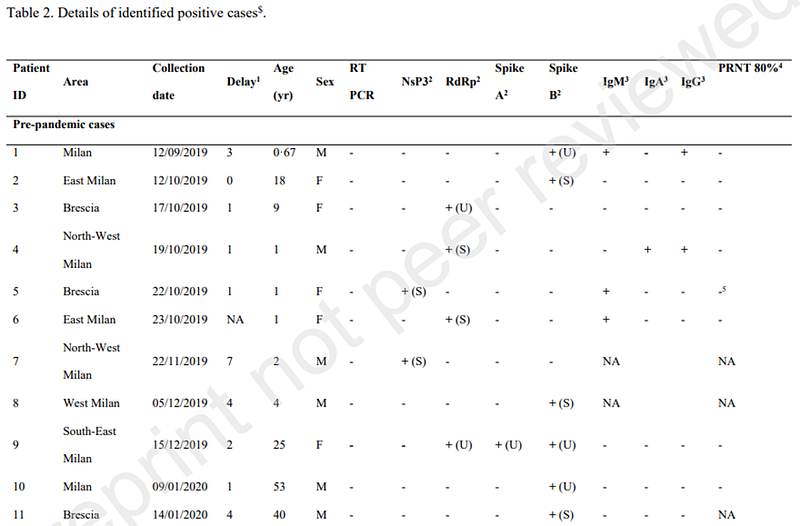
Michael Worobey wrote a thread explaining why these are almost certainly false positives from lab contamination.
The covid sequences found in these samples again have the same mutations as strains circulating in spring 2020. The authors took an interesting response and instead came up with a theory that the spring covid strains had been circulating for months:
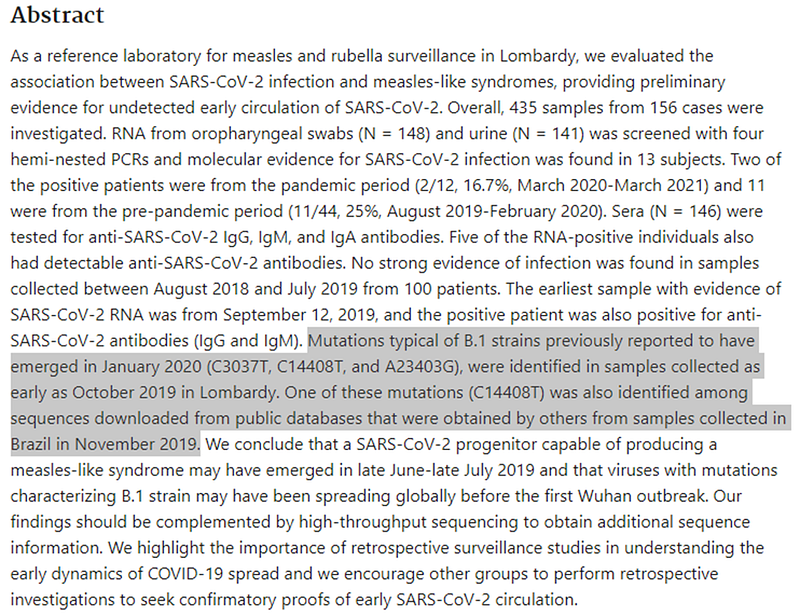
Again, it should be intuitively obvious that 25% of positive samples is a very high rate, and that it’s extremely unlikely that 25% of patients in Italy were sick in September without the virus being detected. If it had, the virus would have grown exponentially around the world in the following months.
A more likely timeline is that covid reached Italy by December or January.
In the United States, the first known covid case was near Seattle, on January 19th, 2020, in a man who had just travelled to Wuhan. 8 out of the next 10 US cases had also travelled to Wuhan.
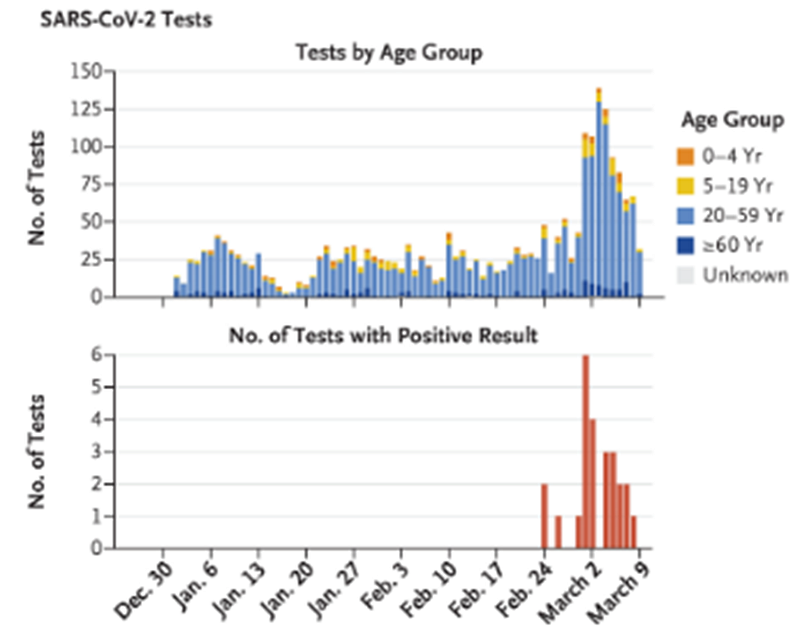
The Seattle flu study tested stored cold and flu samples going back to the beginning of 2020. Covid didn’t show up in the samples until late February:
The red cross tested donated blood, and found covid antibodies from December 13th — 16th in blood samples from California, Oregon, or Washington.
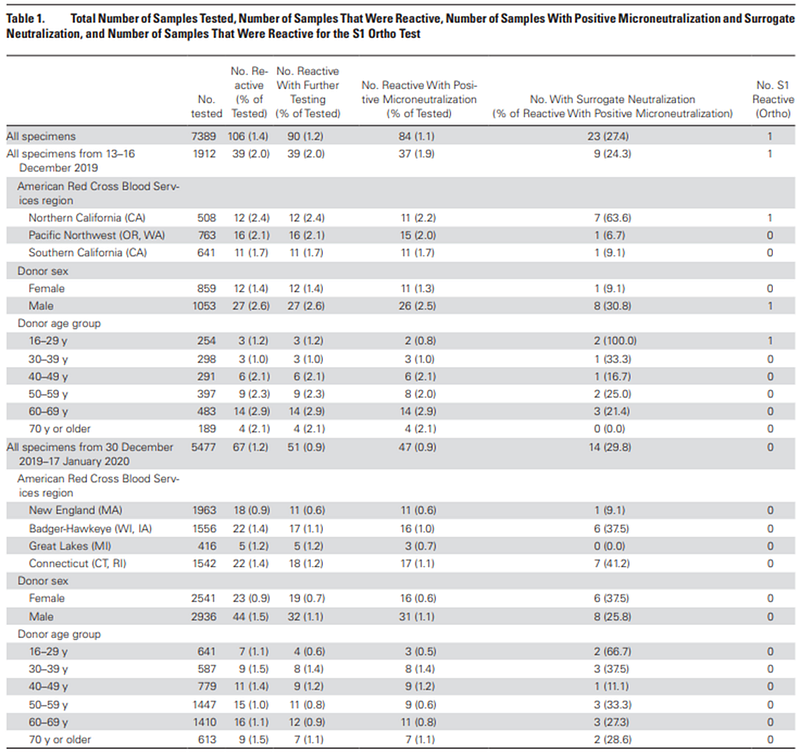
The report makes it clear that these are most likely cross reactive antibodies from other viruses, not real covid positives — in any blood bank in the world you’ll find a similar low rate (1–2%) of people with cross reactive antibodies, left over from other coronaviruses. The authors wrote:
A key question raised by these findings is whether the detection of reactive antibodies in these specimens from December and January indicates infections with SARS-CoV-2 in the US population earlier than currently recognized. As the COVID-19 epidemic has evolved, several serological assays for the detection of SARS-CoV-2 have become available to determine whether persons may have had previous infection. One recent report described cross-reactive serum antibody responses between SARS-CoV-2 and a small proportion of common human coronaviruses, particularly OC43, when using ELISA. Neutralizing activity in sera from individuals with prior common human coronavirus infections has been described against SARS-CoV-2, specifically targeting the S2 portion of the S protein. The S2 subunit of the spike protein is more conserved across coronaviruses and thus may play a role in the cross-reactivity observed during ELISA testing when the whole S protein is used as an antigen. The S2 region is involved in membrane fusion, and cross-neutralizing monoclonal antibodies from SARS-CoV-1 have been identified that bind S2.
A study in the UK confirms this by testing samples from May 2018 and May 2019. They also found reactive antibodies in a small percentage of people:
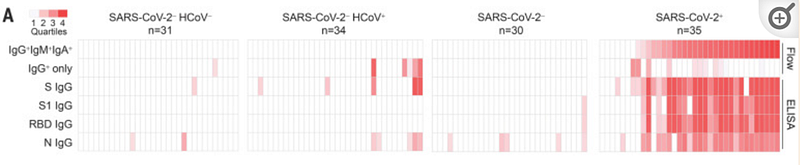
This has something to do with cross-reactive antibodies — Covid was not circulating the world at a 1–2% level for 2 years.
There’s also a Norwegian study on Covid seroprevalence in pregnant women, that found a 1 positive in December 2019:
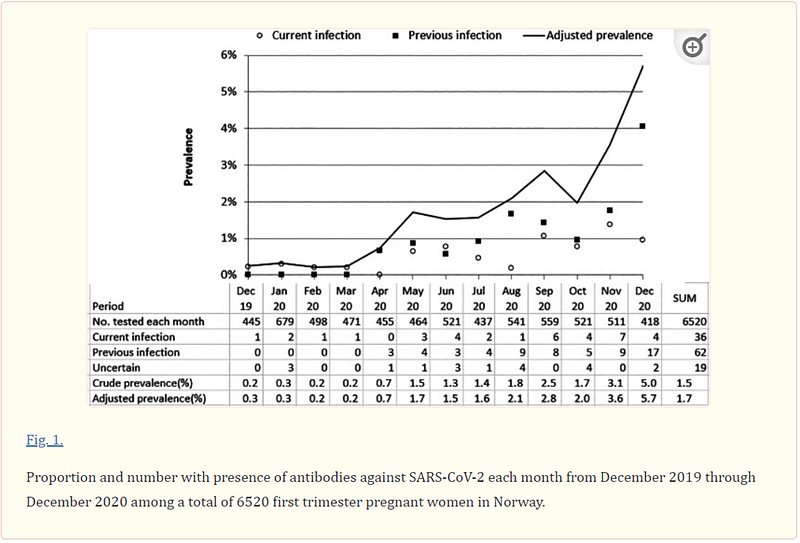
That’s 1 woman that tested positive out of 445, or 0.2%.
The test manufacturer stated their false positivity rate was 0.17%.
It looks like there may actually be no true positives here until April 2020.
Positive tests were confirmed by a second kind of test. All the early positives failed the second test.
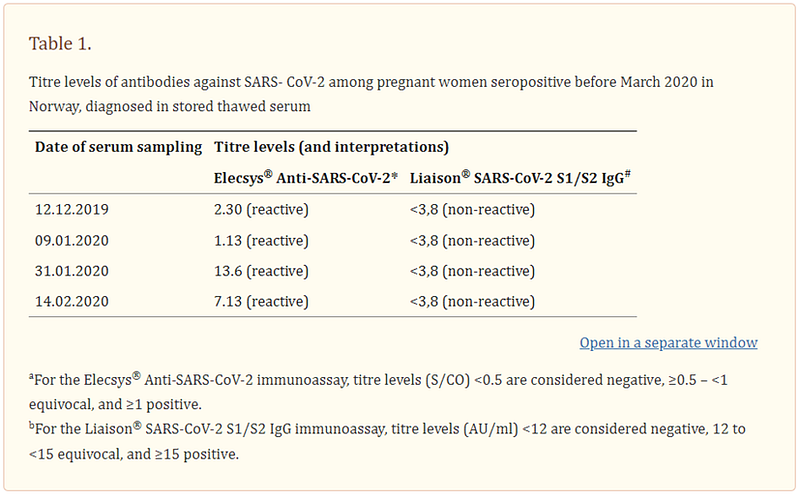
The researchers interpreted these as “current infections”, but false positive seems more likely.
Google Trends can also show us when Covid arrived
Finally, we can look at Google trends to see the spread of the virus. People with covid sometimes search to see why they can’t smell. These search trends pop up in every country. We see the signal first in Iran, then Italy, then Spain, then the UK. That’s the same order in which diagnosed cases hit those countries.
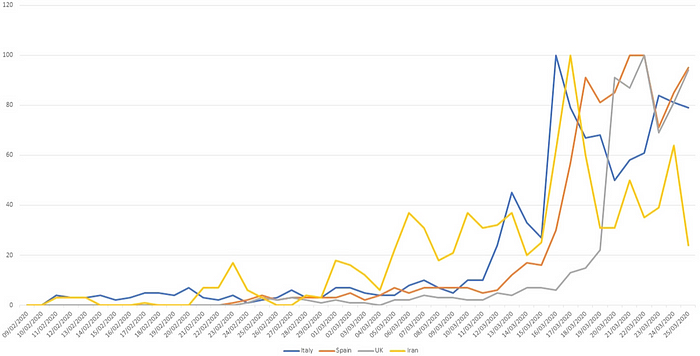
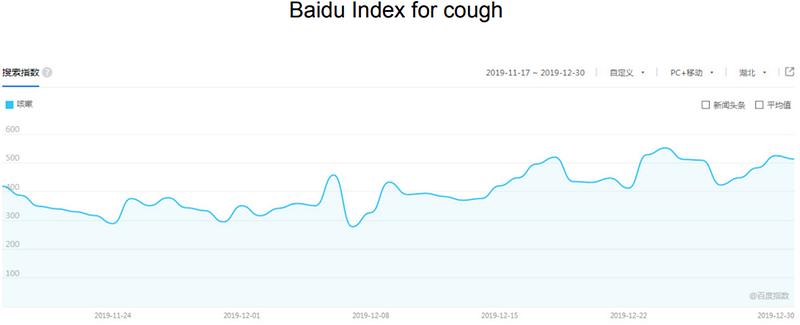
These searches don’t start trending up until February and March 2020. This is too crude of a method to find the first case in each country, but it does prove that covid was not widespread outside of China before February 2020.
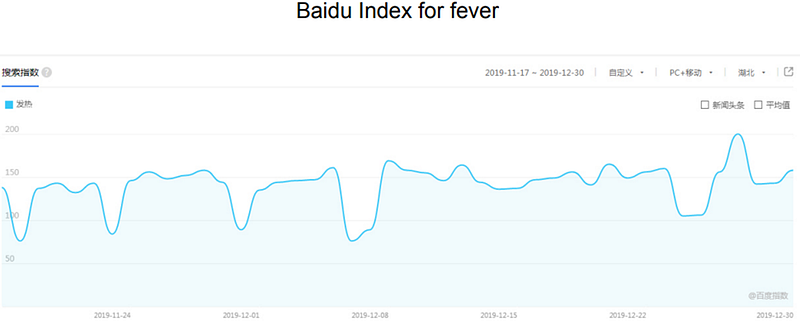
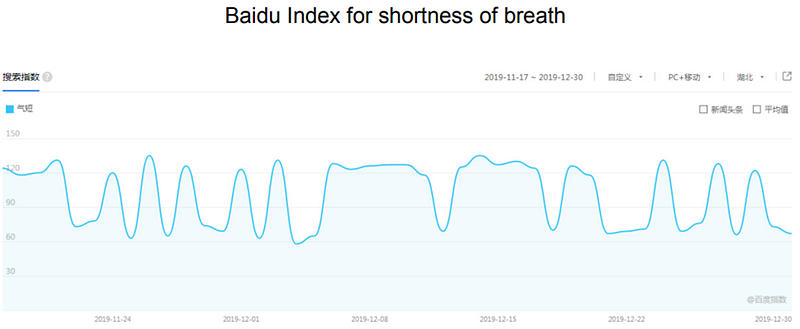
People in China use Baidu instead of Google. I couldn’t find any data on Chinese people losing their sense of smell, but I did find some data on searches for other topics, like people searching for cough:
or fever:
or shortness of breath:
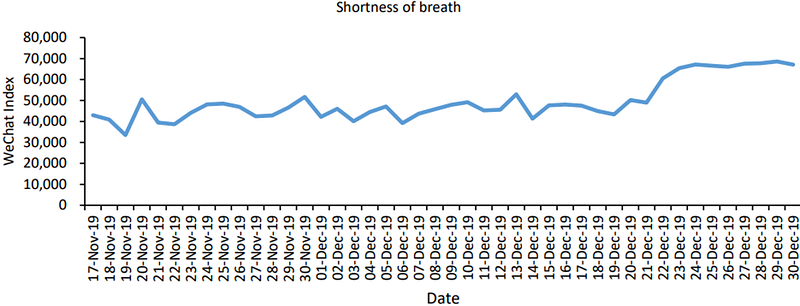
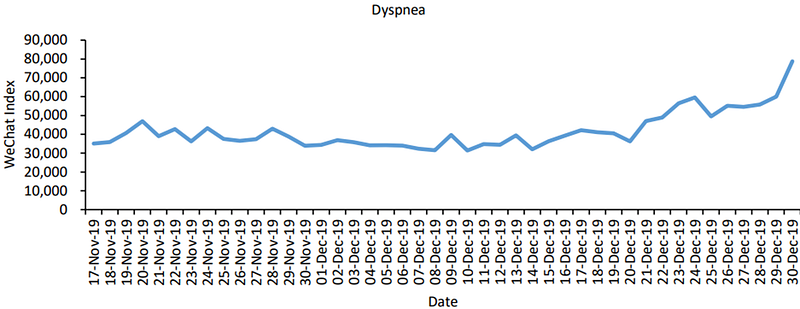
There’s maybe a small uptick in “shortness of breath”, in WeChat, near the end of December:
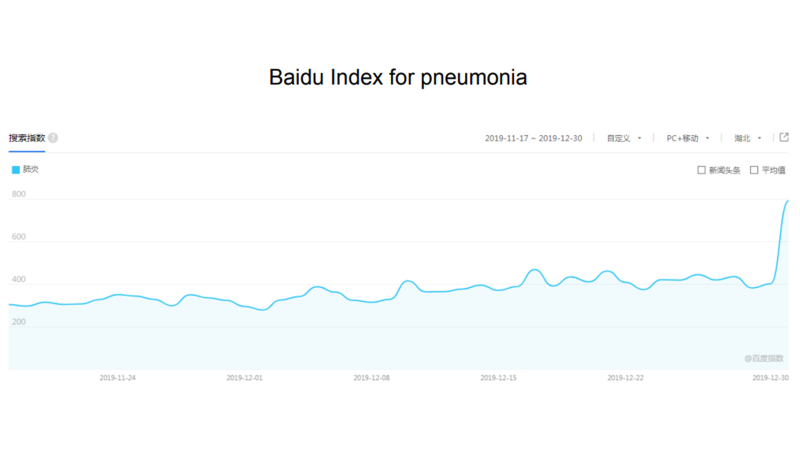
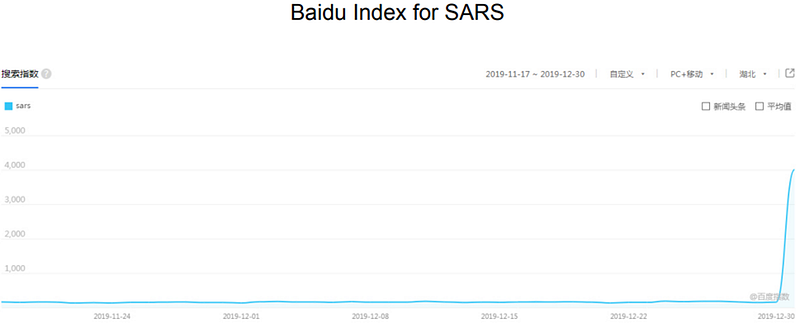
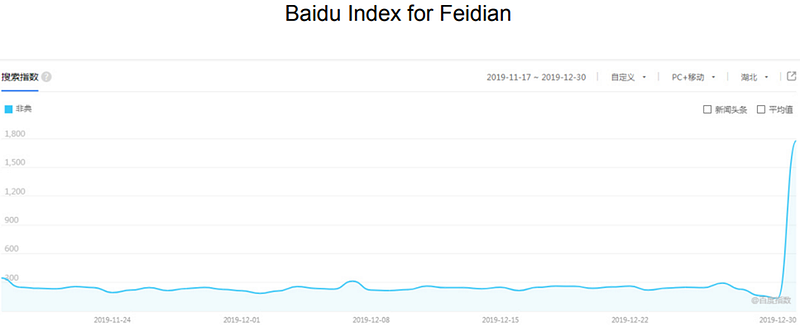
On December 31st, Covid is publicly announced in China and elsewhere, and people start searching for pneumonia, SARS, and Feidian (the Chinese term for SARS):
Finally, I want to point out this is another case where the lab leak theory is inconsistent.
In my criticisms of the lab leak theory, I’ve frequently pointed out that there is no single lab leak theory, there are many separate theories that frequently contradict each other.
Some lab leakers point to these (false) positive samples around the world as proof that Covid was circulating earlier. They think this proves Covid was a lab virus because they think it showed up before the market outbreak.
They’d be right, of course. If there was a clear sign of Covid outside of China, before December, it would give doubt to the market origin theory of Covid. But it wouldn’t necessarily prove that Covid is a lab leak, it could just mean that Covid was a natural virus that was floating around before the market outbreak.
Lab leak scientist Steven Quay looks at this all the opposite way, and points to the lack of earlier positive covid samples as proof of a lab leak. He thinks that natural viruses should always have lots of diversity and only lab leaks show a single introduction (or a double introduction, in the case of Covid at the Huanan market). Both are using motivated reasoning to start with the lab leak conclusion they want and then interpret either the presence or absence of evidence to support it.
This is one of the things that makes the lab leak theory hard to argue against — there’s always some new version of the lab leak theory which can incorporate new evidence into a different story.


