
When Cultures of the World Dance With You
A story of an Eastern European guy who worships a Hindu god
A sharp August sun makes my banging hangover after a farewell party even worse. I try to ignore it because this moment is very important. I don’t know it yet, but it will stay with me forever. A row of Indian men, women, and children stretches in front of me. The subject of their interest?
Me.
It is the end of the international folklore festival in my hometown and I am a guide of this group from Gujarat in India. During the past six days, we spent every waking hour together. That is a lot of time since sleep was the last activity on our list of priorities.
Right now, they have lined up to hug me, express their gratitude, and say goodbye. Maybe forever. The last in line is a man in his sixties, a leader of the group. We spent many hours discussing politics, religion, spirituality, but also my dreams and plans for the future. I am 22 years old and in awe of this man’s aura.
“Thank you for everything, Jan. We will never forget your hospitality and this beautiful festival. Here, this is a token of our gratitude.” He says those words with tears in his eyes, hugs me for one last time and joins his group on the bus, which takes them to another festival on their European tour.
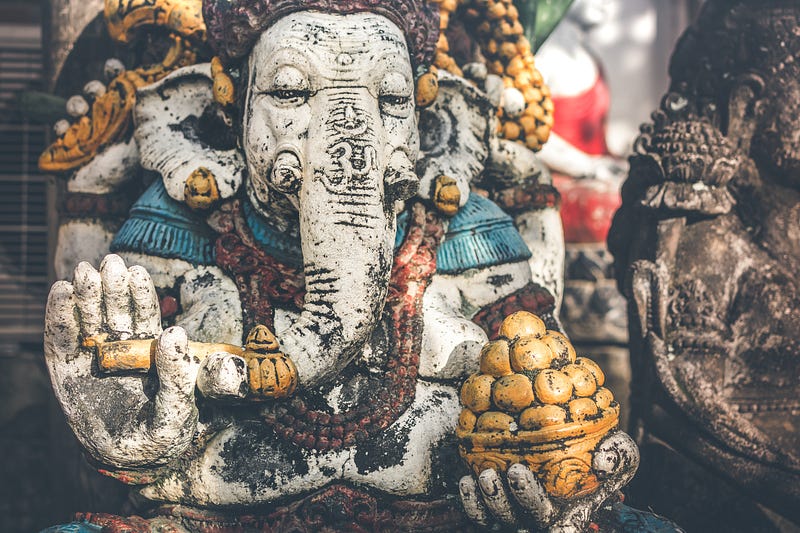
I wipe out the tears, open my hand, and stare at the weird statuette. It is attached to a little chain with a bunch of jingle bells; it looks like a circus thing. The statue is a cross-legged human figure with a big belly and elephant head.
It is Ganesha.
Remover of my obstacles
A son of Shiva, God of Destruction, and Parvati, The Mother Goddess, Ganesha is one of the most worshiped deities in Hinduism.
There are many interpretations of his elephant head origin. The most recited one starts with Shiva departing for a long journey, leaving Parvati alone and yearning for a child to keep her company. So she sculpts a small boy from sandalwood, turmeric, and pieces of her flesh. One day, when having a long bath, she asks him to guard the gate and stop anyone who would try to enter. It is the day Shiva returns from his journey.
Angered at a daring boy who prevents him from seeing his wife, Shiva cuts Ganesha’s head off. Despairing Parvati rushes out of the bathtub and orders Shiva to use his almighty powers to save their only son. With time running out the Lord of Destruction promises to bring her head of the first creature he encounters. When he makes his way through the jungle, a majestic elephant walks out of the bush.
This is how Ganesha, The Remover of Obstacles, is born.
He is the god of wisdom, knowledge, and beginnings. Young and old seek his council whenever they embark on an uncertain journey, or when they launch a new enterprise. They ask him to remove the obstacles from their path, both literal and figurative. Since he is a cunning being, often, he removes them by placing them straight in front of us — with this approach he challenges us to overcome our limitations and become better.
He inspires us to remove those obstacles ourselves.
He is also a patron of letters and writing; his enormous ears make him a sensitive listener, a quality he shares with every good writer. In his elephant head, he can store all of our stories, think them through, and then provide advice to those who seek his help.
As someone who has always been fascinated by words, I was instantly hooked by Ganesha’s remarkable story. This potbellied elephant boy became my friend, my mentor.
Whenever I face a crucial decision, I take the little fella in my hands, rub his belly, and kiss his trunk. This is my ritual.
So how does a guy from the Czech Republic, who has never been in India, become a worshiper of a Hindu deity?
A melting pot of cultures
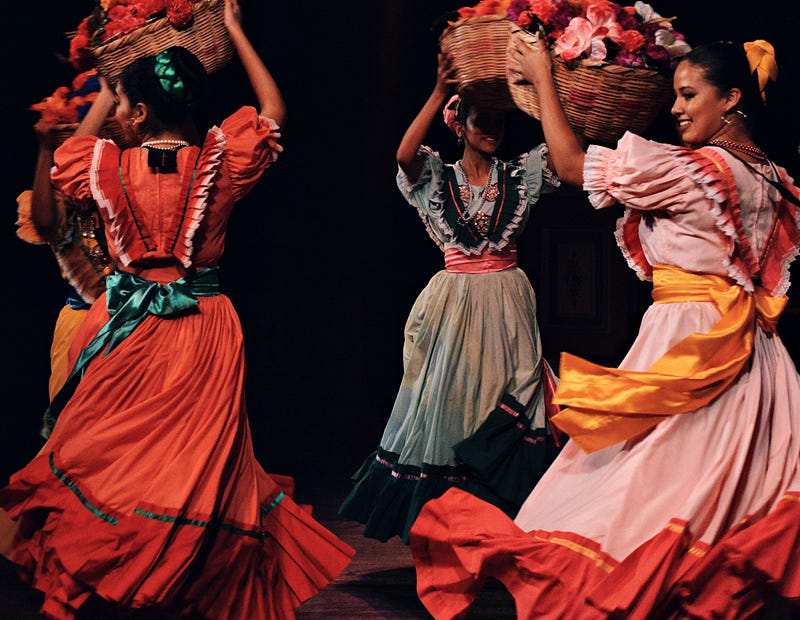
The opening scene took place eight years ago. As a dancer of the group, which organizes the festival, I guided the foreign participants since I was 16. And as a guy with the best English from all the organizers, I always took care of the most exotic groups — the Polynesian Cook Islands, New Zealand, India, Mexico, Congo, France, or Croatia.
Many other groups from all around the world participated during the years. Each day of the week, dancers and musicians perform for the excited audience in various city districts. When the sun goes down, all the groups hang out at the dormitory.
It is an incredible cultural melting pot. People of various ethnicities, religions, and cultural backgrounds dance, sing, discuss, and drink together. Sometimes two young souls fall for each other and go intimate. No matter the age, everybody is having the time of their lives.
All representatives of their culture and at the same time fans of others.
From a myriad of beautiful memories, one will always stand out for its purity. We hosted groups from both Croatia and Serbia. These two nations used to be part of one country called Yugoslavia and since its breakup and following bloody war filled with atrocities, they’ve had an unstable relationship.
Before the festival started, all of us organizers were wary of potential disagreements between the groups.
I will never forget that night in the bar. Twenty young Croats singing their lungs and hearts out in unison with their Serbian brothers and sisters. They stopped right in the middle of one song, everybody held hands, bowed their heads, and began to pray.
Since Croats, Serbs, and Czechs are part of the same ethnic group, Slavs, I understood their prayer.
“God, we promise to never repeat the mistakes of our fathers and mothers. We want to live in peace and harmony with each other, not in war.”
Not a single eye in the room stayed dry.
We are all one
Being part of this festival has been one of the best things in my life. The experience of travelling to another country and soaking up the culture is irreplaceable, there’s no denying. But this festival brought the entire world right to my doorstep.
It taught me not only to tolerate other cultures but to embrace them. That’s why I worship my Indian, elephant-god friend. It showed me that although we are born in different corners of this beautiful planet, raised in diverse cultures, worshipping often conflicting gods, in the end, we are all the same.
We all deal with the same sorrows and problems. Sometimes they are trivial and forgotten the next day, other times they are existential issues.
We also share the same joys. When music rings around the courtyard, we all want to dance. When dozens of voices sing a catchy tune, we join in even though we don’t know a single word in the language of the song. When someone we couldn’t take our eyes off for several days smiles and winks at us, we melt like ice cream in the sun.
We are all from the same matter. We are all one.
Be it Maori, Indian, Peruvian, Mexican, Congolese, Filipino, Russian, Italian, or a fellow Czech; we have always found something we share, a topic that would last for a bottle of wine or more.
Every time the festival week ended, I cried. I wanted it to last forever. The sadness evaporated after a couple of weeks (that’s right — weeks, not days) and gratitude took its place. I realized not everybody has such a unique opportunity to welcome the whole world at their home and absorb the best from multiple cultures.
The annual International Festival Folklore Without Boundaries in Ostrava, Czech Republic made me realize one thing that will stay with me for the rest of my days.
We are all united in our variety.