
IoT — Internet of Things
When Can We Expect A Wearable Coronavirus IoT Device
And how would it work? A brief review of the current possibilities and research being done in the field of IoT.
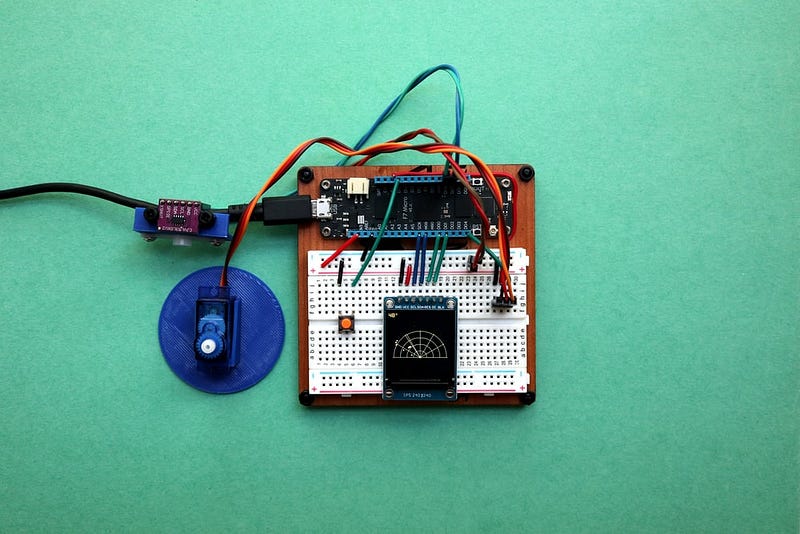
Imagine a wearable device that detects, early signs of Coronavirus infection. It can be a breakthrough in the detection and monitoring of cases worldwide. A device like an Apple Watch or a Fitbit smartwatch that is programmed to detect Covid-19 symptoms. Although the idea behind it is technically applicable, most detection systems currently being performed are through the use of thermal scanners. But that doesn't necessarily give accurate results as body temperature is subject to change due to any number of reasons and not just because of the virus.
Perhaps this device could even connect with the cloud, and monitor sickness symptoms with a wide array of data streams of Covid-19 patients showing similar symptoms. It might even prompt patients to quickly take action to consult with their doctor or medical services in mitigating the underlying effects of the virus.
Researchers recently(May 2020) from Northwestern University and Shirley Ryan Ability Lab have created a sensory device that can be applied like a band-aid, towards the user’s neck. It gently sits on the user’s neck monitoring cough fever(temperature) and respiratory activity. The device is designed tailored with specific algorithms that detect early signs and symptoms of coronavirus.
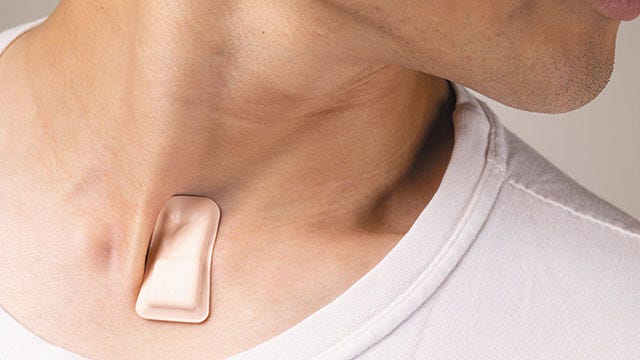
This accessible device which is at most the size of a band-aid sits under the suprasternal space i.e. the visible hollow space at the base of your throat. From this specific position, it aims to identify & monitor coughing intensity patterns, chest wall movements (which indicate laboured or abnormal breathing), respiratory vibrations, heart rate and body temperature, including fever.
From there, it transmits data wirelessly to a HIPAA-compliant cloud, where automated AI algorithms produce graphical reports tailored to aid accelerated, remote monitoring of Coronavirus symptoms.
The devices were engineered at a laboratory at Northwestern, using custom algorithms created by Shirley Ryan AbilityLab scientists. The devices are currently being used in a study at Shirley Ryan AbilityLab by Coronavirus patients and the healthcare workers who treat them.
So far they have implemented the device on 25 of their active Coronavirus patients for more than 2 weeks and collected more than one terabyte of patient data, which was timed around 1500 cumulative hours. These results have allowed their AI-driven algorithms to learn and improve upon the detection and monitoring processes.
“We anticipate that the advanced algorithms we are developing will extract COVID-like signs and symptoms from the raw data insights and symptoms even before individuals may perceive them,”
— Arun Jayaraman, leading research scientist
It significantly improves the monitoring of patients from hospital to home. As the doctors can monitor the incoming data through a cloud interface, thus increasing the chances of Coronavirus responsive detection even before the individual realizes that there is one. As the device can pick up symptoms even before the frontline workers can notice them. Thereby allowing healthcare professionals to engage in precautionary measures and to seek further testing as soon as possible.
But How would it work? And Are there any alternatives?
Much of the study, talks about what it does but doesn't clearly explain how they do it. The technical specifications of the research and deliverable are confidential. Although they claim, that the data they are collecting is HIPPA compliant — there is still a cloud of the mystery of how the sensor actually works.
For example, initially, the sensor was created for stroke patients. The new device is created through a collaborative research effort between researchers from Northwestern and Jayaraman’s Labs. These sensors function by accurately estimating vibrations from the throat and chest. By covering fluctuations, the device bypasses noise from background sounds and thus significantly decreasing privacy concerns.
But there is no detail on what the sensor is made of? Are they using a prebuilt sensor like The MLX90614 — which is an infrared thermistor for noncontact temperature scanning and monitoring?
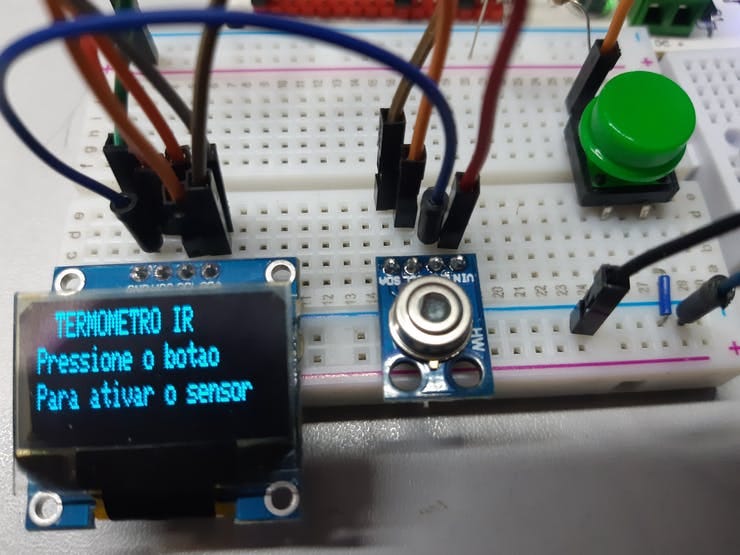
Most of the Coronavirus temperature scanning devices, thermal scanners are comprised of this sensor. They are built around this sensor to detect average temperature spikes most Coronavirus patients have.
This sensor can be easily programmed to create a wearable device that can detect and monitor temperature using a datalogger program that then connects with a cloud database that monitors and cross-references data points of patients to deliver results. Easier said than done, right!?
Well to be fair, the device they have built is mostly dependent on temperature, respiratory & heart rate data insights. As they haven’t detailed on “how” the device actually works, rather than talking about “what” it does. We can fairly assume, the mass data they collect is temperature sensory raw patient data, that is then skimmed by a machine learning model to produce results.
Though the study aims to improve the detection algorithms overtime. We can fairly assume that most of the data they might be collecting might be temperature-based, and rather than other sensory data as they’ve mentioned before.
Another research conducted by Engineers from the University of Florida has created a wearable sensor that uses machine learning models to calculate temperature based results for Coronavirus detection. They claim that it works better than forehead(thermal) scanners, as it uses machine learning to improve the detection and monitoring of underlying symptoms.
Coronavirus detection using Ion sensitive field-effect transistor(ISFET) for applications in bioelectronic sensors
After brainstorming for a research project about the many ways Coronavirus is being tested in the lab — I got to learn about another way, how research is being done using ISFET sensors. Basically, you take a saliva or nasal sample using a cotton swab, and then the sample is placed on the protein patch — the patch has a layer of protein strain on it. If the saliva has a Coronavirus strain in it, it will interact with the protein on the patch thus producing an electrical charge that the sensor will pick up. Alerting the person that they have been infected with the Coronavirus. Further instructions will be displayed to the person who performs the test to consult medical services effective immediately. In theory, it should work this way.
These technologies are perhaps better known as “lab-on-a-chip(LoC)” technology. Lab-on-a-chip commits to the intention of shrinking laboratory tests that once required many large pieces of equipment to the size of a computer chip or a microscope slide. Currently, LoC tests have advanced to clinical trials. The device can currently perform a test in less than an hour but needs a physical sample like a nasal or saliva sample to do so.
Now there are many ways this application can be programmed, using a datalogger along with the device and a wifi module — the results can be uploaded to a cloud(Azure IoT Sphere) environment via an SD card that will store the results in an excel file. These results can be updated and monitored accordingly with healthcare professionals through the use of a smartphone to predict data from different samples and tests.
Though it is just a concept, that is being researched actively to create wearable devices with such capacities — it is highly practical and more robust as compared to temperature-based devices in the field of Coronavirus detection.
Coronavirus symptom detection using Respiratory & Heart rate sensors
Another sensor primarily MAX30102 is designed as a High-Sensitivity Pulse Oximeter and Heart-Rate Sensor for Wearable Health devices. These sensors along with the IR temperature sensor can be soldered together with a datalogger to connect with a wifi module that can then transmit the SD card data collected in the cloud for further analysis and reporting. Where the raw data, can be analyzed and monitored with the live transmission and monitoring insights of Coronavirus symptoms worldwide.
This will allow Coronavirus testing for healthcare professionals by leaps and bounds limiting them towards the exposure of the virus, from suspected patients. Furthermore, Swiss researchers have developed a high-performance biosensor that detects Coronavirus from the air. It uses innovative ways to detect & report coronavirus symptoms.
With each advancement being done daily, and improvements being added using machine learning, high-performance IoT & cloud computing — the time isn’t far that we will have commercially available FDA approved Coronavirus detection & monitoring devices in our hands.
Disclaimer: The average time to complete depending on the R&D projects could vary, but we can expect seeing wearable devices commercially being available in 2020–2025 timeline on a global scale.
Until then follow the SOPs, Stay Safe and Take Care!


