
When Brands Capitalize on Social Issues to Sell more Products
And yes, pandemic is one of them.
“Cause-related marketing” is the term I’ve learned during my time in business school. It refers to business models that focus on both making profit and contributing to social causes. Tom’s Shoes was one such example that we discussed in-detail in class. Its unique business model “Buy One Give One” made it into one of the most celebrated case studies in the business world.
The pair of shoes that costs $3–5 dollars to manufacture, sold at the markup price of $60, not because of the brand name or quality material but because of its symbolic humanitarian value. Your choice of shoes now says something about you as a person. It is a low involvement way of giving back, but the one that you can tell about to others without actually having to tell them.
The value, of course, isn’t only symbolic, since for every pair there is another given to a child in need. But it is not the same as sending money to a charity. Humanitarianism becomes an act of transaction: you don’t just give but also receive. And as two-fold as it ought to be when you seek solutions within the same system that creates the problem: you don’t just help but also harm.
Tom’s Shoes is a purchasable solution that aims to offset the very problems consumer culture and capitalism cause and perpetuate — namely, poverty, inequality, lack of resources and education in the peripheries of global capitalism, in the so called ‘Third World’.
The problem is that shoes don’t really tackle the actual problem. Giving shoeless kids a pair of shoes neither does anything for their marginalized situation, nor provides any potential for upward mobility.
Tom’s shoes was founded by a single guy — who had an emotional experience witnessing poverty in Argentina — with good intentions but little knowledge on how to make altruism effective. Corporations on the other hand, first and foremost use cause-related marketing with an intention to make a profit.
Oftentimes, it is a direct way to maximize profits and enhance a brand’s image. Pantene’s campaign “Labels Against Women”, for instance, was launched in a response to the brand’s struggle of maintaining its emotional relevance to consumers in Philippines. Unlike Tom’s shoes, or cause-related marketing, the campaign does nothing to actually contribute to the feminist cause, but rather draws on feminism to enhance its own brand image.
The ad reveals issues such as gender inequality and double standards, and as a result generates awareness that is, of course, necessary. But if we dig deeper, we can see how the same campaign reinforces Western standards of beauty and a very specific idea of femininity. Not only all the actors in the campaign are either white or light-skinned — which is problematic since Philippines, like many other countries with a colonial past, praises lighter skin over darker tones — but all the women are slim and upper class.
From the business perspective, it represents the audience that Pantene attempts to target. From the social cause perspective, it further reinforces the stereotypes of beauty and femininity. It also reveals a bigger problem of Western beauty companies and the impact of their presence in the Global South.
Meanwhile, at home, from the time of Tom’s shoes launch and the boom of cause-related marketing, things have changed. While cause-related marketing is still a thing, brands follow even a ‘smarter’ marketing strategy these days. Alike Pantene, they use social issues in their advertising to create a humanitarian brand image without actually putting in the work. It is basically the same model as Tom’s shoes, but minus the giving component. The contribution, from what we are told, happens not at the moment of purchase, but earlier in the supply chain.
For instance, H&M is a brand that has a sustainable line of products — H&M Conscious. These products are made from sustainable materials such as organic cotton. The launch of H&M Conscious expresses the company’s stand with the global issues of sustainability and climate change. Sounds like a great initiative, especially given the huge environmental footprint that fashion companies have. But launching it as a new separate line, rather than for instance, moving towards using more sustainable materials for all of its products, is a marketing move. H&M Conscious is a consumer product that sells you not just a T-shirt but also an activist act.
The problem with such activism done through consumerism is not only that it shifts the responsibility from the company to the consumer, but that it diverts our attention away from the larger issue at hand.
By successfully marketing itself as a brand that stands for sustainability, H&M obscures that it is a major contributor to the very problem it appears to be solving. Its primary goal is to sell more products, whereas launching a line of sustainable products enables to tap in the growing segment of environmentally conscious consumers. As a result, it is only increasing the company’s sales, and therefore production.
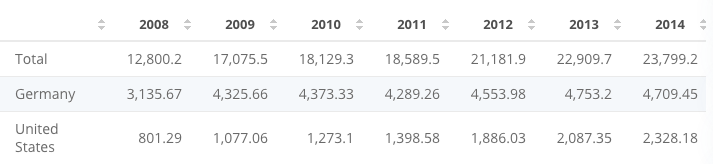
The problem with that? More production = more environmental footprint.
As Hasan Minhaj tells us in his episode of Patriot Act on Fast Fashion:
“In 2015, textile production created more greenhouse gases than international flights and maritime shipping combined”.
In fact, H&M is the second largest apparel retailer in the world with the new styles rolling out every 2 weeks. The company’s stand for sustainability might be nothing more than a clever marketing strategy in a social climate where consumers are constantly bombarded with the news on climate change but little education on its underlying causes.
In the world ruled by money, perhaps it is naïve to expect otherwise. I remember few weeks ago, when Canada and US were struggling to source enough surgical masks for hospital staff, giving mixed messages to the public on whether to wear one or not, my friend made a right prediction of masks becoming a fashion trend.
While there is nothing wrong with wanting this new piece of clothing to match the rest of your look, there is a danger in branding it as a mere accessory. After all, masks are worn as protective measures, similarly to condoms. You probably wouldn’t wear a condom made of cotton, even if it is really pretty, because that defeats the whole purpose. Fashion brands however are launching masks made of materials, which do little for protection but a lot for the looks.
There is of course the beneficial side of it, too. Making masks into a fashion trend might just persuade more people to wear them in the first place, and that is better than nothing, right? But when every major brand starts to roll out its own designs of this new garment, and masks become yet another fetishized commodity, it creates more competition for smaller businesses that are already struggling for survival.
At the beginning of the crisis, a lot of people put their own skills to work and started selling home-made masks online. A number of local businesses too, being left with no other way to make money, diverted their production towards masks.
“And this life activity [the worker] sells to another person in order to secure the necessary means of life. … He works that he may keep alive.
He does not count the labor itself as a part of his life; it is rather a sacrifice of his life. It is a commodity that he has auctioned off to another.”
This quote from Wage Labour and Capital written by Marx in 1847, underlines the situation at hand for those making masks as a means for survival, but also those in the factories at the other end of the world, labouring to produce these new fashion items for the consumer market of the First World. Just a couple of weeks ago we have witnessed Bangladesh reopening its garment factories despite the warnings from health officials and labour advocates about a huge potential for further virus spread. The problem is, of course, much bigger than production of masks, and existed way before the pandemic happened. Now we are revealed the full extend of it. How readily lives are sacrificed. How in order to run itself the economic system requires the sacrifice of human beings at one part of the world in order to sustain the other.
To blame the economic system, or even the government of Bangladesh in this case, is a diversion of responsibility, the responsibility that companies need to take, the responsibility that each human being needs to take. Governments of the Global South are in dependency relationship with the Global North, the relationship that is a continuing legacy of colonialism. In the Global North, governments have long been lobbied out by capitalists — United States case and point — and as a result stripped of any real power.
Public and private property as two separate concepts exist on the paper and in the minds of public, as we continue to speak of government and capitalists as two different entities but the former is more often than not a pawn in the hands of the latter. This is why it is the global corporations that need to take the responsibility, first and foremost.
The major brands selling a single mask for $20, $40, $60 and even 90 bucks, know how bad it looks on them. So they do take some kind of responsibility, mostly for their brand image.
“Industry experts say that brands must be careful to avoid appearing to want to profit from an essential item during a pandemic.
So far, most big names are donating all or some of the proceeds from the masks to charities.” — CNN
I like how it says “avoid appearing”, why don’t they just say “shouldn’t profit from it” period? Well, because everyone knows, they already are, and that what capitalism is.
Araks, known as a sustainable lingerie brand, prices its “protective” masks — with a note that “this mask is not a replacement for medical-grade Personal Protective Equipment” — at 40USD. A whooping price for a small piece of cotton. Comparatively, even Nordstrom sells a pack of 6 for $24. Araks of course is making a lot more profit from it, so they must also donate a lot more? No. They donate only one medical grade mask for each purchase, the standard price of which before the pandemic was around 50 cents (that industry is too being hijacked). I am not sure what their production costs are, but I have a feeling that a $40 sale still leaves a good chunk of profit.
Of course, critics might argue that retail companies provide a number of jobs and need to be able to pay their workers, so they need to make some profit. Making profit itself is not an issue, similarly as doing cause-related marketing isn’t. It becomes an issue when brands use the pandemic, or another social cause, to maximize profits and enhance their brand image. When they put up a front of the desire to help others, whereas in reality it is the desire to help themselves to stay in the business.
I don’t think helping others has to be this complicated: let’s manufacture masks on one side of the world ship them to the other where you and I will buy them and by that we will help the workers in Bangladesh to keep their jobs, while putting them at risk of getting a virus, and the company will then, and only then, donate a mask to a frontline worker.
How about we skip all that? How about companies doing something directly to help their workers in Bangladesh, or donating masks and supplies to medical workers anyway? Or at the very least, if jobs are at threat, and they care for their workers as they often say they do, use that very money to ensure their survival.
Some companies of course already do that: take a simple route and help anyway without waiting for your purchase. Because real love and care is not conditional, and if you want to give it, you give it anyway whether or not there is something coming back in return. Imagine what the world could look like, if each and every one of us thought o fit this way.