
Adventure
When Blind Faith Became a Necessity
A perilous, nocturnal journey through the Andes mountains made me very grateful for good vision.
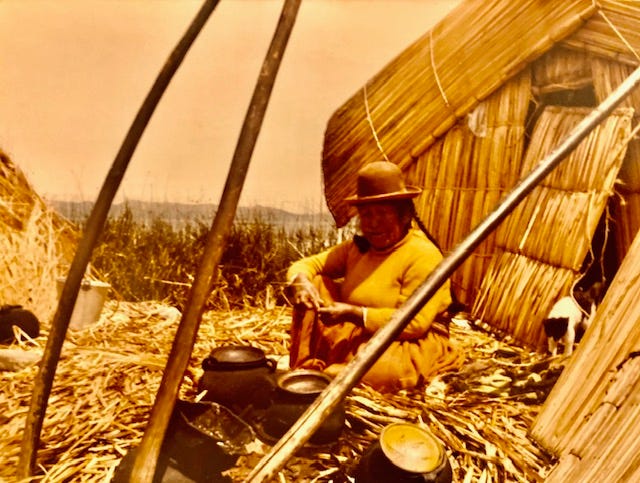
Our train halted abruptly with a squeal of brakes, creating universal whiplash among passengers. A pack of kids yelling choklo, choklo boarded, digging into their baskets of sweet steamed corn covered in chili paste.
We were munching away when the conductor came through our carriage, informing us a herd of llamas had camped out on the tracks and it may be a while before they could be cleared.
Herds had blocked the rails between Cuzco, Peru, and Lake Titicaca, Bolivia, four times since we started our journey in the early morning. This stop seemed to involve half the population of llamas in the Andes Altiplano.
We were delayed an hour, and I began to fret about missing the one and only bus to Cochabamba, Bolivia, where I was headed.
My concern was confirmed when we finally arrived at Lake Titicaca, a half hour after the bus had departed. I was the only foreigner on the train or anywhere in sight. There wasn’t any lodging available to travelers in 1978 at this junction.
A small group of locals were closing their food stands featuring the best potato pancakes I had ever tasted in my life. I bought a small stack and savored one as I donned a second sweater.
We were at an altitude of 12,507 ft. The afternoon sun was vanishing behind high mountain peaks, and a descending chill removed any notion of crashing out in my low-altitude sleeping bag.
I walked around the shoreline and traversed the boardwalks, weaving through floating island homes to keep my feet from going numb. No one lived on the land here.
I had never been in such a fix before and was wracking my brain for solutions when I saw a lone truck pulling up and dumping a load of potatoes at the last open food stand.
I watched and waited as the driver finished his business and then refilled his tank at the lone gas pump. He glanced around and spotted me staring at him like a hawk. We approached each other simultaneously.
“Where are you going, chica? I’m heading back to Cochabamba right now. Do you need a ride?”
“Yes, I do. I missed the last bus, and I’m stranded. But you’ve just arrived, and it’s a 12-hour trip. Don’t you need rest or sleep?”
“There was an avalanche on the road. It had to be cleared before I could continue. There’s no place to stay here, and it gets very cold at night. You better come with me.”
There was no other option. I was already shivering from bone chill. I nodded my head in agreement. “I guess we’re in this together.”
He looked into my eyes and asked a curious question. “Do you have good vision?”
“Yes, my eyesight is good. Why do you ask?”
“It will be a benefit on the road at night.”
I easily accepted his explanation. Four eyes are better than two on a treacherous dirt road with thousand-foot drop-offs into the valleys below.
I had seen crashed buses and trucks in yawning abysses more than once on routes through the Andes. One landslide could be the end of your journey.
I hefted my pack into his gratefully warm cab, and we started off into the deepening twilight. A half-hour later, winding around yet another blind corner, I saw an enormous boulder slightly off center of the road ahead.
“What is that?” Pablo asked as he leaned forward over his steering wheel and slowed to a crawl.
“It’s a huge boulder. Can’t you see it?” I looked at him with concern.
“Well, I guess this is the time to tell you I have night blindness. It’s an affliction in my family. It’s very hard to see details of anything at night. I need your eyes to steer the way.”
Machu Pichu had been the grand finale wrap-up in my two-and-a-half-year, overland journey from Seattle in the U.S. to Chile on the southern tip of South America. The magnificent ruins had completed my circle.
Now, I was homeward-bound. My parents had sent a credit card and camera to me with a plea. Book a flight, take some photos in Machu Pichu, and come back home. We miss you.
I had experienced so many out of the ordinary experiences on this nomadic voyage I thought I was immune to them. This one made me wonder if I’d live to board that plane.
I called on my weary but willing troop of guardian angels with one last request under the Southern Cross skies. Please allow our safe passage through this perilous mountain road.
I rolled down the cab window, leaned my upper body out of it, and verbally guided Pablo past the boulder one foot at a time. We cleared it with only a foot to spare from a plunge into the vastness below.
I was no longer cold. Adrenaline was pumping through my system and I began to sweat under my two alpaca wool sweaters.
Pablo was shaking his head with relief. “I’m glad you’re here, chica. I couldn’t have done that by myself. There’s something we’re both going to need to make it through the night.”
He reached under his seat, pulled out a small bag, and dipped into it, extracting a few coca leaves. I had seen piles of them in local markets and knew altiplano Indian tribes used them regularly as an energizer in the thin air of high altitude.
“Not for me, thanks. I don’t like that drug.”
“Do you drink coffee?”
“Yes, I wish I had a steaming cup of java right now, that’s for sure.”
“Coca is a sacred plant that’s been used with respect in our mountain communities for centuries. It’s not the cocaine that foreigners come here for. You’ll feel the same effect from chewing the leaf as you would from a cup of coffee. I need you to be awake and alert.”
He made a good point. I agreed to his request and received a tutorial on how to chew leaves with a small amount of bicarbonate soda he carried in another pouch. The soda was needed to release the alkaloids in the plant.
I had seen many Indians in markets and toiling in fields, their cheeks bulging with leaves. Now, it was my turn.
I dipped into the bag, added a dash of soda, and started chewing away. I could hardly bear the bitter taste at first but quickly became accustomed as the plant began pepping me up.
Pablo and I became a slightly hyped twosome and began chattering away. We discovered we were born within days of each other and both of us would soon celebrate our 28th birthday.
Meanwhile, I kept my eyes glued to the road, informing him of every obstacle in our path.
He was from a Quechua Indian tribe and described his daily life growing up in the Andes. Altitude took its toll on physical labors and even children were accustomed to bolstering their endurance by drinking coca leaf tea.
I was fascinated by his tales and dove into the leaf bag every time he did as brilliant stars helped illuminate the road and his sturdy truck ground faithfully forward.
My eyelids felt propped open with toothpicks after hours of sharing stories and steady dips into the bag. I had no worries about drifting off to sleep.
Our cultural differences disappeared as we talked more intimately about our respective families and personal beliefs. By the time the sky lightened with the dawn, it felt like we had been buddies for years.
We had been slowly descending in altitude as we approached the “Garden City” of Cochabamba at 8,392 feet. A tropical paradise in comparison to Lake Titicaca. I cast off my sweaters as the road widened, and we left treacherous conditions behind.
We had reduced ourselves to laughing at bad jokes as Pablo pulled up to the central market in the city. He nudged my arm and pointed to a nearby area in the bustling, early morning marketplace.
“Look, my friend. I can see clearly now, and I know where you should go.”
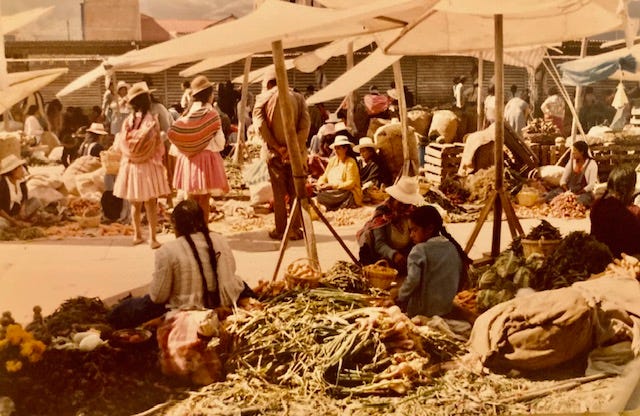
An Indian woman was sitting on a blanket, stripping coca leaves off their stem. My stomach heaved at the sight as Pablo shook with laughter.
“Go ahead, take some coca leaf on your plane back home. Tell your fellow Americans the sacred plant is medicinal. And how it might’ve saved your life on a dangerous ride through the Andes mountains with a blind man.”
I lightly punched his arm with affection, like I did with my brothers. We gave each other a high five in honor of the minor miracle; we were both still breathing.
“I will never forget you, Pablo. Please stop driving at night!”
“I’ve never done it before and won’t again, I promise. Be grateful for your good vision. I won’t forget you either, amiga, believe me.”
I staggered out of the truck and began wending a path through the vibrant marketplace as I headed towards my friend’s house nearby. My eyes take in the brilliant colors, the bright sun, aromatic blooming flowers, and food stalls with vendors doling out bowls of quinoa soup.
Suddenly, I realized how deeply I had fallen in love with South America. The magic, the mystery, the constant calculated risks. The powerful allure of this continent had been present in my soul since I was a teen.
I stopped, leaned against a wall filled with deep purple bougainvillea, and turned my face to the sun.
An act of blind faith had granted me another day of life.
Escaping tears streamed down my cheeks. Rivulets of gratitude for every day of this wild, long adventure coming to a grace-filled end.
I think of this long-ago experience in our current times.
How we, the people, are trucking through challenging mountain passes in a dark night filled with obstacles on the road.
But the dawn is coming. It always has and always will.
Blind faith is on the rise.
As we turn to steer by the compass of our hearts.
Thank you for reading my nostalgic story.


