
When Beautiful People Say Beauty is Within
Female pop vocalists who tell us beauty is within are always so beautiful!
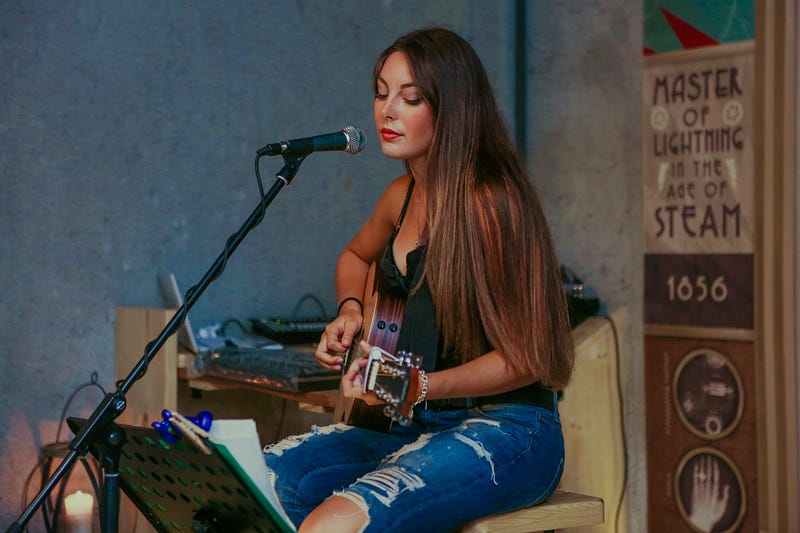
Who defines beauty, anyway? The Ancient Greeks believed that one could only perceive beauty through the mind, and that beauty forms the base of knowledge and beingness. Today, beauty is most often defined as particular physical traits ascribed to societal norms. I won’t go into an analysis of how beauty standards have developed, but being thin, white, young, wealthy and able-bodied translates to being beautiful. Some people theorize that in the Western world being white alone exemplifies beauty (Donella, 2019). Slowly, advertising is expanding the beauty norm, but generally speaking, pop culture has not strayed far from it. But when traditionally beautiful people say beauty doesn’t matter, how seriously can we take them?
The first time I heard India Arie’s song “Video,” I remember exactly where I was, driving through the farm-lands in rural Massachusetts on a summer’s day, and when the first line came on the radio I literally shrieked for joy! “This was it!” I thought. “Pop culture is finally ready to change!” This song didn’t give apologetic platitudes to the tune of “You are beautiful because I said so,” it was talking about beauty in art, giving thanks for your uniqueness, acknowledging beauty myths and choosing to ignore them. I loved that song! Also, India Arie was herself a person who would not be considered beautiful by pop culture standards. She had long natural dreads, dark skin, and broad African features. I believed her words when she said,
I learn to love myself unconditionally because I am a queen (Arie, 2001)!
So, let’s look at some singers who preach this “love yourself” stuff who do fall into traditional beauty standards. In “Lovely,” Sara Haze croons,
I feel lovely just the way that I am (Haze, 2010).
To which the pop world would respond, “Well, that is because you are lovely!” with her long blond hair, and piercing blue eyes. A trim and attractive Christina Aguilera with long blond hair, blue eyes and skin smooth as butter reminds us,
You are beautiful no matter that they say!
You are beautiful in every single way (Aguilera, 2002)!
Meanwhile the people in her music video struggle with body image issues. In the music video for “Scars to Your Beautiful,” Alessia Cara tells us,
You should know you’re beautiful just the way you are.
You don’t have to change, the world can change its heart (Cara, 2016).
Clips of an overweight woman, an Albino woman, a girl with no eyebrows or hair give mini interviews of social strife experienced due to lack of perceived attractiveness while slim and pretty Alessia beseeches us to forget about looks. In the music video “Try” by Colbie Caillat, women and girls of various beauty standards remove their make-up while Caillat sings,
You don’t have to try so hard; you don’t have to bend until you break.
You just have to get up, you don’t have to change a single thing (Caillat, 2014).
And by the end of the video, she removes her make-up and fake eye-lashes, and… wait for it... she is still a knockout! It is difficult to sing about the unimportance of beauty when it is often a requisite for “talent” in the cut-throat pop music industry. Being sexy and beautiful is a must, especially for women, and these stars show this in their looks even if their lyrics are telling us listeners to ignore their beauty. I love how Jill Scott, a full-bodied black R&B artist pokes fun at the conflation of talent with sex-appeal in her song “You Got Me” with the roots.
Ain’t it funny, I got on all my clothes and I can still sing!
But maybe I am wrong, maybe unless pretty girls say beauty is inside, we won’t believe it. On the other hand, it’s more likely that these songs don’t convince anyone. It’s like if Elon Musk looked us in the eye and said, “Wealth is measured by what you have inside, you are rich just as you are!” we would not take him seriously. Maybe paradoxically the “love yourself” pop songs convey the idea that even though beauty is inside, we will get ahead if we pay the price to achieve external beauty standards. I am reminded of the play by Tori Sampson that references Beyoncé’s song “Pretty Hurts,” titled “If Pretty Hurts Than Ugly Must Be a — — -.” So, are these pop star vocalists ironically telling us that pain is a price worth paying to achieve a beauty that isn’t real?
References
Aguilera, C. (2002). Beautiful [Song]. On Stripped [Album]. RCA.
Arie, I. (2001). Video [Song]. On Acoustic Soul [Album]. Motown.
Caillat, C. (2014). Try [Song]. On Gypsy Heart [Album]. Republic.
Caracciolo, A. (2016) Scars to your beautiful [Song]. On Know it-all [Album]. Def Jam.
Donella, Leah. [Retrieved Feb. 25, 2021] Is beauty in the eyes of the colonizer? https://www.npr.org/sections/codeswitch/2019/02/06/685506578/is-beauty-in-the-eyes-of-the-colonizer. NPR.
Haze, S. (2010). Lovely [Song]. On My Personal Sky [Album]. Strategic Alliance Records America.
Knowles, B. (2014). Pretty hurts [Song]. On Beyoncé [Album]. Columbia Records.


