
DEATH BECOME US
When Are You Going to Stop Writing About Dead People?
The voices inside my head
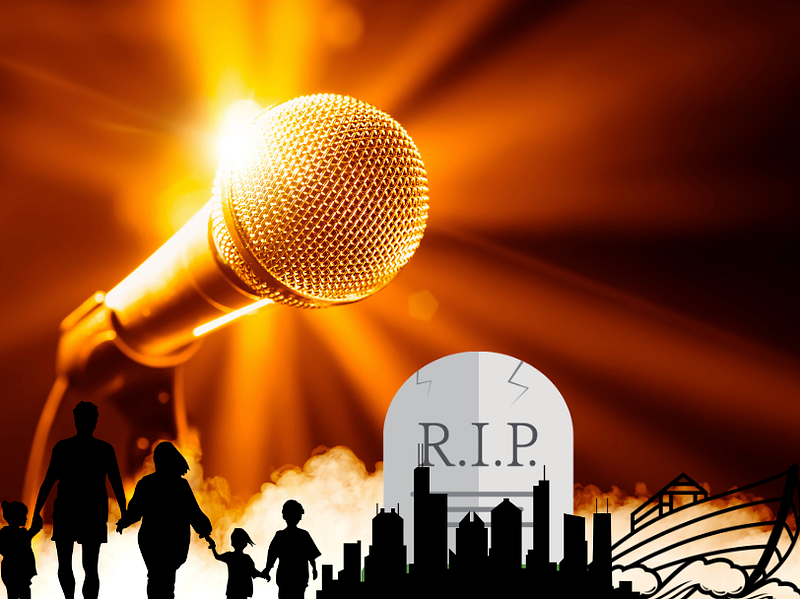
Someone I loved once said to me, “Jesus, Amy. When are you going to stop writing about dead people?” That killed me. It fucking slayed me. It yanked me off my path and compounded my self-loathing in a brand new way. Thanks, unsolicited gaslighting.
I’d been writing about my oldest friend who died. I was possessed. That’s true. I had been writing and rewriting about him until he re-formed, exited his grave, and rejoined the surface world for a second chance.
He didn’t regenerate, but he might have had I not stopped writing about him. What if I was a witch? He was so young. I was trying to understand him, immortalize him, maybe forgive him.
When people die at twenty, you want to add onto their life, tack on some more years. I wanted to compound his time, throw him some more experiences so he could make better choices. So I wrote and wrote and wrote.
I made up who he would become at 25, 35, 45, and shit, even 80. He was never going to live to be 80, but what if he did? It was all magical thinking from the second I found out about his death to the moment I finally stopped writing about it.
The first draft was written on a 5" by 7" yellow legal pad, with a 7 mm black pen. The yellow pad has a lightly sunken-in coffee ring, on top of the first page, but it’s still legible.
I don't keep the yellow pad anywhere specific so whenever I come across it and see his name written, I lightly gasp. Is that a thing? Or does gasping always have to resemble heaving?
It’s been 30 years. Feels like 100.
His death was part of my voice for a long time — until that comment yanked me out of it.
“Jesus, Amy. When are you going to stop writing about dead people?”
That’s when I started to write the words MAKE FUNNY on top of everything I wrote. For a long time, that was the only funny thing written on the page — those words.
I would write the world’s most depressing story and on top of the page, I’d see the words MAKE FUNNY. I’d read the story over and over again futilely looking for the joke.
Once I stopped writing about the boy who died, I started writing about the city that molded me into who I am. The corrupt, hypocritical, overly intellectual, racist, lake-hinged, privilege surrounded by deep poverty and lack-of-access city.
I wrote a whole book about that place, except in the book, I flooded the whole damn place. I made an ark, but only three people survived on it, and barely. Once the survivors landed, none of them could walk. They could only walk on the lake, but not land. Sea legs.
After I deleted that book, I realized all I had left inside of me were the voices of my family. They were so intertwined with my own, I didn’t know who was who. I only knew I wasn’t me. That’s what enmeshment looks like. Blending.
My own voice finally unhinged from death, city, and family during COVID. Being trapped inside freed me. The sounds of the world had no access to my normally overly permeable self.
You know that expression, Death Becomes Us? It does until it doesn’t. When it was done becoming me, death let out a big sigh. A sigh big enough to heave its mortal congestion out of my chest and into the world, setting me free.
My voice keeps changing now that it is no longer constrained. Sometimes it’s funny. Sometimes it’s about death. Sometimes, it comes from out of nowhere and I let that in too.
I still miss the dead boy, but it’s been thirty years. I miss a lot of people now, though he’ll always be my first.


