
When A Nerve Triggers A ‘What-If’ Moment Of Doubt…And You Realize, Like It Or Not…
It’s time to hand in your gun…
Peace makers are taught how being peaceful feels. It doesn’t just happen. It’s a learnt feeling, a learnt state of happiness, because the modeling takes place to make it naturally occur.
This happened
In schools we teach children to be peaceful. We model peace in the way, as teachers, we interact with our students, that is peacefully.
But then, sometimes we toss it aside. We trade it for the excitement that lurks on the other side of the fence.
In this story I talked about our school carnival where students were taught, and encouraged to roar their chants to show that their team was by far the best…AND TO WIN!
And at the end of the day, when their energy was spent, when they were close to tears, and had had enough, they were required to march around the school oval chanting yet again, eyes popping with sheer determination, but too tired for words.
My colleague had a plan
My colleague had asked to march last. His team took off in awesome silence, they mouthed the words to their chant, they enacted their chant, but they did not chant.And they took their time.
And at the end of the march, there was not a clap for them.
Instead, a whole school of children, a whole staff, and a whole set of parents and grand parents stood in awkward silence, not knowing what to do.
And then, taking their cue from the initial, somewhat reluctant drifting parents, they moved off.
Not a soul spoke.
Even in their cars, so I am told.
Nor over dinner.
The thing is is took a few days before many parents had intuited the lesson that winning is not about being the loudest, or crudest, or tonsil-damaged.
We can get our message across easily, and well, by being boldly and determinedly silent.
So what did the team teach? What was the lesson?
- that we are all winners
- that we shared a day together and had fun
- that winning can happen in silence
- that winning is about participation as a school
What a salutary lesson, delivered so simply and calmly!
Right now, in America, there is a huge problem.
People have the right to bear arms, (blunderbusses?)
They have the right to feel safe.
They have always had guns.
They’re protecting their homes, and their families…it’s all about safety, you know.
Or is it?
I grew up without a gun in sight…different times, different era. Still, we never ever felt unsafe.
But Americans don’t see it that way, well, not those who hold dear to the idea that they have the right to bear arms…but haven’t quite factored in the responsibility that marches alongside that right.
But sometimes truth slaps you in the face
And we are shocked into seeing another way.
And like the parents and student body in my school, it can happen in absolute silence.
Take, for instance, Richard Small, who would:
‘bristle at at any talk of tighter gun restrictions, viewing it as nothing more than politically driven finger-pointing that would do little to stop the violence while infringing on his rights as a gun owner.
“But then, the 68-year-old retired high school history teacher saw a photo of one of the young victims of the shooting last Tuesday at Robb Elementary School in Uvalde, a pleasant little town that he had visited often when he coached youth football.
“He looked like my grandson. I mean, they could have been twins. They have the same face,” Small said, his voice shaky with emotion. “It just stirred something in me.”
See when it comes close to home, when you realize that a member of your family could so easily have been a victim, something sweeps over you, and like people at my school, you realize, that what you originally thought was right and proper, just ain’t right!
‘After the massacre, Small and his wife, Marina, drove nearly 90 minutes from their ranch in Charlotte, a tiny town south of San Antonio, to pay their respects in Uvalde. He stood on the edge of the town square where 21 crosses, for the 19 fourth-graders and two teachers killed in the shooting, have become the epicenter of the anguish here. Somehow tears did not feel like enough.”
Thereafter he turned his gun in to the local police.
Will he ever turn gun thinking around in Texas? Who knows, but every journey begins with just one step. If we think it might, it might…
Everyone knows Andy Murray — right?
He’s the famous Scottish tennis player. Now in his mid thirties, he and his brother could so easily have become gun violence statistics.
Murray lives in the picturesque town of Dunblane, a small elegant town, where nothing much happens.
A town where everyone should, and did feel safe.
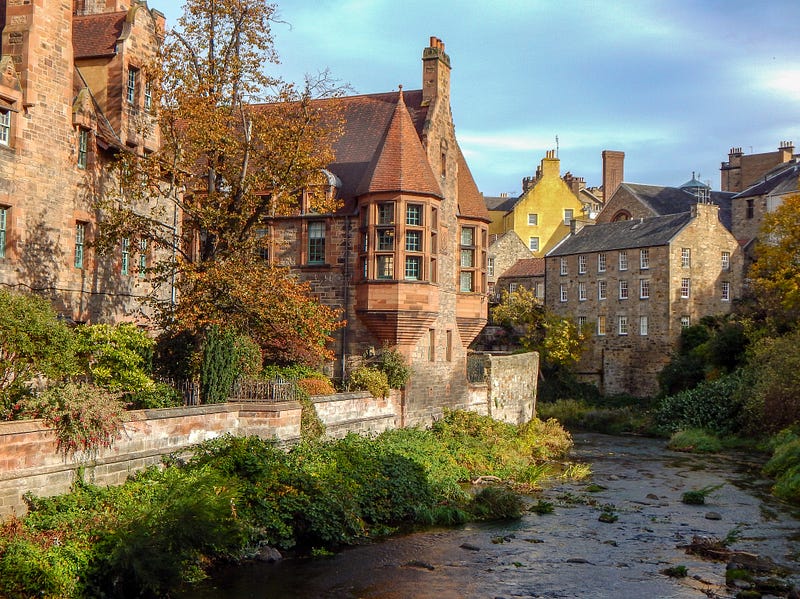
“Dunblane has a craggy, determined air, and a handsome face, with stone or whitewashed cottages and a good dose of pebbledash hunkered down low on lanes around the cathedral. And all of this set in a hilly bowl, cleft by the Allan Water. The centre is dainty: its narrow, stone-built high street of butchers, rug showrooms, charity shops and newsagents wouldn’t look out of place in a village. But, like come-on Andy, behind the hardy front lies courage and emotion: a few steps into the cathedral you meet the memorial to the 1996 school massacre, heartbreaking, etched into the city’s very heart.”
It’s a posh part of Scotland, close to Stirling and Edinburgh. Andy has lived there all his life.
He now has four children, and the events of that day are still with him, and will haunt him of the rest of his life.
The thing is, he and his family knew the killer. They’d shared car rides, and the perpetrator was well-known in the school.
When such an event happens, everyone reacts accordingly. They become fearful, they helicopter-parent their children, and for a while life simply cannot go on.
Everyone is diminished.
“Twenty-five years after a local shopkeeper walked into Dunblane Primary School and opened fire, killing 16 5- and 6-year-olds and their 45-year-old teacher, the attack occupies a singular place in the British cultural consciousness. The March 13, 1996, tragedy wasn’t the first mass shooting in modern U.K. history, but as Peter Squires, a criminologist and public policy expert at the University of Brighton, explains, “The notion that someone would use handguns to kill children, like shooting fish in a barrel, was just so appalling that it provoked a reaction beyond that which had been experienced with Hungerford,” a 1987 massacre that left 16 adults in a small English town dead and 15 others seriously injured.”
From the Antipodes I read about this and my first thought was, not in Dunblane!
Not in a place where I would love to hang my hat.
Not in a place where people are comfortably off.
Just not in Dunblane.
But why not?
If someone is intent on butchering some kids, they don’t think…will I drive to the gorbals (an area in Glasgow renowned for its poverty)?
They are simply intent on killing and so why not the local primary school?
This perpetrator’s reputation was under a cloud. He’d tried unsuccessfully to clear his name so he had to fight back.
‘The 43-year-old killer, a former Scout leader who’d been dogged by rumors of inappropriate behavior toward young boys, viewed himself as the victim of a “sinister witch-hunt,” according to the Independent. Though authorities never outlined a definitive motive for the attack, the Scottish Herald reported that the gunman had referenced Dunblane Primary School in a letter seeking to clear his name.’
Andy and his brothers escaped death that day, but they have never forgotten the terror.
So if they can’t forget, imagine for a moment how a parent who had lost a child might respond.
Mick North, a biochemist whose 5-year-old daughter Sophie was killed in the attack, initially couldn’t bear to talk about his loss. But once he was ready, he found himself discouraged from speaking out about the broader issues underlying the shooting. “The initial reaction was: You can say how devastated you’re feeling and how you’ve lost your lovely child, but you couldn’t say anything about guns,” he told Buzzfeed News in 2018. “But I did.”
North left his position as a biochemist and became part of an action group, including lawyers, all of them totally dedicated to gun reform.
“Around the same time, a parallel movement spearheaded by a group of Dunblane mothers prepared a petition to ban all handguns in the U.K. Dubbed the Snowdrop Campaign in honor of the only flower in bloom on the day of the massacre, the call to action garnered 750,000 signatures in just ten weeks and more than one million by the time it reached Parliament in the summer of 1996.”
And so the government was called to take action…
“Under immense pressure from an increasingly pro–gun control public, Conservative Prime Minister John Major introduced the Firearms (Amendment) Act 1997, which banned high-caliber handguns like those used by the Dunblane shooter but allowed .22 rimfire handguns to be “used and kept” in licensed clubs, as they were “largely intended for target shooting,” not police and military use, as Home Secretary Michael Howard said in a speech given to the House of Commons.”
The thing is, in this whole gun law debate, a ‘what if’ thought doesn’t easily happen for any of us. We hear of atrocities, we read about them, and we shudder, and life kind of goes on.
But an epiphany happens when we lose to a gun man, or when we narrowly escape a situation too close to even think about, and action is needed.
But an epiphany happens when we lose to a gun man, or when we narrowly escape a situation too close to even think about, and action is needed.
Will we ever see action in America?


