
When a Boy Doesn’t Need to Die
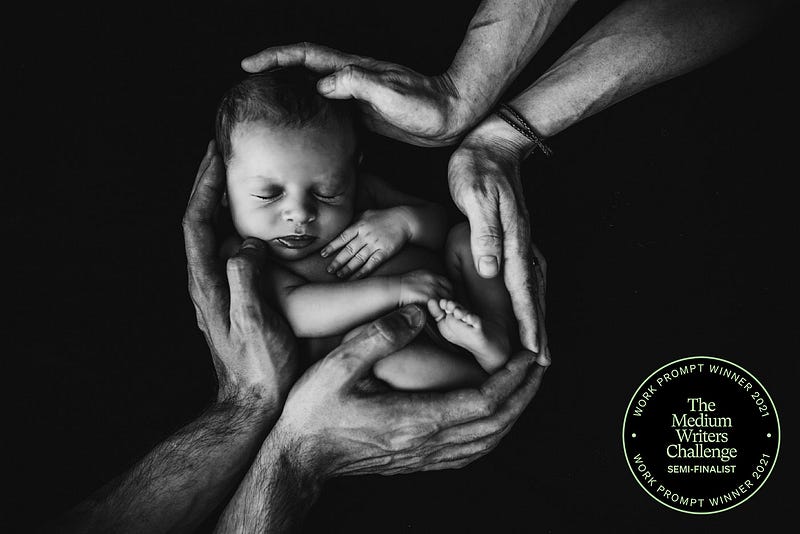
Some days we public health specialists are hell-bent on improving quality of care and reducing medical errors. Other days we wring our hands about the lack of access to health services, turning our focus to affordability and outreach. In reality, quality and access are two sides of the same medical care coin. But this presumes that the coin is within our grasp, not rolling down an embankment and into a muddy river.
On this particular day, my team’s goal was quality improvement. In rural Kenya, doctors are scarcer than sunscreen, so nurses have to act as frontline health providers. Our task was to observe and rate nurses as they diagnosed and treated sick children at two government health facilities about two hours from Vihiga town and three hours from the nearest city. The protocol was for us to assess a nurse’s management of six sick children — enough to observe a range of ailments.
The team I was leading consisted of eight Kenyan clinical supervisors and assessors from several cities. A supervisor would first document how the nurse handled each young patient. Then, in a separate room, an assessor would perform a “gold star” re-examination to determine if the nurse had made any errors. It was a painstaking process. The nurses, understandably nervous in the face of such close scrutiny, took 20–30 minutes with each child, rather than the usual five to seven.
The day had dawned grey with a chill wind. As we bobbed along rutted roads, the team cautioned me about afternoon downpours, which could mire our vehicle if we were not careful. At the first health facility, half of the team disembarked. Thirty minutes later the rest of the team and I reached the second facility. For nearly six hours, the supervisors and assessors worked to observe, assess, and record the nurses’ performance. I handled logistics and instruments. By the time we finished and drove back to the first facility, it was already late afternoon.
My group remained in the vehicle as I ran inside to retrieve the rest of the team. The sky was now ominous and I felt a few droplets of rain. A long queue of mothers with feverish children were sitting on narrow wooden benches along the outer wall of the health center, still waiting to be seen. The facility was dilapidated, with peeling paint, pocked bulletin boards, and no running water. It had only four light bulbs to illuminate the interior. In one office, I found our supervisor gazing intently as a thin, tired-looking nurse assessed a two-year-old boy. The supervisor assured me it was his last observation of the day — the sixth child for this nurse. All that remained was the assessor’s re-examination.
At that moment, a bolt of lightning crackled across the sky and the droplets became a deluge. I urged them to hurry. Another lightning flash. Suddenly the lights went out and we were in semi-darkness. While the assessor rapidly conducted her re-examination, the other team members packed up and sprinted for our vehicle. I turned to leave, but the assessor, accompanied by the father and two-year-old boy, stopped me. “We have a problem,” she declared. I was focused on the rain and barely heard her over the din on the corrugated roof. “Yes?” I offered. “The nurse had diagnosed this child with malaria, but his symptoms are far worse. He is gravely ill. He must go to hospital, or he may die tonight.”
I peered at the child. I am not a physician, but I could see that the boy was exceedingly pale and breathing poorly. The father, barefoot and in a lacerated shirt, was grim-faced. The nurse seemed utterly deflated. I later learned that she had been up all night with a difficult delivery. I said to the assessor, “OK, fine. Let’s take the father and child to Vihiga hospital. It will be a squeeze, but we can do it.” The assessor turned to the father and translated what I had said into Kiswahili. The father responded quietly, “Hapana” (no).
I felt sure that he had misunderstood. “Please explain to him that the child is deathly sick. He needs to go to hospital.” The assessor spoke again to the father. He told her that he knew that the illness was severe, because they had buried the child’s older brother just two weeks earlier. “So, what is going on?” I asked, growing more anxious as I watched the rain plummeting. The assessor replied, “His wife just gave birth yesterday. That is why he is here with the boy. He cannot leave his wife at home, not knowing his whereabouts. She will panic.”
I thought quickly. “OK, let’s drive to his home, inform the wife, and then head to the hospital.” The nurse intervened, “That’s impossible, because he came here on a footpath. There is no road near his home.” I eyed the queue of mothers in the waning light. “Is there anyone here who knows where this man lives?” The father scanned them and recognized a woman. “Excellent. Tell her that you are going to Vihiga hospital,” I said, relieved that we had overcome this hurdle. But the man repeated softly, “Hapana.”
Now I was confused. “Why not?” I asked. The father pulled out his pants’ pockets to show that they were empty. No money for a hospital stay, or for the two-hour drive back to Vihiga. The recent funeral and birth had sapped his limited finances. I dug into my purse and found a 1000-shilling note (about $15), which I thrust on him. Problem solved, right? “Let’s go!” I begged. But the man shook his head, with sad fatalism, “Hapana.”
This was maddening. The rain was torrential. We would never get out of here. “Why not?” I nearly yelled. The father pointed to the boy. In his misery, he had vomited all over himself. The father could not imagine travelling with the child in this state. The nurse spoke up, “Wait here.” She ran to her cottage near the health center, and returned with a pink baby’s blanket from her own daughter’s bed. She gently wrapped the ill boy in it. Finally, we could leave.
Yet the rain by now had rendered the road treacherous. We slid and slipped. At one point, the vehicle sank heavily into an immense pothole that consumed both front tires. One supervisor muttered that the child would die before we reached the hospital. A group of us pushed and pushed, until the vehicle kicked out, splattering us with mud.
At 9 PM, exhausted and hungry, we reached the hospital. It loomed dark and still, like an abandoned warehouse. One supervisor and I ran inside, with the father and child close behind. “Is there anyone here?” we shouted, with rising urgency. Eventually, a male nurse came and led the father to the pediatric ward. There the nurse started the child, whose name was John, on an IV.
When I visited the next day, I found that John was on the mend, with his aunt sitting at his bedside. His father was already on a bus heading home to his wife and newborn. By remarkable luck and his own resilience, our sixth sick child had survived. But how many other children perish in these macabre, human-made obstacle courses? Clearly, even if medical error was minimized, sick children and their families would still face abysmal hurdles.
For the next two weeks, we soldiered on with our nurse performance assessments in Vihiga county, as we were being paid to do. We knew it was important. More nervous nurses, worried mothers, and exacting assessments. Yet, contrary to protocol, we also continued to assist some small souls who could not otherwise endure the impenetrable river. Was this our way of saving the world, as the Talmud teaches? Or just assuaging our consciences as we carried out our work?
All we knew for certain was that a correct diagnosis, an offer of transportation, a helpful neighbor, some necessary cash, a soft blanket, a vanquished pothole, or a decently-equipped hospital were not sufficient to keep a sick boy like John alive. Instead, it required all of these — quality, access, teamwork, family and community. Helping children thrive takes more than a village, more than a health system. It takes all of us learning together, not faltering, eyes on the prize, building bridges over the murky waters. Maybe someday John will join the effort.


