
Wheel Estate
The great tradition of living on the road
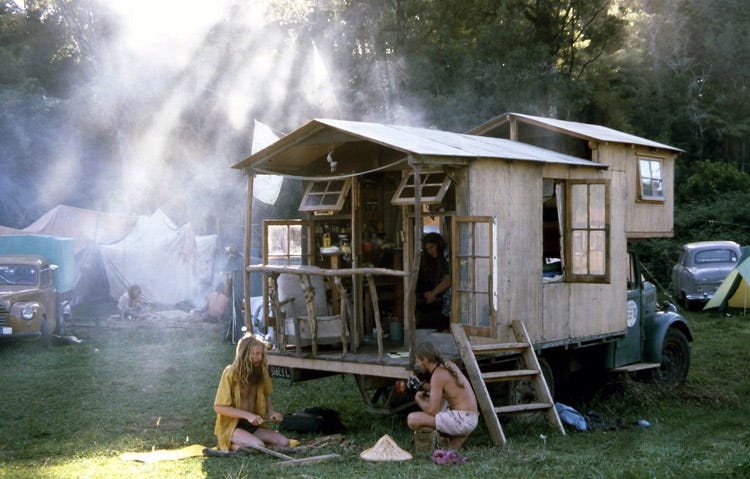
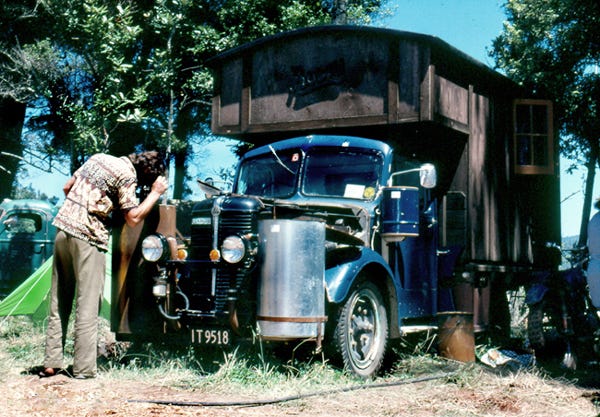
Since the mid-1970’s housetrucks on New Zealand roads are common as sheep in a paddock. Each one unique. They’re built from plywood and varnish, tin sheets and two by fours, on the back of flatbed trucks. A patchwork of rimu and cedar and oak and pine and larch. Cupboard doors inlaid with mother of pearl and shelving from colonial drawers. Knobs and hooks in brass and bronze. Old stained glass windows and portholes. Mosaics of broken china and tiles of mint green and blush pink found in Victorian villas. And always, a wood stove with the crook of the chimney poking out the roof.
Houestrucks are magical and practical. Like a cabin in the woods.
And cheap living.
You could knock one up yourself.
Humanity has been on the road since the dawn of time.
Carrying only what you need. Pre the advent of agriculture, where grain was grown and stored at scale, hunters and gatherers roamed the earth living in sync with the seasons. Knowing where the water flowed, where the berries sprouted, trusting their knowledge and the natural world like the walkabout of the Australian Aborigines.
We have the American Indians with teepees the Mongolians with their yurts, and the Irish Travellers and the Romani Gypsies with their colourful caravans. History shows us: living on the road is not that odd. And is likely recorded in our ancestral memory and DNA.
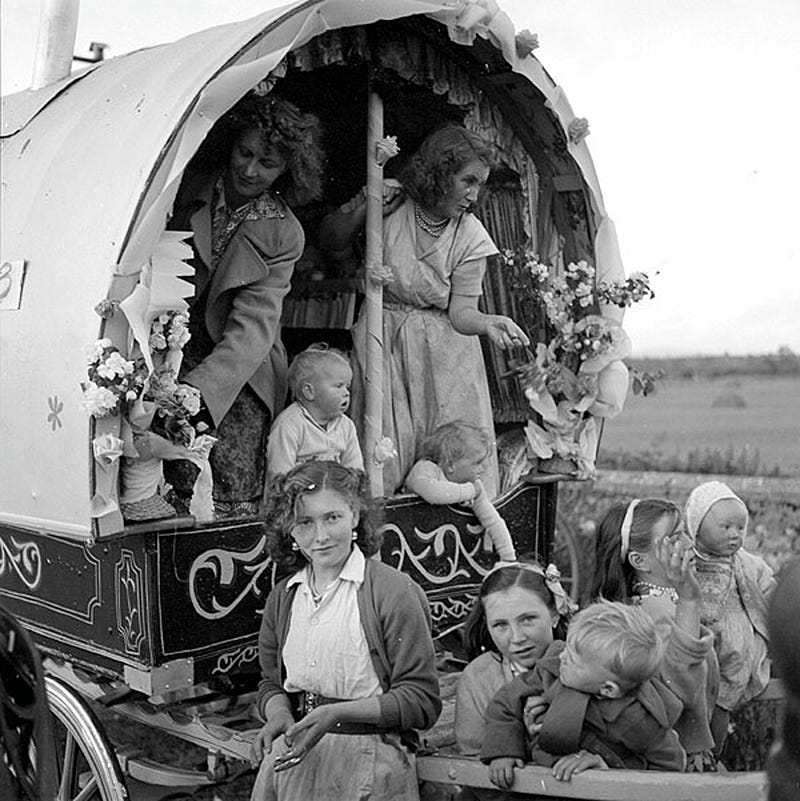
With house and rent prices going through the roof, knocking up a wagon house of some kind is appealing. And for thousands, the best plan. Young people who’d rather live in a van than with mum and dad.
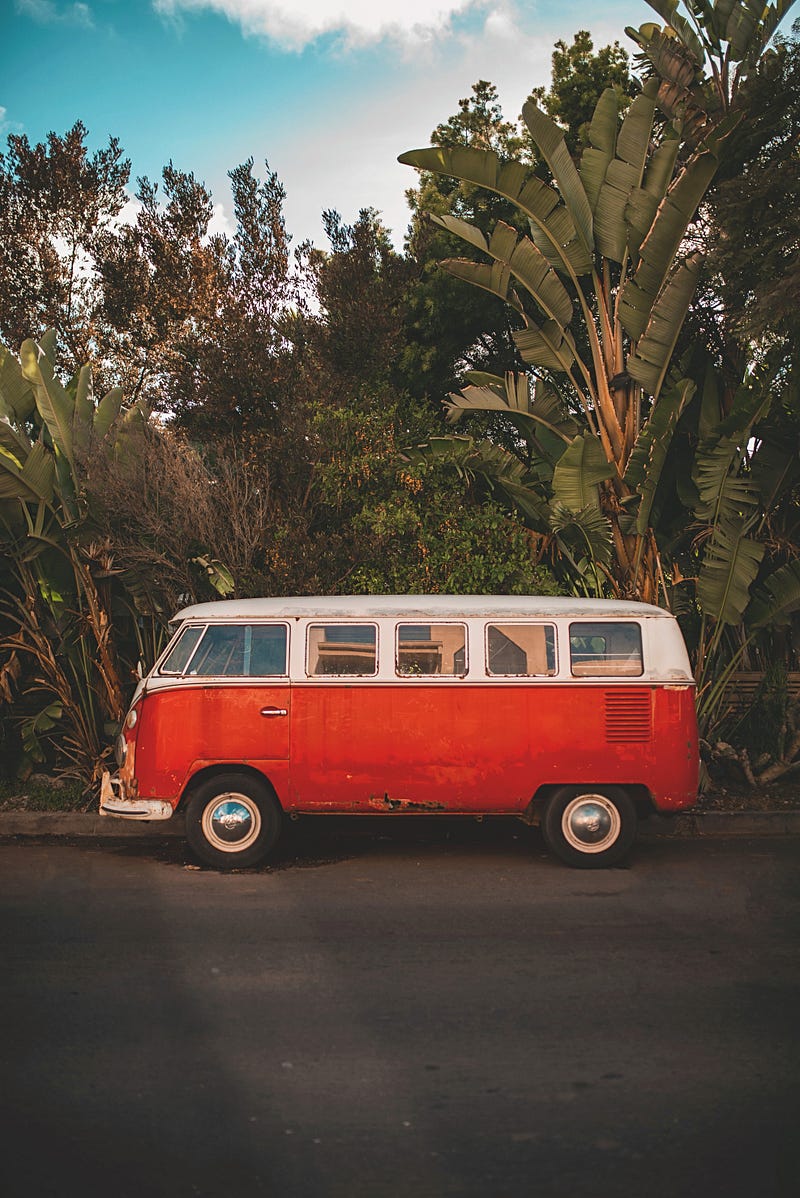
Renovated RV’s and yellow school buses. It looks fun. But they tell too of hiding from authorities sometimes, of the dangers, of the difficulty of parking legally. Of rainy days cramped inside. On where to pee.
“Every other nation has folk traditions of men who were poor but extremely wise and virtuous, and therefore more estimable, than anyone with power and gold.” - Nomadland by Jessica Bruder
They save money. They speak of being free and lightening the load of possessions and aiming to walk the earth causing the least disturbance. Such lofty ideals and down and dirty practicalities all mixed up together.
It’s not just the young.
In Nomadland: Surviving America In The Twenty-First Century by Jessica Bruder, she travels with and tells the stories of Fern and other fifty-plus Americans living on the road. Of the choice - being the last choice left — having lost their homes to economic woes, some beyond their control, of not wanting to be a burden on their children, of having nowhere else to go.
The precariat class.
“There have always been itinerants, drifters, hobos, restless souls. But now, in the second millennium, a new king of wandering tribe is emerging. People who never imagined being nomads are literally hitting the road.” - Nomadland by Jessica Bruder
“A deepening class divide makes social mobility all but impossible. The result is a de-facto class system.” - Nomadland by Jessica Bruder
Soul groups.
Fiona lived in a housetruck. Visiting my friend was like being inside a genie’s bottle. She had maroon velvet and Tibetan shawls and sheepskins to sit on. A copper tap gave water collected on the roof and the woodstove she fuelled with pinecones from her wanderings in the woods. She had long maple syrup toned hair to her waist, and in deep winter slept with a merino wool hat on her head, to ward off the frost.
Fiona liked to feed me with meat pies made in her gas oven, or corn fritters fried in her cast iron pan. She had Tiger Balm and snips of aloe vera for chapped lips. On the windowsill in jam jars, grew rosemary, sage and thyme.
The road gypsies are community-minded and heart centred. They have empathy for the traveller and the wounded. They are like that song from Oliver Twist.
Consider yourself, at home. Consider yourself, part of the furniture. We haven’t a lot to spare. Who cares! Whatever we’ve got we’ll share. - Oliver Twist, Charles Dickens
In Nomadland the travellers have regular spots on the trail where they meet to share resources, skills, food and song. They have a tribe vibe. It is not so lonely on the road. Lonelier — would be forgotten in your flat eating cereal for dinner because the rent just went up.
The housetruckers in New Zealand share news on Facebook of parking spots. They park in apple orchards and over the dunes from the sea and on the edges of crown land and wilderness parks.
They share information about solar systems and seasonal work. And the tricks and knacks of living off-grid. Some have been on the road since the 1970s and know every old housetruck out there.
With talk of a crippling recession and the growing social awareness to create buffers and barriers for you and your loved ones; living with less to lose, being prepared now, is a good idea. Some are buying guns. Some are planting gardens. And some are getting the hell out of dodge.
There’ll be harder days, Empty larder days, For sure. - Oliver Twist, Charles Dickens
Freedom.
Most of us would like a cabin in the woods. A retreat smelling of cedar boards and woodsmoke from the fire, a soup pot simmering on top. A quiet place to lay down and read a book and out the window all you see is trees.
I have a nice house. I’m safe and sound. But I'm collecting materials to build a portable abode. A shanty on wheels. Just quietly. I have leadlight windows and tools. A sturdy chassis to build on and curved wooden roof beams vardo style. I’ve got a Ryobi drill and a metre long level, and a tool belt and some other things. Sheets of corrugated iron that may come in handy. Little magpie collections. Antique coat hooks and porcelain knobs painted with tiny sprigs of flowers. I’m hunting for a bead curtain to go in the doorway, though cream lace wafting in the breeze, might be nice too. I’m making a little wooden cabin on wheels.
It’s probably not as hard as it looks.
Don’t call it a dream — call it a plan.
Thanks for reading, Louise


