
WhatsApp The New LifeStyle
Faster Communication through the Convenient App
Why do I call WhatsApp the new lifestyle? No one can do without WhatsApp! Everyone I know in India, including a vegetable vendor, a delivery boy, a driver, a cook, and a beggar on the road is addicted to a message from WhatsApp.
Yesterday at the red light I had stopped my car and a beggar was asking for some money. I was not keen to give him but he kept pestering me, so I opened my window to give him the money and I saw that he had withdrawn and he was on the phone. He tells me wait! Let me see my WhatsApp message and looked at his phone. The red light changed to green and I moved on. He lost his alms and I started thinking about Whatsapp, its origin, and the changes it has brought to our lifestyle.
Origin Of WhatsApp

How did WhatsApp come into our lives? Two young friends both employees of Yahoo, Brian Acton, and Jan Koum, resigned from their jobs in 2007 and tried to get a job in Facebook but they were unable to do so. They then went to South America and made some experiments and the two of them commenced working with a small start-up entrepreneurial venture.
They set up their Head Office at Mountain View in California in the USA with Will Cathcart as the Head of operations. In 2009 they came up with the WhatsApp model which to them meant like saying how are you with a catchy title ‘what’s up?’
There was a lot of criticism with introductory glitches as this instant messaging system was introduced by using the internet. People rejected it and said that it was too expensive to use data all the time.
In fact, mobile companies charged a lot of money for the usage of data in those days. There were not many mobile users either and people usually had one mobile phone for the whole family
WhatsApp added the feature of free calling through wireless networks and people started liking WhatsApp. This was a sure method of receiving calls and messages as there were blue ticks to know that a person had read the message sent.
By 2012,2013 mobile phones had become popular and almost every member of the family-owned it and installed WhatsApp. By February of 2013, WhatsApp had 50 personnel of its own and 200 million people had connected to it as users.
Shortly after that, the app was bought out by Facebook for $19 billion which was considered to be one of the highest amounts ever paid for acquisitions the world over. It left people shocked but Facebook was unperturbed as it had sensed the importance and could judge the value of WhatsApp in the changing world scene, empowered with the fact that it would become the new lifestyle of the people. Only people were not able to foresee the startling change it would bring to their lives.
Adapting to WhatsApp
Young people adapted themselves towards WhatsApp as it soon became the favored way for messaging casually. Soon it turned to jokes and frivolous talk and in schools and colleges, Students began to carry mobile phones to their institutions and barely listened in class to the teacher or to their peer group. They became busy messaging.
The older generation still could not adapt to it. In 2016 WhatsApp introduced free video calling. The world being a global village, many families were spread out in different countries. Weekly calls, turning to video calls became a bonus and people happily turned to this App as a source of keeping in touch with families.
When people went on holidays or work trips, the family could be contacted and the safety of the person was ensured. Soon business calls started on WhatsApp and people found it effective to deal with each other as they could see the facial expression of each other while conducting business. Now WhatsApp meant ‘always connected’.
WhatsApp began to uplift its image by providing new features like sharing pictures, location, jokes, videos. It became so convenient to take pictures and send them. Voice messaging became another feature that people enjoyed a lot. Leave a message and you can conveniently hear when you like. Look at pictures and videos across the globe.
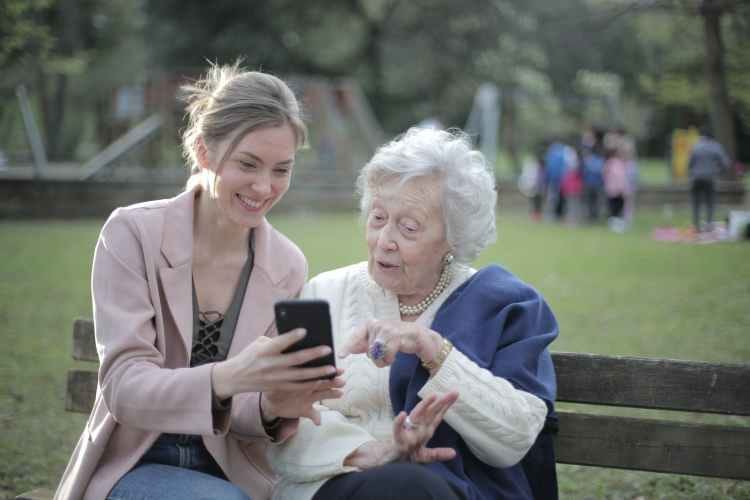
In a jiffy, messages would be received. Group messaging, group calls, conference calls, are all additional features that have further enhanced the value of WhatsApp. Senior citizens who were not keen on WhatsApp and took calls from other people’s phones also asked for help to download WhatsApp on their phones.
They soon changed from ordinary phones to smartphones to be able to talk to their friends and message their loved ones. They even went in for group messaging and felt less lonely.
The New Life Style- ‘WhatsApp, WhatsApp Everywhere’
(a)The WhatsApp University: Now, everyone carries a smartphone with them to work and for casual programmes. They carry it for meetings and official programs. They carry it to a mall or market while shopping, to a restaurant, a movie hall, a wedding, a religious gathering, a kitty party.
Even while driving when a WhatsApp message flashes people cannot help themselves, It entices them to see what is in it. It is so mysterious, so interesting and important or not important but it has to be seen or the person may miss something. Your companion is important but WhatsApp message cannot be delayed.
The moment you see it you are self-induced to reply as though a big problem will arise if you don’t do so. Your peer group may look down upon you or will throw you out of the group or may even consider to drop you from their activities if you don’t reply immediately.
The older generation is hooked on to interesting or silly messages, videos, and chats which they exchange individually or with the group. Sometimes without even reading the message they just pass it on and send it back to where it came from. It is garbage in and out and ‘your garbage being exchanged with mine’.
People send nine-ten messages at the same time. 15–20 pictures are sent together and your message box gets filled especially in group messaging because there is no restraint by people as to when to stop sending a message. Day and night, it keeps flashing expecting people to be awake all the time or wake up in the middle of the night just to see a message.
People complain, “I cannot sleep”. The doctor says, “do not look in your phones for the last hour before your sleep or your sleep will be disturbed”. The addiction however does not go away
The addiction however does not go away. At a restaurant, I saw 4 people from a family who had come to celebrate their father’s birthday. None of them were talking to each other, mother, father, and two children, were busy with their own phones as they waited for the waiter to arrive and again to serve them. Why had they come to celebrate? They might have just stayed at home.
In schools and colleges, students are exchanging notes, PPT’s, and messages through group messaging, the fastest way to connect. It is now a connected community! The world is indeed a small place and now indeed we all belong to the ‘new lifestyle’ popularly called ‘WhatsApp University’.
(b)WhatsApp at work: At work, emails invaded the system but once you left your office for the day, you were at peace. One fine morning, I was told that a particular job had to be finished and notification had already been given in the group. ‘I have not received any such message’, I said.
I was told look, in your WhatsApp group message, there was to be an urgent meeting in the morning and I was not prepared. I was startled. The new lifestyle at work had started.
Workgroups had to allot work over WhatsApp groups. Moreover, a further shock came when people started sending messages like GDMRN, IMO, B/W, EM which meant Good morning, in my opinion, between, email respectively and I had to decipher these and other official terms.
Some people would insist that they wanted to receive work messages by email but the peer group and the seniors would give a glance to make the person feel sorry.
This invaded the privacy of the employees and there was no special ‘me’ time left for anyone anymore. Work from morning to night and more too!
Hope it brings a smile when you read this piece of work. Welcome to the new lifestyle with Whats app ‘we are always connected’.

This post was originally published in https://www.preetisinghempower.com.


