avatarCitizen Upgrade

Free AI web copilot to create summaries, insights and extended knowledge, download it at here

2858

Abstract

;utm_content=creditCopyText">engin akyurt</a> on <a href="https://unsplash.com/?utm_source=unsplash&amp;utm_medium=referral&amp;utm_content=creditCopyText">Unsplash</a></figcaption></figure><p id="8ca1">Let’s start by clearing up some confusion around the different types of face covering. Your standard surgical mask or other non-airtight face covers, like a bandana, provides you with some limited protection from virus droplets in the air.</p><p id="7e99">Wearing these masks also reminds you not to touch your face, thus avoiding self-inoculation with any virus particles you picked up since then last time you washed your hands. The primary purpose of these masks, however, is to limit the droplets generated from your exhaled breath.</p><p id="696a">Droplets are relatively large virus-carrying mucus or saliva particles that can transmit the virus. A person wearing a mask limits the potential that their droplets might infect the people around them since their masks act as a barrier when they cough, sneeze or exhale.</p><p id="8c3a">Given that many contagious individuals have no symptoms, masks need to be worn by everyone where social distancing is not possible, not just by those feeling ill.</p><p id="a794">Not all facemasks are created equal. Whether you’re using a <a href="https://www.theguardian.com/world/2020/jul/19/what-kind-of-face-mask-best-protection-against-coronavirus-covid-19">store-bought or homemade version</a>, the effectiveness of your mask could depend on the material used to make it or how it fits on your face.</p><p id="e750">Any facial covering is better than no facial covering, but the best face masks will be made of heavy cotton or multiple layers of cloth.</p><h2 id="e09a">Respirators</h2><figure id="dde3"><img src="https://cdn-images-1.readmedium.com/v2/resize:fit:800/1*dRKJRgjChOotGTGz2QPCAQ.jpeg"><figcaption>Photo by <a href="https://unsplash.com/@cdrying?utm_source=unsplash&amp;utm_medium=referral&amp;utm_content=creditCopyText">C Drying</a> on <a href="https://unsplash.com/?utm_source=unsplash&amp;utm_medium=referral&amp;utm_content=creditCopyText">Unsplash</a></figcaption></figure><p id="be80">A different type of face covering, primarily used by health providers, is called a “respirator.” These form an airtight seal around your face so that all of the air you breathe in is filtered through the mask.</p><p id="0269">These protect the wearer from exposure to particles that are airborne, i.e. smaller and more resilient than droplets. The classic respirator is known as an “N-95” mask since it filters out at least 95% of these inhaled particles. Respirators are not designed for prolonged use and some wearers experience discomfort when wearing them longterm.</p><h2 id="1b37">Comparing Surgical Masks and Respirators</h2><figure id="a0d3"><img src="https://cdn-images-1.readmedium.com/v2/resize

Options

:fit:800/1*0DXv11drJYlnoRYRRjizZg.png"><figcaption><a href="https://www.cdc.gov/niosh/npptl/pdfs/UnderstandDifferenceInfographic-508.pdf">Source: Adapted from CDC infographic</a></figcaption></figure><h1 id="71bc">How to use your mask</h1><p id="ee54">Whichever mask you choose to wear, be sure to put it on and take it off properly. It is easy to contaminate the surface of your mask if you don’t follow a <a href="https://www.scientificamerican.com/article/how-to-use-masks-during-the-coronavirus-pandemic/">stepwise approach</a>.</p><p id="709e">When removing your mask, consider the front of the mask as a contaminated surface. Begin by washing your hands, then remove the mask by the ear ties, discard the mask or set it aside for cleaning, and wash your hands again.</p><h2 id="af68">How to properly wear a cloth mask / surgical mask</h2><p id="6fd4"><b><i>Step 1: </i></b>Wash your hands (use hand sanitizer if you don’t have access to soap and running water).</p><p id="f991"><b><i>Step 2: </i></b>Place the mask on your face, fitting it over your nose and chin. If the mask has a way to adjust the fit at the nose, do this now to ensure a tight seal.</p><p id="4944"><b><i>Step 3:</i></b> Place the mask straps around your ears or tie them behind your head.</p><p id="0d66"><b><i>Step 4:</i></b> When it’s safe to remove your mask, start by washing or sanitizing your hands again.</p><p id="e44f"><b><i>Step 5:</i></b> Untie the mask straps or remove the loops from around your ears and pull the mask away from your face (avoid touching the front surface of the mask).</p><p id="fa96"><b><i>Step 6:</i></b> Dispose of the mask or place it in a paper bag for <a href="https://theconversation.com/how-should-i-clean-my-cloth-mask-143974">future cleaning</a></p><p id="a2bf"><b><i>Step 7:</i></b> Wash or sanitize your hands one last time.</p><h2 id="2419">How to dispose of or clean your mask</h2><figure id="8050"><img src="https://cdn-images-1.readmedium.com/v2/resize:fit:800/1*ow0el4gr5UBm0F0Dc8qSkQ.jpeg"><figcaption>Photo by <a href="https://unsplash.com/@purzlbaum?utm_source=unsplash&amp;utm_medium=referral&amp;utm_content=creditCopyText">🇨🇭 Claudio Schwarz | @purzlbaum</a> on <a href="https://unsplash.com/?utm_source=unsplash&amp;utm_medium=referral&amp;utm_content=creditCopyText">Unsplash</a></figcaption></figure><p id="b77c">Final point: If your mask is disposable, be sure to dispose of it in a garbage can. No one wants to pick up your medical waste!</p><p id="cb94"><a href="https://medium.com/@citizenupgrade">Citizen Upgrade</a> is a community of experts covering technology, society, and personal development. Visit us at our <a href="https://citizenupgrade.com/">website</a>, on <a href="https://www.facebook.com/citizenupgrade">Facebook</a>, or on <a href="https://twitter.com/CitizenUpgrade">Twitter</a>.</p></article></body>

What’s The Verdict On Masks For COVID-19 Protection?

The answer: It’s complicated and you’re probably doing it wrong
Photo by Tonik on Unsplash
  • In June 2020, the World Health Organization endorsed the use of facemasks to curb the transmission of COVID-19. The CDC has also endorsed mask-wearing.
  • Nevertheless, most people remain confused about the exact function of masks, especially related to the different functions of “respirators” versus standard face masks.
  • Even those who are using masks are often wearing them incorrectly, or contaminating their mask with frequent readjustments.
  • Here our physician writer summarizes what you need to know to protect yourself and your family.

It doesn’t take a genius to notice that face masks are here to stay. Despite early tweets to the contrary by the Surgeon General, scientists and public health officials now agree that widespread use of facemasks can slow the spread of COVID-19.

Combined with social distancing, mask use lowers the “R” value associated with the outbreak. The “R” is the average number of people an infected individual will subsequently infect, so an R greater than 1 means the virus is spreading (each individual infects more than one other person), and an R less than 1 means that it is on the decline.

You can track your state’s evolving R via this website. The value is representative of the success of public health efforts.

Types of Masks

Cloth Masks and Standard Surgical Face Masks
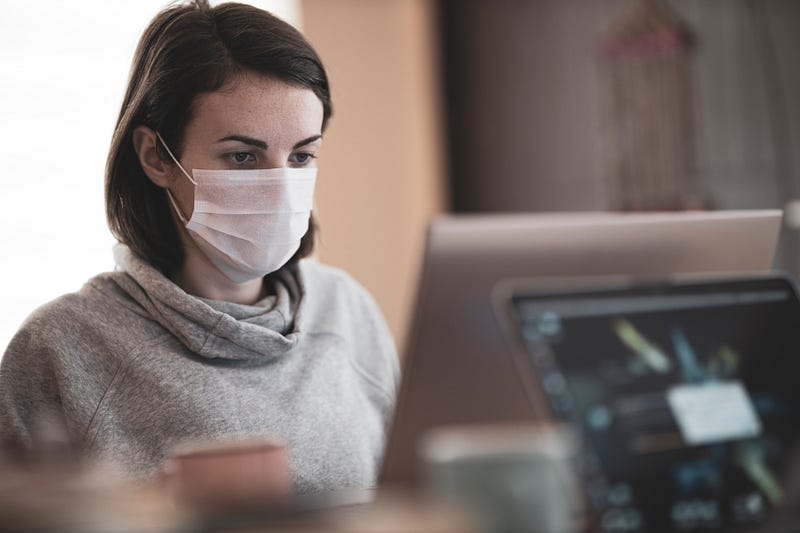
Photo by engin akyurt on Unsplash

Let’s start by clearing up some confusion around the different types of face covering. Your standard surgical mask or other non-airtight face covers, like a bandana, provides you with some limited protection from virus droplets in the air.

Wearing these masks also reminds you not to touch your face, thus avoiding self-inoculation with any virus particles you picked up since then last time you washed your hands. The primary purpose of these masks, however, is to limit the droplets generated from your exhaled breath.

Droplets are relatively large virus-carrying mucus or saliva particles that can transmit the virus. A person wearing a mask limits the potential that their droplets might infect the people around them since their masks act as a barrier when they cough, sneeze or exhale.

Given that many contagious individuals have no symptoms, masks need to be worn by everyone where social distancing is not possible, not just by those feeling ill.

Not all facemasks are created equal. Whether you’re using a store-bought or homemade version, the effectiveness of your mask could depend on the material used to make it or how it fits on your face.

Any facial covering is better than no facial covering, but the best face masks will be made of heavy cotton or multiple layers of cloth.

Respirators

Photo by C Drying on Unsplash

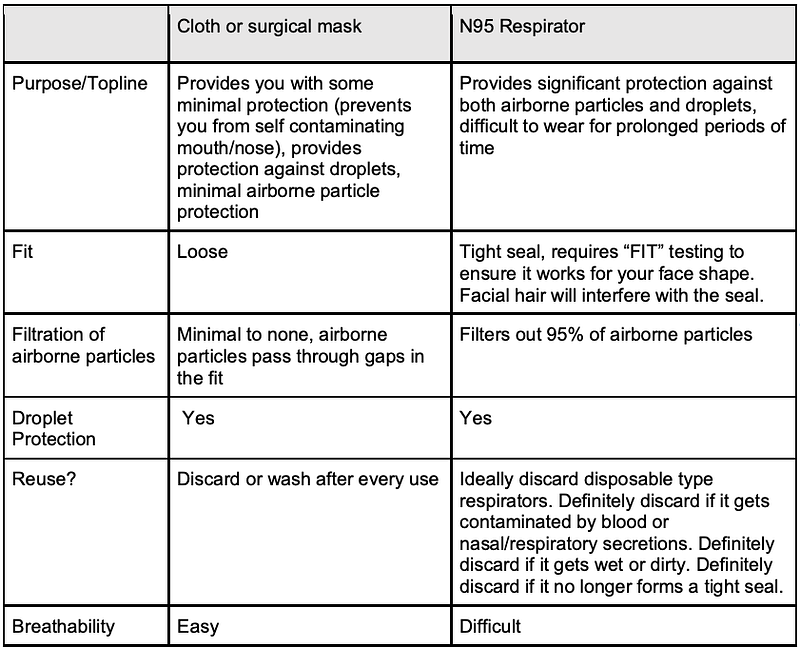
A different type of face covering, primarily used by health providers, is called a “respirator.” These form an airtight seal around your face so that all of the air you breathe in is filtered through the mask.

These protect the wearer from exposure to particles that are airborne, i.e. smaller and more resilient than droplets. The classic respirator is known as an “N-95” mask since it filters out at least 95% of these inhaled particles. Respirators are not designed for prolonged use and some wearers experience discomfort when wearing them longterm.

Comparing Surgical Masks and Respirators
Source: Adapted from CDC infographic

How to use your mask

Whichever mask you choose to wear, be sure to put it on and take it off properly. It is easy to contaminate the surface of your mask if you don’t follow a stepwise approach.

When removing your mask, consider the front of the mask as a contaminated surface. Begin by washing your hands, then remove the mask by the ear ties, discard the mask or set it aside for cleaning, and wash your hands again.

How to properly wear a cloth mask / surgical mask

Step 1: Wash your hands (use hand sanitizer if you don’t have access to soap and running water).

Step 2: Place the mask on your face, fitting it over your nose and chin. If the mask has a way to adjust the fit at the nose, do this now to ensure a tight seal.

Step 3: Place the mask straps around your ears or tie them behind your head.

Step 4: When it’s safe to remove your mask, start by washing or sanitizing your hands again.

Step 5: Untie the mask straps or remove the loops from around your ears and pull the mask away from your face (avoid touching the front surface of the mask).

Step 6: Dispose of the mask or place it in a paper bag for future cleaning

Step 7: Wash or sanitize your hands one last time.

How to dispose of or clean your mask
Photo by 🇨🇭 Claudio Schwarz | @purzlbaum on Unsplash

Final point: If your mask is disposable, be sure to dispose of it in a garbage can. No one wants to pick up your medical waste!

Citizen Upgrade is a community of experts covering technology, society, and personal development. Visit us at our website, on Facebook, or on Twitter.

Covid-19
Coronavirus
Masks
Health
Safety
Recommended from ReadMedium