
What’s the real deal with breed restrictions?
Finding an apartment or getting homeowner’s insurance is a challenge with a pit bull, but not impossible

I have two children: my beautiful teenage daughter, and my handsome tan doggie Maddox. I won’t go as far as to say I love them equally, in case my child ever finds this article. However, they are my family.
I rescued Maddox from an animal shelter in October of 2017. I did not exactly seek him out, but he chose me. I was contemplating getting a dog. My daughter begged for a Chihuahua or other tiny dog. I had always been a fan of bigger dogs but went to the shelter with an open mind.
At the county animal shelter, stray dogs were kept for only fourteen days, three of which were to see if an owner would claim them. After two weeks, most dogs were euthanized.
I went to the shelter to see two dogs that local rescue advocates had been advertising on Facebook. Neither of those dogs was Maddox. I quickly noticed this sad skinny little thing leaning against the fencing in his kennel, I knew he was meant to be mine.
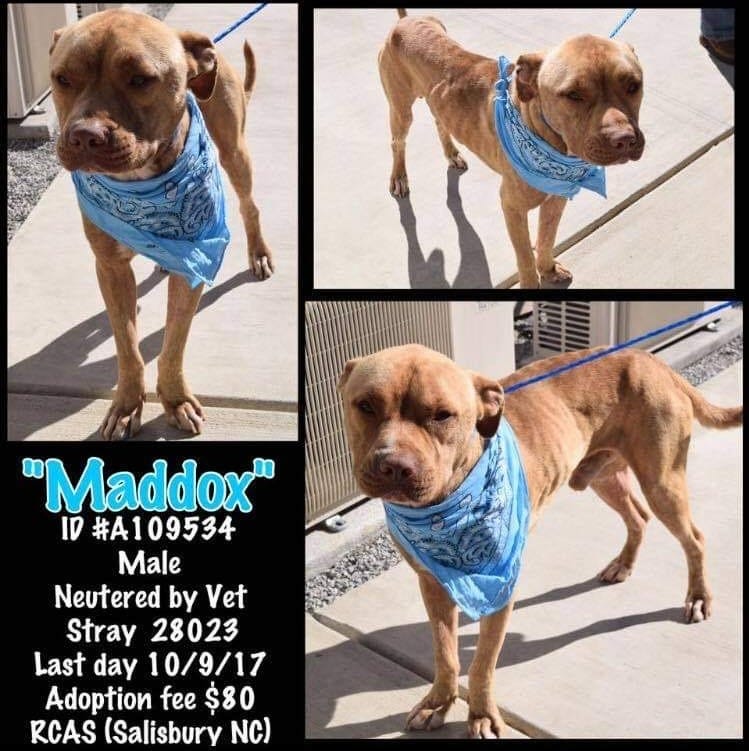
Maddox is a great dog. He is happy and healthy and the backbone of our little family. He is my daughter’s best friend, although she confuses him for her pillow on most occasions. He rarely barks and I’ve never seen him behave destructively or aggressively. Maddox gets along well with people of any age and other dogs. According to my vet, Maddox is an American Staffordshire Terrier, also known as a pit bull.
Breed Restrictions
I didn’t really know about breed restrictions or how they’d impact my life when I adopted Maddox. Breed restrictions make finding a home to rent almost impossible. The breed of a dog will even affect a homeowner’s insurance policy. Some pet stores, groomers, and doggie daycares even have breed restrictions.
Breed restrictions are enforced for different reasons. A renter’s reference, Zumper.com, quoted restricted breeds as those that are considered “large, uncontrollable, dangerous, or noisy.”
It is my personal, biased, opinion that dogs that are “uncontrollable, dangerous, or noisy” are not that way because of their breed, but because of their current or past owners, so this was alarming information for me.
When it comes to dogs, discrimination is not illegal or even frowned upon.
Breeds that often appear on the ‘restricted’ list include:
- American Pit Bull Terriers
- American Bull Dogs
- Rottweilers
- German Shepherds
- Doberman Pinschers
- Akitas
- Boxers
- Huskies
- Great Danes
Even if a dog is mixed with a part of one of these breeds, they may face discrimination. The list of restricted breeds is at the discretion of the organization imposing it and will vary from place to place. The owner of a store, apartment complex, or insurance agency can add or remove any breed they like.
Homeowner’s insurance with a Pit Bull
When I first brought home Maddox, I lived in a single-family home owned by my parents. I had no issues having him there. My mother is a dog lover and she lived in another state. She never said anything indicating she had any concern about the breed of my new family member.
We sold that house about six months later, and I purchased my own home. In order to secure a mortgage, I had to get a homeowner’s insurance policy. Meeting with the insurance agent, I learned that having a pit bull may mean I was denied coverage. Pit bulls were considered high risk to the insurance agency.
Not all insurance companies will deny coverage to a pit bull owner. Some companies simply exclude the dog from the policy. The exclusion would mean that if there is an incident with my dog and I am sued, the insurance policy will not cover that liability.
Exclusion and coverage denial policies vary at different insurance companies. Shopping around for the right policy may require a little more work with a Pit Bull, but will likely end with a satisfied (and insured) dog-loving homeowner. Policygenius.com, an informative website on insurance, states that large insurance carriers like State Farm and Allstate insure all breeds.
Renting with a Pit Bull
I was forced to sell that home just a couple of years later and entered the market as a renter. I have struggled to find suitable places that will accept Maddox.
Looking for an apartment is exciting, or at least it is supposed to be. Many apartment complexes advertise that they are pet friendly which is attractive to any animal lover.
Accepting pets at apartment homes usually is accompanied by some fine print. There are often weight restrictions for dogs and also the dreaded breed restriction. Each apartment complex will have its own list of restricted breeds. I have not ever seen a restricted breed list that did not include pit bulls.
Why not lie? I have lied about his breed on applications, but that did not work for me. I was asked for photos on a couple of occasions, at which time Maddox’s looks gave his breed away. I have even rented a place based on that lie, but my anxiety got the best of me. It was no fun living in fear of eviction and trying to hide my best pal.
How do you deal with breed Restrictions?
- Renting from an individual homeowner — Finding a single-family home, townhouse, or condo that is owned by an individual is an option to avoid breed restrictions. The individual may not have any pet restrictions, or they may be willing to make an exception. There is a possibility that the landlord may have concerns about their insurance, or just not like the dog, but it’s a good place to start.
- Providing documentation to support an exception — Some landlords or management companies will make exceptions to their breed restrictions on a case-by-case basis. Preparing a portfolio for your pet including references, photos, vet records, or scheduling a meet and greet may help to get around the breed restrictions.
- Purchasing renters’ insurance — having the liability of your dog covered on an insurance policy may be attractive to a landlord whose main concern about breeds is their own insurance. Reassurance that the owner will not be responsible legally if there are issues may be enough to allow the dog.
- Qualifying as an ESA — The Americans with Disabilities Act(ADA) protects the owners of service animals. If a dog, of any breed, is certified as an Emotional Support Animal (ESA), it should be exempt from breed restrictions. There are situations where it is legal for a landlord to still deny renting to the owner of an ESA. It’s best to check with the landlord or management company on their policy regarding service animals.
Takeaways
Having a Pit Bull creates challenges when renting or insuring a home or apartment. If challenges present themselves when looking for insurance with a dog that may be considered high risk, shopping around is the solution. Finding an apartment with a dog on the restricted breed list may require more time, purchasing separate insurance, or researching service animal eligibility.
Thank you for reading. If you enjoyed this article you may also enjoy:
And if you are enjoying the platform, support me and many other writers by becoming a member today.


