
What’s The Point of Voting When the Rich Own Both Parties?
The voting process was flawed, and corruption abounded. But with each passing decade and election cycle, our nation has become more democratic — a word that means “rule by the people.” Yet despite this progress toward fairness and equality in government, there’s still one huge problem: The rich own both parties.
You may have heard that politicians are bought off by big corporations or wealthy individuals who fund their campaigns with money. But I’m here to tell you that this isn’t true — because corporations AND wealthy individuals are buying them off. Indeed, some politicians don’t care about money as much as others do, or they have more of it. However, when an average politician enters office, they will never again know what it feels like to be broke. They will make millions during their time in office because they have access to all of these lobbyists who pay them bribes. It’s called campaign donations, so they can get whatever laws passed that benefit their company or industry. This Is why even though we live in such an advanced society where information is easier than ever for everyone to access, we still elect many leaders who go against what science will help us thrive.
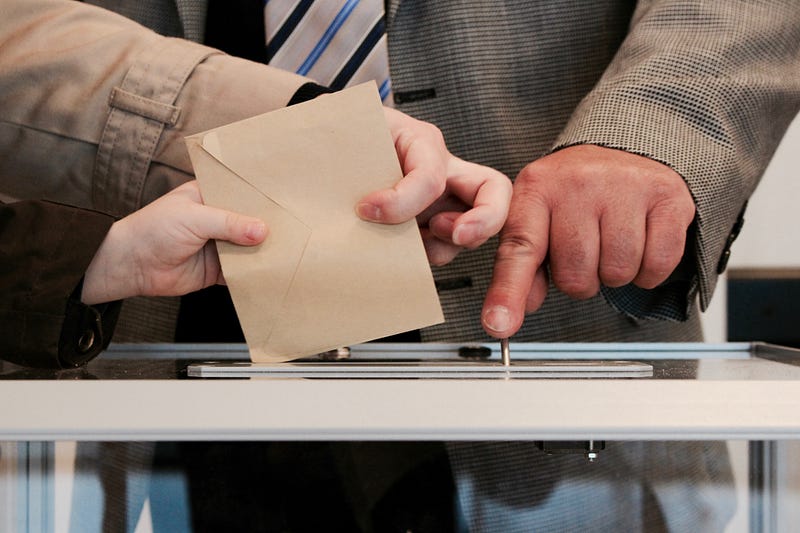
It’s no secret that the 1% owns both major political parties
The early 1900s saw the rise of “the invisible primary,” when the rich started using their money to influence politics before it even began. This process has only intensified since then, with billionaires like George Soros funding third-party candidates or PACs (political action committees). These organizations then use their funds to support specific candidates and attack others to ensure that those supported by them win elections.
The most obvious example of this was during the 2016 presidential election when billionaire Michael Bloomberg spent $100 million trying unsuccessfully to get rid of Donald Trump through ads attacking him as unfit for office but, not because he disagreed with his policies, instead because Bloomberg was worried about what would happen if Trump won.
The rich and powerful have been buying up our elections for decades.
But don’t take my word for it. Former President Jimmy Carter said about the 2016 presidential race: “The funding of campaigns today is just unbelievable.”
And here’s what former President Barack Obama said: “You don’t have to be a Democrat or a Republican to say that we can do better than this.”
The bottom line is that if you care about democracy, you should care about money in politics and vote accordingly.
The early 1900s saw the rise of “the invisible primary,” when the rich started using their money to influence politics before it even began.
In the early 1900s, wealthy people in business started using their money to influence politics before it began. They did this by funding candidates and other politicians in what became known as an “invisible primary” because no one could see it happening until after the election when these same rich people had a vested interest in seeing their candidates succeed.
The invisible primary was also called “the smoke-filled room” because it took place behind closed doors at resorts like Bohemian Grove in California or Camp David in Maryland, where George H.W. Bush hosted his top fundraisers. Journalist Walter Dean Burnham coined the term itself during his study of American elections from 1828–1924. He said there were two kinds of primaries, visible ones, where voters cast ballots, and invisible ones, where power brokers picked winners behind closed doors before any votes were counted.
In the 1970s, financial deregulation began taking hold, leading to a drastic increase in corporate donations.
Today, these donations are at record levels.
Corporations have a lot of influence over politics. They use it to get tax breaks, subsidies, and other benefits, costing taxpayers billions yearly.
This trend continued today, with spending skyrocketing in the last few years.
According to one study, the top 1% spent $2.6 billion on lobbying between 1998 and 2008, and that’s just what they reported. Another report found that between 1998 and 2012, they spent $5 billion on campaign contributions at all government, local, state, and federal levels.
The rich also fund think tanks and other organizations that influence public policy, from academia to civil society groups like Oxfam America, to advance their interests and promote economic inequality by pushing for lower taxes for themselves while cutting social services for everyone else, weakening unions so workers have less bargaining power against corporations trying to pay them less money privatizing government functions like education or healthcare delivery. Hence, there’s no longer any accountability from voters over where our tax dollars go, undermining environmental regulations so companies can pollute without consequence, etcetera ad nauseam ad infinitum ad nauseam again.
During this time, economic inequality grew rapidly as well.
During this time, economic inequality grew rapidly as well. The rich got more prosperous, and the poor get poorer, not just because of their own decisions or lack thereof. For example, corporate influence on politics has increased since before World War II and even the Civil War. This means that the people who own companies can use their money to buy politicians’ loyalty to get favorable policies passed in Congress and legislatures around the country. That’s why you see things like tax cuts for billionaires, which benefit them personally at your expense!
The rich also have more power than ever because there needs to be more government spending on programs like education or infrastructure repair. Instead, we’re wasting billions on wars overseas that don’t benefit our country but do helpline pockets of defense contractors who donate heavily toward candidates from both parties during election season.
Today’s voter turnout rates are at a historic low, with only about half eligible voters casting ballots on Election Day.
Voter turnout rates are at a historic low, with only about half of eligible voters casting ballots on Election Day. The reasons for this are many:
Apathy
Disillusionment with politics as usual
Lack of civic engagement in general
But you may have yet to consider something, the wealthy own both parties. As such, they have considerable influence over who gets nominated to run for office and which policies get implemented once elected officials take office. This means that if you vote for Democrats or Republicans in national or local elections, your vote doesn’t count!
There are numerous reasons why people don’t vote besides apathy or disillusionment with politics as usual. These include inconvenient polling hours, lack of transportation resources, and physical disability caused by inadequate healthcare coverage or old age. Other factors include:
Negative voting process experiences such as long lines.
Language barriers.
Lack of access to information about candidates and issues.
Voting is a civic duty.
Voting is your voice as a citizen.
Voting is a privilege that not everyone has access to or takes advantage of, especially if they are disabled, elderly, or otherwise disenfranchised from the system because of their race or socioeconomic status.
If you don’t vote, you have no right to complain about what happens in this country. You have no say! You’re just another bystander who lets others make decisions on your behalf while hoping for the best and most likely getting screwed over by those same people every time, if history tells us anything.
The point of voting is to make a difference. The end of the vote is to have your voice heard. The issue of voting is ensuring that your values are represented in government and legislation. The point of voting is to have leaders who don’t just mean the interests of corporations but the interests of people, especially those most vulnerable in our society.
Thanks for taking the time to read. I’d like to hear your perspective.
You can also refer to the related article:
Please subscribe here to receive the latest insightful stories by email.
By becoming a Medium member for only $5, you can gain unrestricted access to a vast collection of stories. If you choose to register through my referral link, I will receive a modest commission without any additional expense to you. I sincerely appreciate your support!