
PROMPT
What’s The Oddest Way You’ve Landed A Writing Job?
Can you top the story of the creator of Forrest Gump?
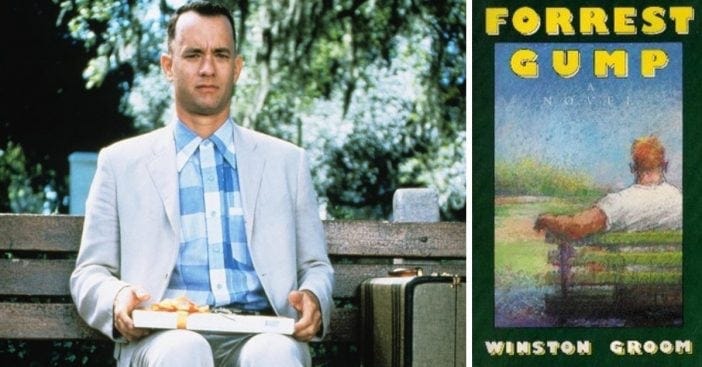
My work as a journalist has involved asking a lot of bestselling authors how they got their first jobs, and a striking number have said, “It was a fluke.” Many reporter friends say they’ve had a similar response from sources in other fields.
I was reminded of this while reading Don’t Quit Your Day Job, a collection of essays by celebrated writers on why they gave up steady paychecks, edited by Sonny Brewer.
Sonny was a bookseller in my town who’d stepped away from the cash register when Random House bought his first novel, The Poet of Tolstoy Park, and I’d picked up his book looking for stories like his for my recent Medium article on writers who’d quit their day jobs.
He couldn’t get hired after serving in Vietnam
One of the most memorable of those stories came from Winston Groom, the creator of Forrest Gump, who was among the contributors who — to put their decision in context — explained why’d taken a job in the first place.
Groom had been an Army officer in Vietnam before he returned to the States and headed for New York City, hoping to land a job at a high-prestige magazine like Time, Newsweek, or The New Yorker.
As he made the rounds, he kept hearing from people that he needed to gain some experience before he asked them for work. And how could he do that? They couldn’t say.
Working for dollar an hour at a factory
Groom went back to Alabama, where he’d grown up, and struck out there, too. Low on cash, he took a job for a dollar an hour putting up shelves at a factory that made canvas tarpaulins. Then the wind shifted, he says.
“Just when I was feeling so low I had to look up to see down, some luck came my way.
“There was a big wedding of the sister of a good friend of mine and I was asked to the after-rehearsal dinner party. At one point I stepped outside to get some cool autumn air, and there was an older guy there who I figured was probably a newspaperman because he had on a tuxedo and brown shoes.
“We got to talking and he asked me what I did.
“When I told him I was ‘retired,’ he asked what from, and when I told him, he asked what I wanted to do.
“I said I wanted to write, but nobody would hire me, to which he replied, ‘Well, you want to write, why don’t you write me a letter saying why, ’cause I am the managing editor of the Washington Star.’ He was also the uncle of the bride.”
A couple of weeks later, Groom was bound for Washington, D.C., and work as a reporter on a newspaper in the nation’s capital.
As he was leaving, his mother called and said the editor of the local paper was on the phone. Someone had left and it had an opening:
“I told him to go…well, let’s just say I wasn’t interested.”
Groom spent nine years at the Star, where he met four presidents along with Supreme Court justices, members of Congress, and ambassadors. He left to write the novel that became Better Times Like These and other books, including Forrest Gump.
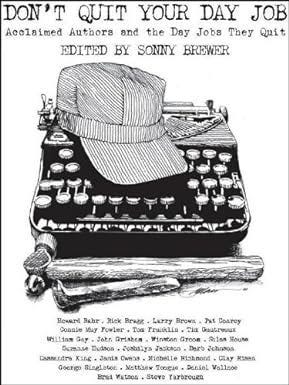
In his essay in Don’t Quit Your Day Job, Groom says he learned something from each of his jobs:
“And if you expect to be a writer, you’d best be able to draw on what you know from what you’ve done pretty heavily.”
What’s the strangest way you’ve landed a writing job? I don’t do separate-story prompts (which this page isn’t set up to handle), but if you think your experience was stranger than Groom’s, I’d love to hear it in two or three lines in the comments. If you have a good story on how you quit a day job, you can tell it in the comments of the story I’ve linked to below.
You might like my story on how five writers quit their day jobs, which has more on why Groom walked away from the Star.


