
What’s the Biggest Human Relative That Ever Lived?
We’re pretty big, as primates go, but one ape towered over us all, and now we know what happened to it
Unless you count Bigfoot or the Abominable Snowman, the largest primate known to have ever walked the Earth was a gargantuan ape known as Gigantopithcus blacki. The largely mysterious beast — looking pretty Yeti-like in scientific illustrations — stood about 10 feet tall (3 meters) and weighed around 1,100 pounds (500 kg), about the same heft as a racehorse.
And now, closing in on a century after its discovery, we know what happened to these distant human relatives.
Researchers don’t have much evidence on Gigantopithcus blacki to sink their teeth into. There are no skeletons in any scientists’ closets, no carvings on cave walls, no blurry photographs posted to the interwebs. But they have found a couple thousand of G. blacki’s fossilized teeth and a few lower jawbones, and that’s led to a surprising number of insights and even some speculative illustrations of what the outsized primates might’ve looked like.
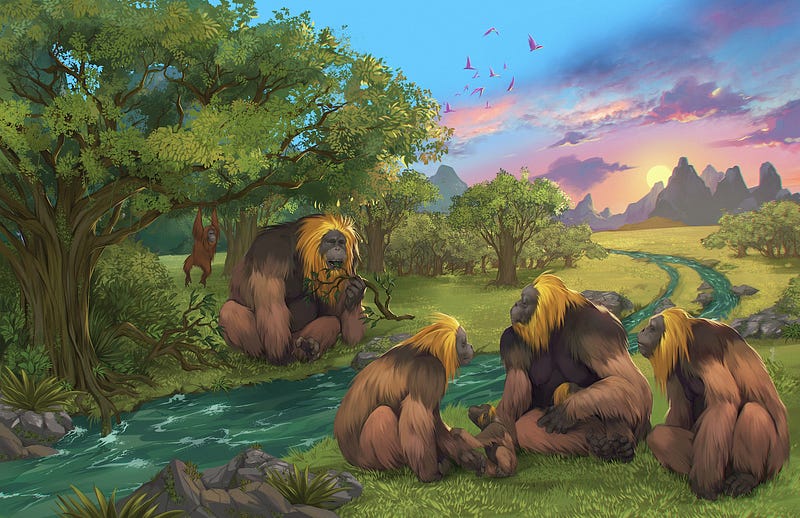
Have we met?
The discovery of G. blacki was made in 1935, by a paleontologist perusing fossilized bones and teeth in a Hong Kong pharmacy. Subsequent discoveries traced the creature’s origin to multiple caves in southern China’s Guangxi province, an area thought to have been inhabited by early humans around the same time.
We don’t know for sure if G. blacki and ancient humans ever crossed paths, literally, but it’s unlikely. The most recent interpretations suggest the apes were extinct before humans arrived in the region, but previous interpretations have suggested they may have been in the area around the same time.
From the scant evidence, researchers have concluded G. blacki entered the evolutionary scene about two million years ago and exited the stage more than 200,000 years ago.
Gigantopithcus blacki is most closely related to orangutans, which are the most distant relatives of humans among the great apes (chimps are the closest to us). But the split between G. blacki and orangutans along the tree of evolution occurred more than 12 million years ago, scientists reported in 2019. Still, that makes G. blacki our very distant cousins, though far more distant than, say, Neanderthal or chimps.
Had you run into G. blacki back then, your size disadvantage might’ve proved frightening, but it’s unlikely G. blacki would have tried to eat you (though nobody can say whether or not you might’ve gotten beaten up). Analysis of its teeth — the shape of the whopping 1-inch-wide molars and their chemical composition — reveal the formidable beast was an herbivore.
I mean, look how cute!
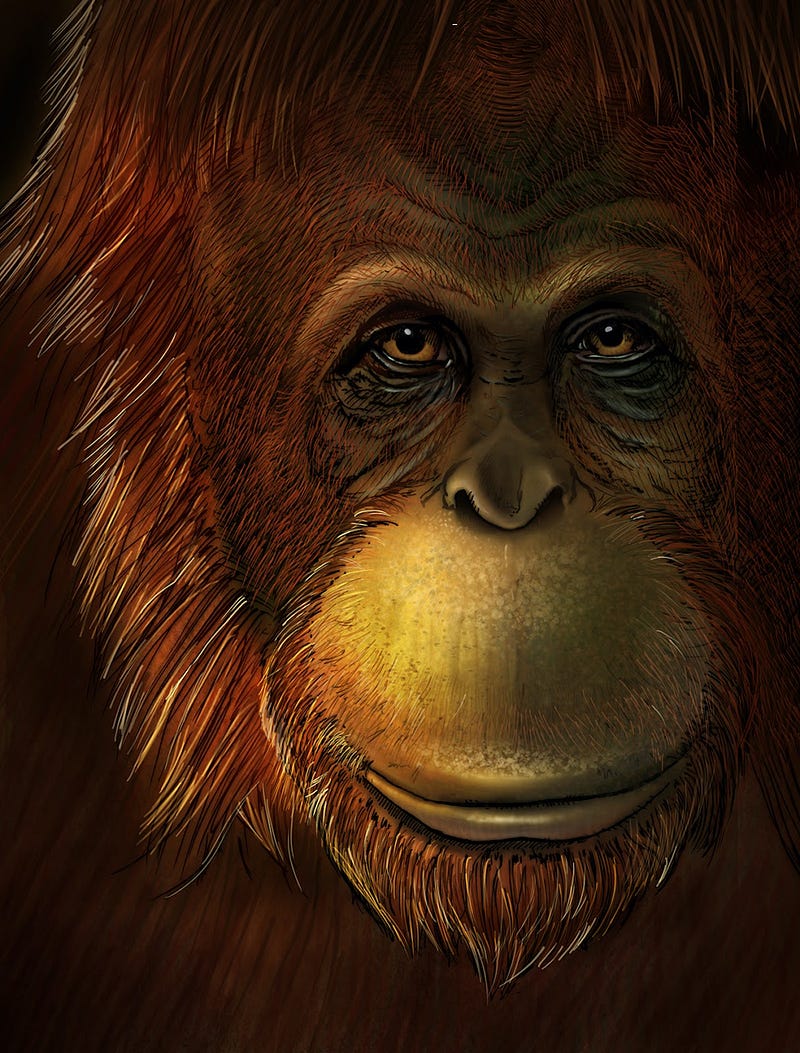
Hello I must be going
Only in recent years have scientists figured out why the colossal creature went extinct.
The latest research on G. blacki, detailed Jan. 10, 2024 in the journal Nature, pinned down its extinction at somewhere between 295,000 and 215,000 years ago.
“Teeth provide a staggering insight into the behavior of the species, indicating stress, diversity of food sources, and repeated behaviors,” said geochronologist Renaud Joannes-Boyau, PhD, an associate professor at Southern Cross University in Australia and member of the international research team.
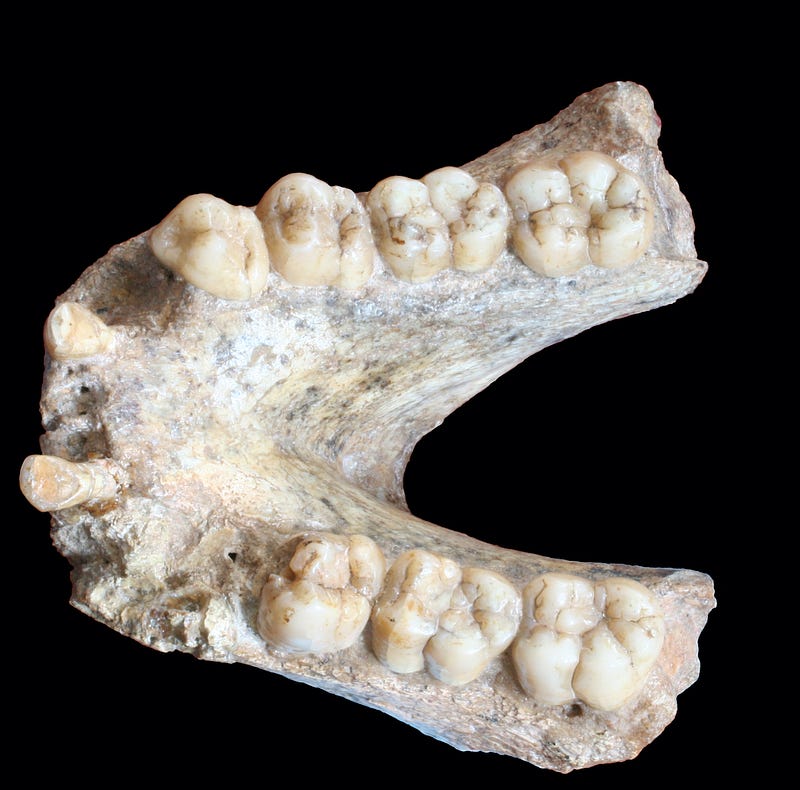
In addition to studying the teeth, the team analyzed pollen in soil samples from the caves, and used other techniques, to reconstruct the environment of the era.
“The story of G. blacki is an enigma in paleontology,” said study team member and paleontologist Yingqi Zhang, of the Chinese Academy of Sciences (IVPP). “How could such a mighty creature go extinct at a time when other primates were adapting and surviving?”
Early on in its existence, G. blacki enjoyed a rich and diverse forest, according to the team of scientists from the US, China and Australia. But over time that environment changed. Vast forests turned to grassland. Fruit became less plentiful. G. blacki turned to the dwindling remains of bark and twigs for sustenance. Orangutans were mobile and leaned into seeds and bugs for food, and even evolved size-wise to adapt to the changes.
“In comparison, G. blacki relied on a less nutritious backup food source when its preferences were unavailable, decreasing the diversity of its food,” the scientists concluded. “The ape became less mobile, had a reduced geographic range for foraging, and faced chronic stress and dwindling numbers.”
The ape’s extinction offers a lesson in getting stuck in old ways, and how a species can be too big to survive.
“G. blacki was the ultimate specialist, compared to the more agile adapters like orangutans, and this ultimately led to its demise,” Zhang said.
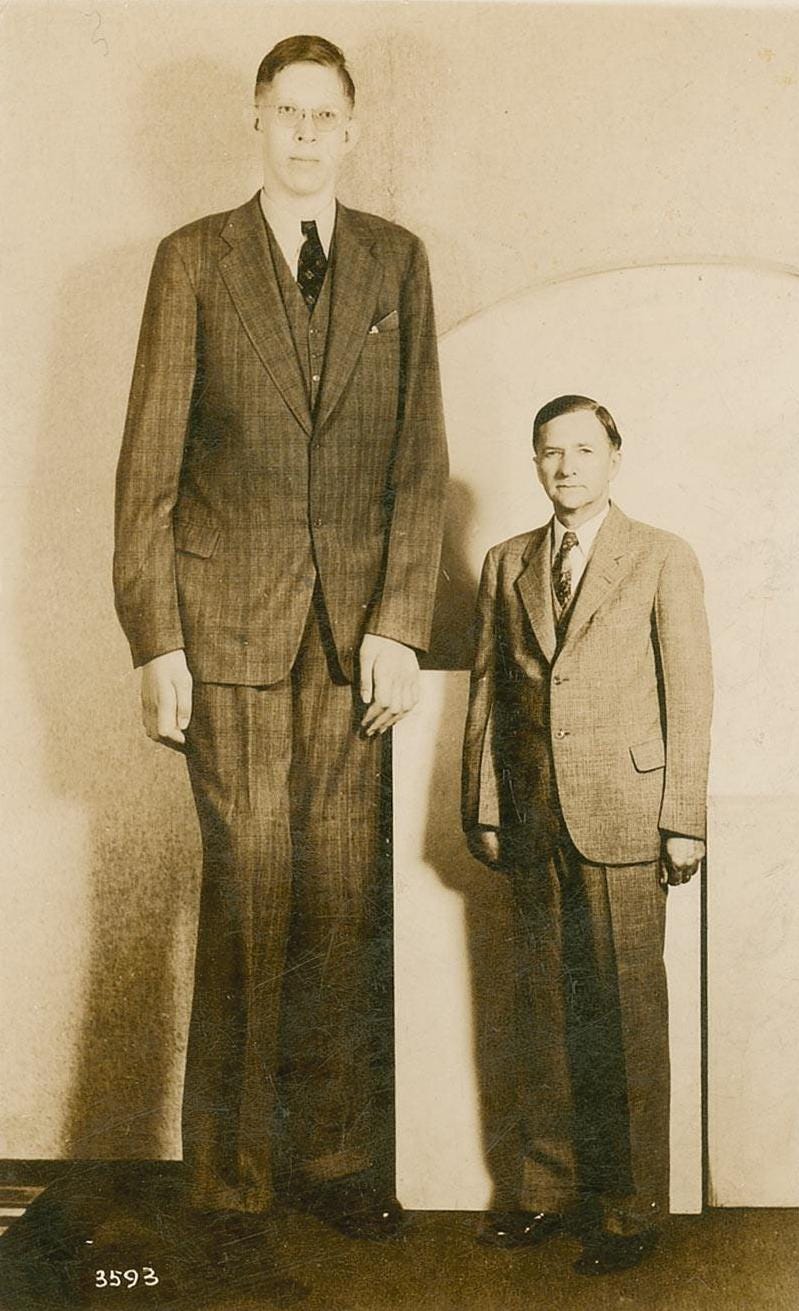
Finally, for a sense of scale, the tallest human ever measured was Robert Wadlow, who topped out at 8-foot-11 — a foot shy of a typical G. blacki. Here’s Wadlow with his father:
Note: This story was corrected to reflect the fact that orangutans are the most distant relatives of humans among the great apes, not the closest.
Thanks for your support, which makes my reporting and writing possible. To make your days better, check out my book: Make Sleep Your Superpower. And if you’re a writer, sign up for my Writer’s Guide newsletter.