
What’s Going On When Someone Said You’ve Changed, But You Don’t See the Difference
The Problem with Biases
I’ve been on a trip for the holidays and posting reels about it on Instagram when an old friend decided to reach out.
“Are you lesbian?”
“Obviously,” I responded.
“I asked you before, but you refused to respond…and you’ve had boyfriends. Is she your girlfriend?”
“Yeah,” I responded. I know people might react to seeing her face on my reels recently.
Then she told me about her workmate who looked like my girlfriend, but I don’t see it this way. She then said they (possibly referring to my college friends) don’t feel me anymore since I got into a relationship.
I’m a bit puzzled by that statement because I’ve always been the one who rarely joins long chat conversations. That’s because I prefer in-person conversations.
So, whenever friends ask me out, and I don’t have any deadlines to finish, I’d go. And when I do, I rarely have my phone in front of me.
But then, her following statement broke my heart.
“You are not Wam. Everything changed.”
“Wait, what? Was it because of me coming out?” I thought. Her “since I got in a relationship” comment confirmed it. I barely even started this relationship. I don’t even know if I am really in a relationship. There’s a lot of story behind that, and only a few people knew about it. Those people who weren’t there can only assume unless they ask, of course.
I just responded with this statement, and I never got a response.
“Maybe your picture of me is different from who I truly am.”
How can we tell if we know someone? How can we tell if someone we know changed?
We Perceive Everything Biased on our Experiences
Everyone grew up with different cultures based on our country, state or province, community, and families. Note: Not all families are the same.
So, there could be ethnocentrism going on within your family or community without you noticing because you’re so used to whatever is happening around you.
There you are, living in that bubble, seeing everything that you’re used to seeing. Then your world expands, and you see other cultural differences.
Common reaction?
Resistance.
When you bump into someone with a different culture, doing something you’re not used to seeing. You react and assume that this person is wrong.
“That’s not how you’re supposed to cook that! It’s supposed to be this way!” You say.
“Well, we don’t do it that way,” said the other person, “it’s supposed to be this way!”
You think he’s wrong, and he believes you’re wrong because both are biased on their ethnocentric beliefs.
But that is only for new people who were almost strangers, you say. Someone you haven’t grown up with or gone to school with. This isn’t the same as an old friend we thought we knew, then suddenly changing after moving to another country!
We see others biased on our experiences
..and that’s a problem.
What if this friend of yours is holding up a facade because of the very culture that holds you together? If this facade breaks down, would you think this person is still the same? Or would you suddenly see this friend as a stranger because she no longer fits that picture you built with her?
How others see me
When I moved to the United States, I became friends with new people, who eventually became my new family. By choice, my roommates became my family.
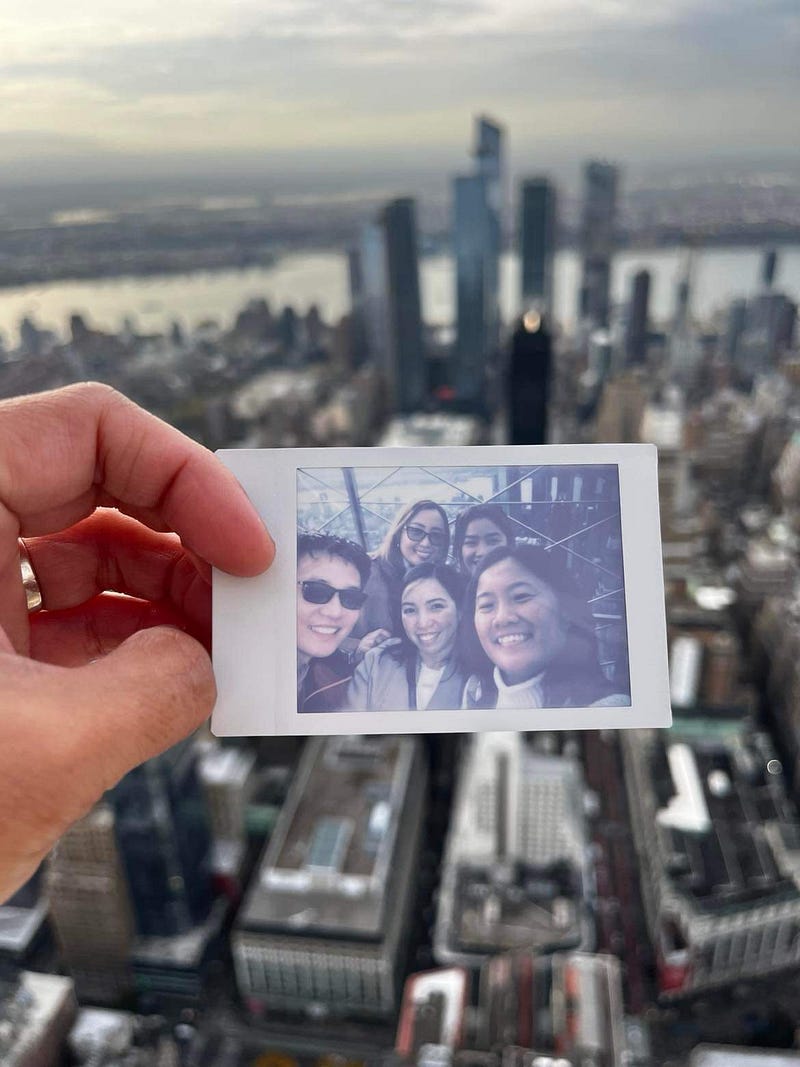
Since we were all new in New Jersey, with no close relatives or friends nearby, the closest family we could have was each other. We relied on each other for emotional, informational, tangible, and different types of support.
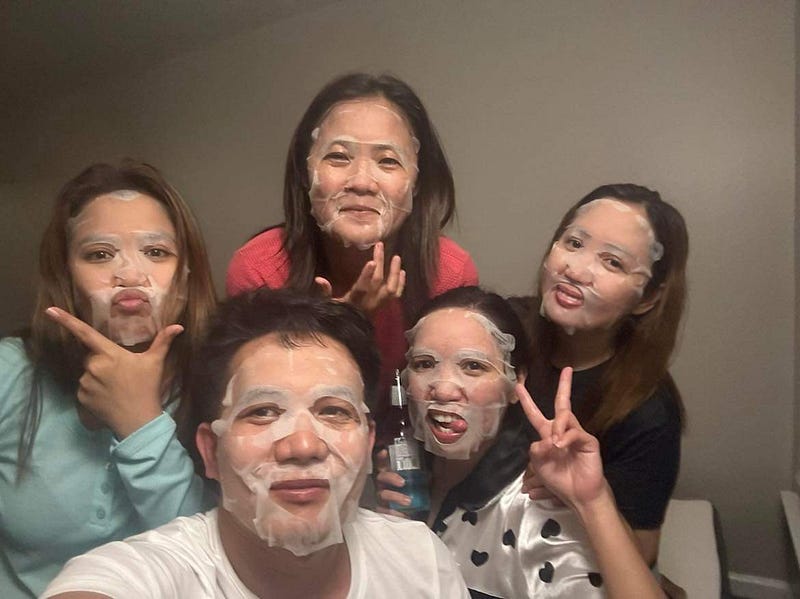
We all came to know each other according to how we presented ourselves. We shared our past and current relationships, preferences, places we’d all want to go, plans, and issues within our work.
So, when a long-time close friend came to visit from the Philippines, my roommates told her something about me. She responded with sort of a “yeah, I already know that. I knew her a long time ago.” I forgot exactly what my roommates and my long-time close friend said. What I can remember is how that incident got me thinking…
Do they really know me?
My roommates know me from the present, with a lot of history. And because of that, they knew that I was a mess. I am a work in progress!
My old friend, however, knew me from college, which was more than a decade ago. The past me who was innocent, naive, who was starting to discover the world, and still holding up that facade to keep the reputation.
My old friend knew me but possibly didn’t know me because her picture of me was stuck in the past. On the other hand, my roommates know me, although they never knew me, because their picture of me is the present.
And if we don’t know something, we fill the gaps.
We assume.
Just like how someone assumed that I am used to meddling with cheaters just because I’ve decided to steal someone from a peaceful relationship.
Excuse me. I steer away from married or happy couples, thank you.
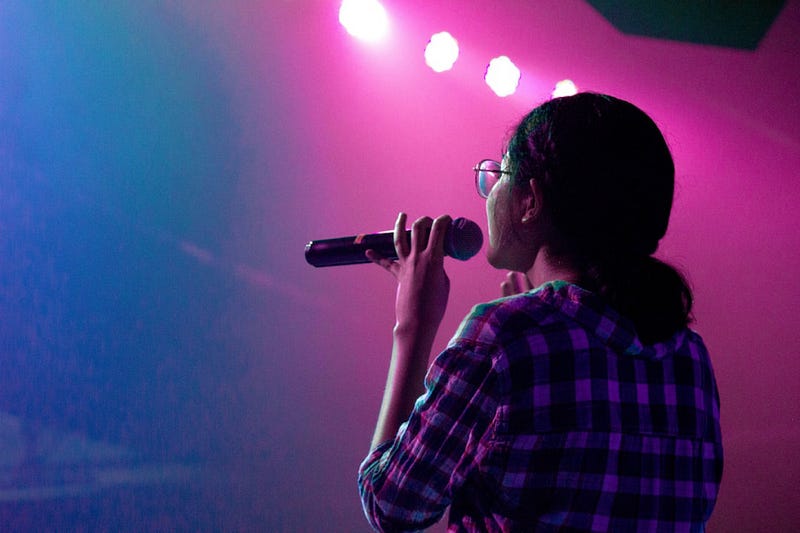
My girlfriend now also assumed something about me. She thought I was the type who was not afraid to sing and do Videoke at every party. And she couldn’t believe it when I told her that, until a year ago with the guys (the roommates), nobody could make me sing Videoke at any party. Ever!
From all the statements made, I could assume that:
My old friend filled a decade gap between the person I was in college and who I am now by assuming I’m still the same person.
The friend who told me that I had changed filled the gap between a year ago, when I was still struggling to hold that facade, to who I am now, without the facade.
My roommates could fill the gap between who I was and who I am now, according to their experiences with me. They could assume that I have always been like this, even though I wasn’t.
But we don’t have to assume or fill the gap all the time. There is a better way to look at things.
How we should see the world
If we don’t see the world biased on our perception of it, there will be:
- Less resistance because you’re more open
- There is less misunderstanding because you see things from another perspective
- and there will be more peace because you’ll be more accepting.
Think about it.
If you are not biased on anything at all, how will you see the world around you? How will you see the people around you? How do you see yourself?
Your neighbor,
Wam


