avatarAnne the Vegan

Free AI web copilot to create summaries, insights and extended knowledge, download it at here

2130

Abstract

st everywhere we went in England, there were scars from World War II. Whether it was generational stories passed down from loved ones or actual puncture wounds in bricks from the scatterings of bombs and bullets, the evidence was clear. Europe is still in recovery from this trauma.</p><p id="5e37">As Americans, I doubt many of us can appreciate this fact. The only wars waged on our own soil were really during the Revolution and against each other during the Civil War. Of course, some people here still think we are fighting for the Confederacy, proudly waving their flags as if the South won, but they are delusional.</p><p id="4c95">My recent visit to England was a theater-themed trip with a travel group and was booked through my daughter’s school. Their theater history is vibrant.</p><p id="0348">The number of fires suffered by multiple theaters is astounding, and it was usually from stupid things like lighting fireworks inside for special effects during a show. I guess that lesson wasn’t learned the first time, as it happened numerous times in many theaters!</p><p id="2c14">I won a trivia question when we were shown the largest door in the world. It happened to be to the backstage of a theater. I knew from my own education as a drama nerd that the colossal opening was to allow for backdrops to be installed easily. The young adults on the trip were mildly impressed with my knowledge.</p><figure id="393a"><img src="https://cdn-images-1.readmedium.com/v2/resize:fit:800/0*uXfK9Dm_0dlcYB3G"><figcaption>The largest door in the world. In the Theater district in London. Photo by author.</figcaption></figure><p id="c1f9">Connected to theater history here is the birthplace of Shakespeare in Stratford-upon-Avon, which was my favorite small-ish town visit of the trip. We also got to see Mrs. Shakespeare’s childhood home, that of Anne Hathaway.</p><p id="7d28">The guides here taught me so much about where some of our common names for home structures and some table manners arose. For example, the threshold got its name literally, from “holding” the “thresh,” hay used to line the slate floors in winter to ke

Options

ep the home warmer. The rule of no elbows on the table came about because early dinner tables were simply a slab of wood set upon a platform, and if you leaned on it, you’d end up wearing your meal! My mind was blown.</p><figure id="2a93"><img src="https://cdn-images-1.readmedium.com/v2/resize:fit:800/0*YixzXNOqLwr8QizP"><figcaption>Anne Hathaway’s childhood home. (Mrs. William Shakespeare. Not the actor!) Photo by author.</figcaption></figure><p id="159c">During our ventures, I got the sense that Europeans take pride in their history, how old some of their buildings are, and even sharing the scars of enduring world wars. They like to point out how “young” America is. Old to us is yesterday for them, considering the depth of their history.</p><p id="3e40">If you look at the oldest structures in America, many of them were actually created by Native Americans, and yet we still look to those built by Europeans and their slaves as what qualifies as old here. I often have difficulty reconciling my feelings about being a descendant of original colonizers. The fact that the United States was colonized by Europeans means our history has some ugly parts to it, indeed.</p><p id="332f">I do feel very lucky, however, to have grown up in Virginia, a place with much history, a place where our Founding Fathers once walked, and also to have been able to visit the birthplace of my ancestors, the country from which my people immigrated.</p><p id="97a6">I loved seeing the old and traditional mixed with the sleek and new in Europe. It was unexpected. But I also appreciated the difference between European “old” and American “old.” It’s a lot to digest and consider, but it is amazing and beautiful.</p><p id="c891"><i>Have you ever traveled to another country and been struck by societal norms of “old” and “new”? I’d love to hear your thoughts!</i></p><p id="e9c8"><i>As always, I hope you all are safe and healthy.</i></p><p id="ed1c"><i>Originally published at <a href="https://annethevegan.com/2023/08/31/whats-old-to-americans-is-new-in-europe/">http://annethevegan.com</a> on August 31, 2023.</i></p></article></body>

HISTORY/TRAVEL

What’s Old to Americans is New in Europe

How old is old, anyway?
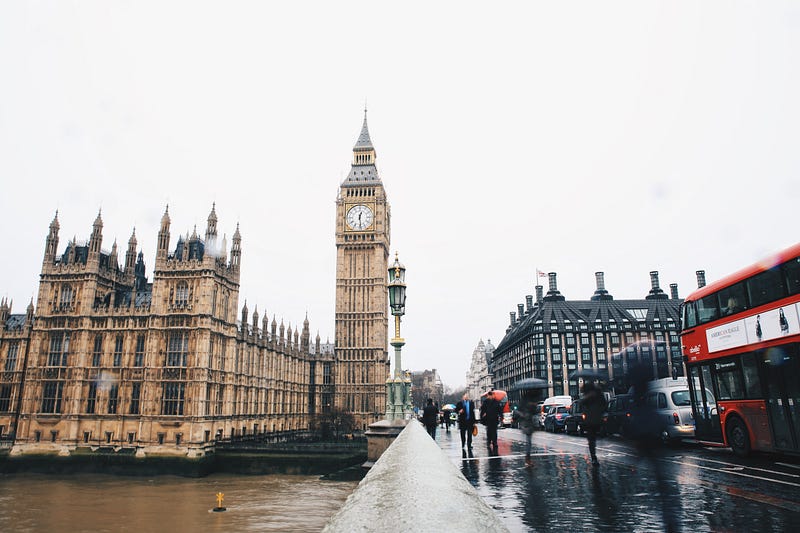
Big Ben next to a modern double-decker bus. Photo by Heidi Fin on Unsplash

One of our tour guides in Oxford scoffed at our group’s idea of old, as she casually pointed out that one of the buildings we were standing beside was built in 1249 and was a stunning example of Gothic style.

What do you consider old?

I’m an American. When I think of something being old, my memory is drawn to a visit to Colonial Williamsburg, where the Wren Building on the campus of William and Mary is the oldest academic structure in the United States. It was built in 1695.

My husband is an avid relic hunter, and some of his discovered pieces of history date back to colonial times, including Spanish coins and English shoe buckles.

In my recent travels to England, I was prepared to see old things, but the fact that some structures have been in existence since the 1200s seems unfathomable. Yet I witnessed them with my own eyes.

I was lucky to pick up some English relics for my husband in Stratford-upon-Avon, including a coin from the 1200s during Henry III’s reign, and a Roman coin from the 6th century discovered in town. Now that’s old!

A sleek high-rise building stands tall next to the London Tower Bridge. Photo by author.

Traveling to the more cosmopolitan city of London means observing the stark juxtaposition of highly modern, sleek high rises next to staunchly traditional government structures like the Parliament.

Almost everywhere we went in England, there were scars from World War II. Whether it was generational stories passed down from loved ones or actual puncture wounds in bricks from the scatterings of bombs and bullets, the evidence was clear. Europe is still in recovery from this trauma.

As Americans, I doubt many of us can appreciate this fact. The only wars waged on our own soil were really during the Revolution and against each other during the Civil War. Of course, some people here still think we are fighting for the Confederacy, proudly waving their flags as if the South won, but they are delusional.

My recent visit to England was a theater-themed trip with a travel group and was booked through my daughter’s school. Their theater history is vibrant.

The number of fires suffered by multiple theaters is astounding, and it was usually from stupid things like lighting fireworks inside for special effects during a show. I guess that lesson wasn’t learned the first time, as it happened numerous times in many theaters!

I won a trivia question when we were shown the largest door in the world. It happened to be to the backstage of a theater. I knew from my own education as a drama nerd that the colossal opening was to allow for backdrops to be installed easily. The young adults on the trip were mildly impressed with my knowledge.

The largest door in the world. In the Theater district in London. Photo by author.

Connected to theater history here is the birthplace of Shakespeare in Stratford-upon-Avon, which was my favorite small-ish town visit of the trip. We also got to see Mrs. Shakespeare’s childhood home, that of Anne Hathaway.

The guides here taught me so much about where some of our common names for home structures and some table manners arose. For example, the threshold got its name literally, from “holding” the “thresh,” hay used to line the slate floors in winter to keep the home warmer. The rule of no elbows on the table came about because early dinner tables were simply a slab of wood set upon a platform, and if you leaned on it, you’d end up wearing your meal! My mind was blown.
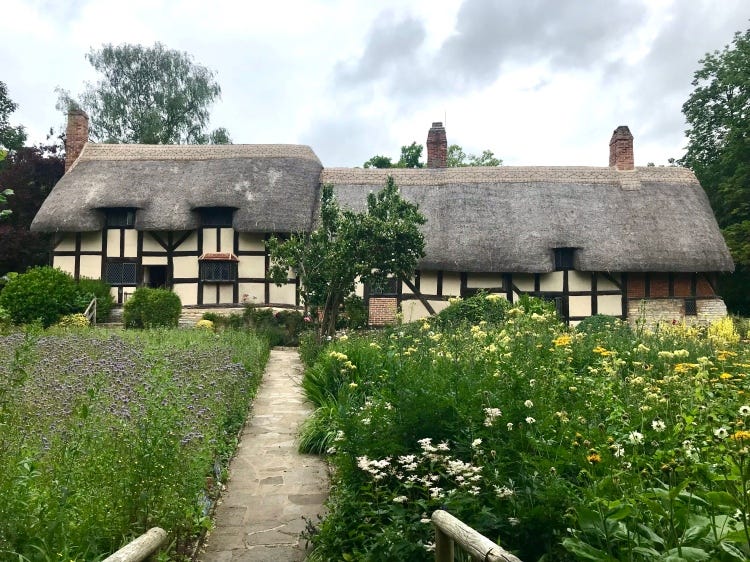
Anne Hathaway’s childhood home. (Mrs. William Shakespeare. Not the actor!) Photo by author.

During our ventures, I got the sense that Europeans take pride in their history, how old some of their buildings are, and even sharing the scars of enduring world wars. They like to point out how “young” America is. Old to us is yesterday for them, considering the depth of their history.

If you look at the oldest structures in America, many of them were actually created by Native Americans, and yet we still look to those built by Europeans and their slaves as what qualifies as old here. I often have difficulty reconciling my feelings about being a descendant of original colonizers. The fact that the United States was colonized by Europeans means our history has some ugly parts to it, indeed.

I do feel very lucky, however, to have grown up in Virginia, a place with much history, a place where our Founding Fathers once walked, and also to have been able to visit the birthplace of my ancestors, the country from which my people immigrated.

I loved seeing the old and traditional mixed with the sleek and new in Europe. It was unexpected. But I also appreciated the difference between European “old” and American “old.” It’s a lot to digest and consider, but it is amazing and beautiful.

Have you ever traveled to another country and been struck by societal norms of “old” and “new”? I’d love to hear your thoughts!

As always, I hope you all are safe and healthy.

Originally published at http://annethevegan.com on August 31, 2023.

Travel
History
England
America
London
Recommended from ReadMedium