
Mental health
What’s New in the Classification of Mental Health Diagnoses
And why you should care

A few days ago, I attended a scientific conference on mental health disorders. One of the speakers, a highly distinguished professor, said that trying to understand the disorders of the mind through the current diagnostic systems would be like trying to take a photo of a distant galaxy with a polaroid camera.
At another point during his presentation, he said that a major flaw of the diagnostic systems was that they tried to measure something that we still don’t have the right tools to measure: the mind.
His presentation inspired me to write about the classification systems, what’s new, and why it’s important to know all these things even if you’re not a mental health professional.
You have probably encountered several labels for mental health diagnoses, such as Obsessive Compulsive Disorder (OCD), Major Depression, etc. Do you know what’s problematic about these diagnoses, though? Have you ever wondered how the classification systems were created, and why?
Through this article I hope to spread the information about mental health diagnoses, and how the scientific world is (slowly) moving to the right direction. Hopefully, understanding more about the classification systems will decrease the stigma that surrounds the diagnoses.
Without further ado, let’s start with the basics!
Table of Contents: − Mental Disorders Over Time − The Categorical Approach − The Criticisms − The Dimensional Approach − Examples of New Models − Summary & Conclusion − Why should you care?
Mental Disorders Over Time
A Disorder is the patient’s clinical condition, whereas Diagnosis is a label for the information we have on the clinical condition.
The Diagnostic and Statistical Manual of Mental Disorders (DSM) that is published by the American Psychiatric Association, and the International Classification of Diseases (ICD) that is published by the World Health Organization have been trying to classify mental health disorders since the 1800’s.
The most significant (in terms of reporting) versions came out in the 1950’s both for DSM and ICD. We’re currently in the 5th version of the DSM, and the 10th version of the ICD.
Many things have changed over the years, but not always for the better. For instance, homosexuality was classified as a mental health disorder until 1973. Even though it was removed since then, other “disorders” about sexual orientation, kinks, and gender identity appeared in the diagnostic manuals.
It’s impressive to see how many more disorders were added along the years.
DSM: DSM I: 106 DSM II: 140 DSM III: 200 DSM IV: 284 DSM V: 265 (not including modifiers)
ICD: ICD-7: 78 ICD-8: 210 ICD-9: 569 ICD-10: 444 (not including modifiers)
No, the world wasn’t getting any “crazier” as the years passed by. It’s the scientists, who were becoming more and more eager to classify as “abnormal” anything that deviated from the typical western society norms.
The Categorical Approach
In the Categorical diagnostic systems, we find the following characteristics: * A disorder is either present or absent (i.e. the person can’t have “just a bit” of a disorder) * Disorders are conceptualized as discrete entities (i.e. a disorder can’t exist within another one) * Assumptions of homogeneity in the population (i.e. it’s assumed that everyone with a specific disorder will pretty much have the same traits) * Improved diagnostic reliability (i.e. it’s easier to diagnose a disorder when you only have to look make sure a certain number of criteria is there)
Therefore, for a categorical system, a diagnosis depends on either the presence or the absence of some behaviors and emotions.
The categorical diagnostic systems (like the DSM and the ICD that are in use to this day) have both pros and cons.
The pros: * They’re helpful because they create a common language of communication among professionals * They help predict the prognosis for each diagnosis * The diagnosis can be done fast, with increased reliability
The cons: * The boundaries are unclear between similar diagnoses * The homogeneity is unrealistic and doesn’t take into account cultural factors * The validity is often questionable
The Criticisms
Even though there’s a lot of money that goes into research for these diagnostic manuals, it’s interesting that there are still so many things that are wrong with them.
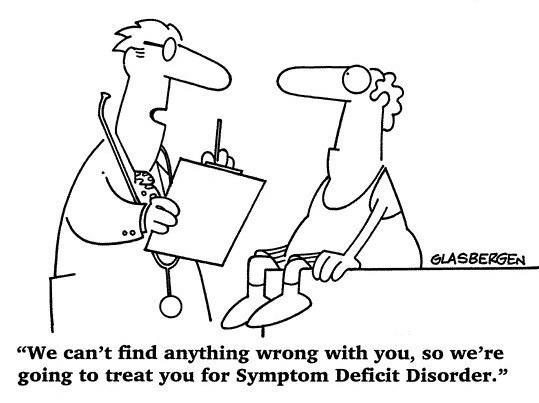
In brief, they’re known for: * Pathologizing natural reactions, for example grief vs. a depressive disorder * Massive retraining effort needed for mental health professionals * Not having changed the criteria for disorders treated with pharmacotherapy * Difficulties with differentiation between disorders, e.g. Schizophrenic vs. Affective Disorders * Difficulty in comparing new findings with older ones * Remaining symptom-oriented without adequate reference to neurobiological factors * Not taking into account crucial research findings (for example, sMRI findings for differentiation between schizophrenic and depressive disorders, and serum marker tests for depression)
The Dimensional Approach
Contrary to the categorical approach, the dimensional approach accounts for frequency, duration, severity, personal distress.
It also conveys a richer clinical presentation of a disorder while emphasizing the relationship between social and biological factors.
Moreover, it takes into consideration the patient’s subjective account.
There are proposals of new models to move away from diagnoses based on aggregation of behavioral patters, and an emphasis to be placed on genetic and environmental causes.
Examples of New Models
There are two significant new models of the dimensional approach, the HiTOP and the RDoC.
Hierarchical Taxonomy of Psychopathology (HiTOP) It’s based on empirical findings and a hierarchical structure of Psychopathology. It’s levels of assessment look like this:
Level 1: Symptoms/signs Level 2: Syndromes/traits Level 3: Factors Level 4: Broad spectra
Research Domain Criteria (RDoC) It’s based on genetic, neuroimaging, and cognitive findings. It provides insight into the neurobiology of disorders, and it constructs a matrix of assessment and diagnosis, based on: * Genes * Molecules * Cells * Physiology * Behavior * Self-reports from the patient themselves
RDoC is similar to HiTOP. They’re both revolutionary systems because they take into account individual personality traits. Furthermore, they incorporate genetic vulnerabilities.
Summary & Conclusion
- Current diagnostic manuals (like the DSM & ICD) still rely on the clinician’s opinion about the disorder
- Categorical criteria help to make faster diagnoses, and dimensional criteria give a holistic image of the disorder
- The implementation of both systems could be proven more useful in diagnosis and treatment planning
Why should you care?
With the present diagnostic systems, one disorder could be given multiple (inaccurate) diagnoses.
This would mean that, depending on the clinicians, a patient is more likely to get the medication or psychotherapy type they need. This, in turn, affects negatively the prognosis of a disorder, and the patient is not getting the help they need.
The new models provide insight into the etiology of the disorders, thus facilitating the diagnostic process, and personalizing treatment to fit every person’s individual needs.
Moreover, the new (dimensional) systems eradicate the stigma and assumptions about people who struggle with mental health issues. As our way of perceiving psychopathology advances, so should our perception of the world advance and encompass the multiple (individual) realities.
The understanding that a mental health disorder is not a list of behaviors, could further help to understand one another better. For example, not everything is a disorder.
Focusing on the individual first and the behaviors second, gives us a much better way to understand one another, without stigma or any preconceived notions of how a person should be based on a label.
Thank you for reading!