
What’s It Like To Get Old?
Have you ever seen an interview with the oldest person in your town, or the oldest person in an audience, or the oldest person in the world?
The question is always something like, “What is it like to be old?”
At seventy-five, my mother said, “I don’t know, if I close my eyes, I’m still a girl, so ask me when I’m old.”
Nobody has actually asked me that question, most likely because, lengthening lifespans being what they are, eighty-year-olds are a dime a dozen these days. But give me a decade or two and some blogger will probably shove a microphone in my face and ask me what it’s like to be in my dotage, or what does growing old mean to me?
Shortly after the birth of his son, Archie, Prince Harry greeted the press aglow in the aura of new fatherhood. He revealed his astonishment that the royal infant had changed so much in a mere two days. Yup, I wanted to tell him. His son was growing old.
Each day that goes by, time will work its magic and eventually transform Archie’s wonderfully delicious baby weight and baby smell into the wizened visage of his great-grandfather, Prince Philip. That’s called growing old. It happens every day, bit by bit.
At two days, Archie was older than he was at birth, and his parents could already see the changes. I’m sure every parent hearing the account said yes, I remember.
The story brought me back to my own daughter’s infancy. I treasured her from the moment the nurse put her in my arms early in the dawn hours after her birth. It was the olden days, when OBs commonly ruled that first time mothers should not endure the final stages of labor. I’d been rolled into my room and awakened from the anesthesia, having slept through the birth.
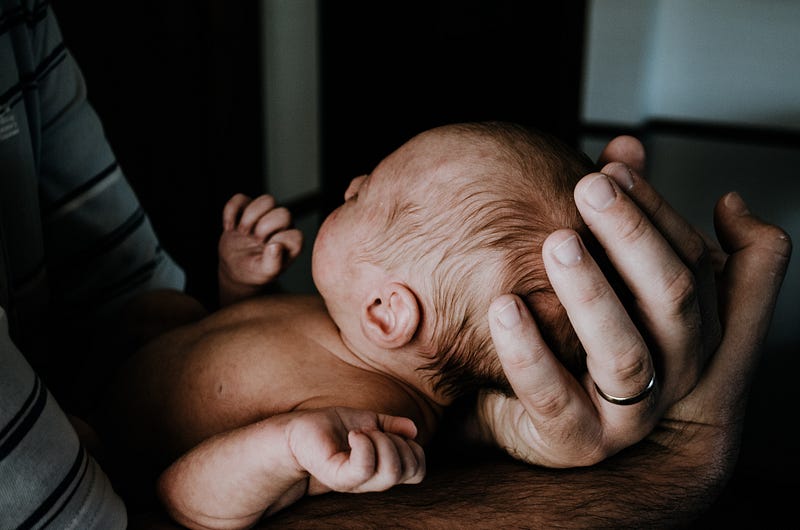
So she had already aged about three hours when I first saw her.
I missed her first moments, her first breath, her wide-eyed wonder or was it a red, angry face when she was pulled from my womb. My doctor showed me a photo of her taken in the delivery room, so I was able to compare it to the snug bundle in my arms. Her misshapen head had started to fill out, and her face didn’t look so wounded from the forceps my obstetrician had to use because I was unconscious and couldn’t push.
At three hours old, she had begun to change, to age, to move into her life and become her own little person, growing up moment by moment.
At her first or second visit to her pediatrician, when she was the most beautiful infant in the world to me, petite and delicate as spun glass, we sat across from another mother and child waiting their turn to see Dr. Gans. The mother and I compared notes, showing off our babies to each other. Of course, I gushed over her child. As you do. But I was lying. I thought her baby was grotesque.
Because it had grown huge — to me — at two months, I thought it was ugly. So large compared to my little gem that I felt sorry for the woman. Did I stop to think that in a few weeks my precious little flower would be the same size? Hmm, never been much good at looking ahead. I just glowed with pride that I had a tiny infant still miniature in every way, not big, ungainly, and yes, old.
My little baby, still precious to me, is now almost sixty, and I laugh at that silly, prideful moment. But motherhood and babyhood were all so new to me, and at twenty, I was too young to understand age and growing old. I have a brother who is in his nineties, yet I, at eighty, am his baby sister.
In my writing group, we have a member who is seventy, and we consider her our youngster. We are only old to the person who is born after us. Ask twins who fight for supremacy, the one who managed to elbow his or her way out of the birth canal a few seconds before the other boasts of being older.
My best friend died a few months ago just shy of her eighty-second birthday. It always grated on me that she would say things like, “You’ll understand when you’re my age.”
For the more than sixty years of our friendship, I’ve been just two years younger than she was. Yet that two years gave her an edge in her mind. More experience? Wisdom? Something to feel superior about? Who knows? (If I could have her back for one more visit, I wouldn’t care what she teased me about, but that’s another story.)
A ten-year-old can ask us at twenty, what’s it like to be old? I’ve written previously that at eighteen, I thought thirty-somethings were too old to have sex.
The really funny thing about getting old, no matter what age you are, is that you only age on the outside. Ask anyone what it feels like to be twenty-one or thirty-five or fifty or eighty, and even if they have every disease known to man, they say that, like my mother did when she aged, they’re still the same on the inside as they’ve always been.
So what is it like to get old? You tell me. I’ll be eighty in a few weeks, but you’re getting old at the same rate I am. One day at a time.