avatarTodd B Harrington

Summary

Todd B. Harrington discusses his journey from conventional nature and landscape photography to creating thought-provoking composite images, reflecting on the emotional and intellectual impact of visual art.

Abstract

The article "What’s in an Image?" by Todd B. Harrington delves into the author's personal evolution as a photographer, transitioning from capturing traditional 'warm and fuzzy' nature and landscape images to crafting more complex and challenging composite photographs. Harrington describes his initial reaction to images as either evoking a sense of comfort and joy or prompting deeper inquiry, a dichotomy encapsulated in the subtitle of the piece. He attributes his shift towards composite imagery to a desire for greater creative fulfillment and cites the influential work of Jerry Uelsmann as a catalyst for this change. The process of creating composite images is depicted as demanding a higher level of creativity, focus, and patience compared to traditional photography. Harrington's photographic library, enriched with hundreds of nature and landscape images, now also includes composite works that challenge viewers and satisfy his need for photographic innovation.

Opinions

  • Harrington uses the term 'warm and fuzzy' to describe the comforting and pleasing reaction some images elicit.
  • He believes that certain images should provoke curiosity and cause viewers to look closer, describing this as an image 'begging a question.'
  • The author expresses a period of feeling unchallenged and somewhat bored with traditional nature and landscape photography by around 2008.
  • Harrington was inspired to explore composite photography after encountering Jerry Uelsmann's work, which he regards as defining photographic creativity.
  • He emphasizes the increased demand for creativity, focus, and patience when producing composite imagery compared to more straightforward photography genres.
  • Despite the challenges, Harrington finds the process of creating composite images to be refreshing and invigorating.

What’s in an Image?

Warm and fuzzy, or begs a question?

The subtitle pretty much defines the primary perceptions I have of art.

Antigua (Photo by Author, © Todd B Harrington)

When I view an image my initial reaction tends to answer the subtitle question.

Some images evoke a pleasant reaction from your visual senses. I use the phrase ‘warm and fuzzy’ to describe that reaction. Non-threatening, it makes you feel good, and maybe puts a smile on your face.

Begs a question is the other sensory response that challenges the mind and causes you to look closer.
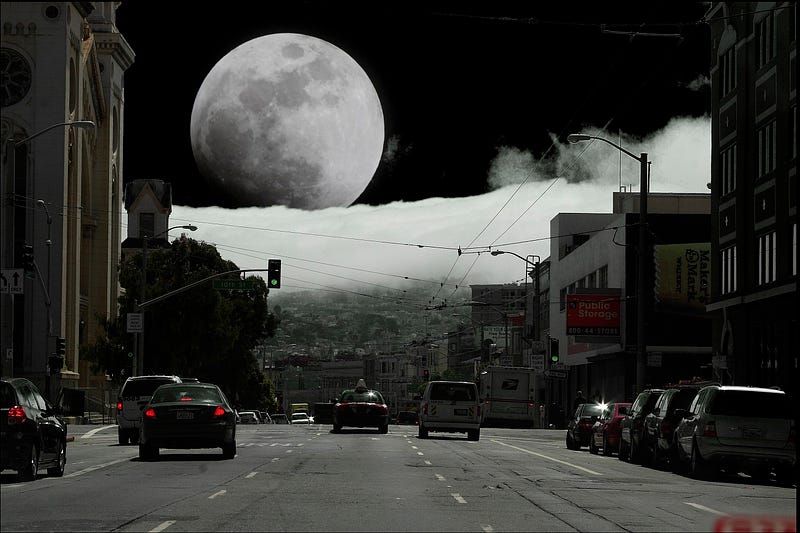
SF Street (Full Moon Series)(Photo by Author, © Todd B Harrington)

Looking at an image and wanting to know more is a reaction shared by many.

Nature and landscape photography can generate a great deal of satisfaction for the photographer. It can also produce endless warm and fuzzy images that are pleasant to the viewer. I know this area well. My photographic library is stocked with many hundreds of these types of images.

At some point around 2008, after a couple of decades of shooting nature and landscape and getting a little bored with it, I found the need to be photographically challenged at a higher level.

I liked the concept of an image begging a question.

The trigger to start experimenting with composites was probably the encounter with Jerry Uelsmann’s incredible photography. It defines photographic creativity. Every piece begs a question.

And so it began, down the road towards a different level of image creation.
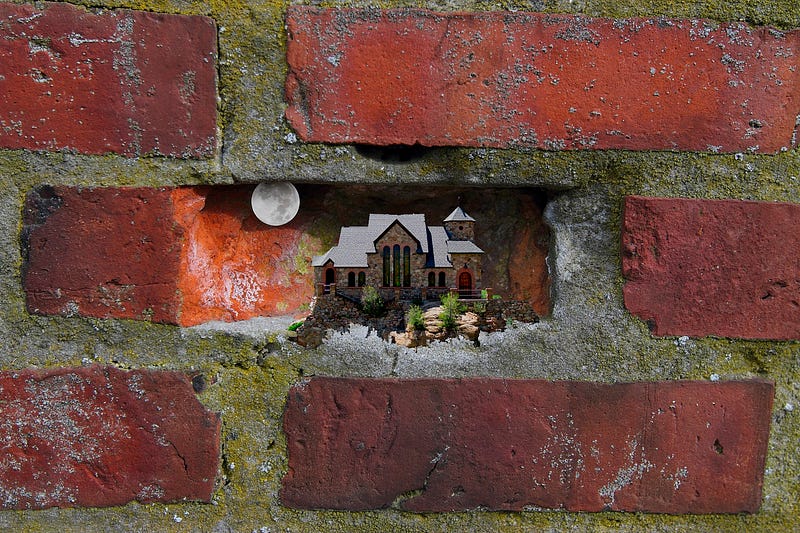
Brick Wall (Full Moon Series)(Photo by Author, © Todd B Harrington)

While a lot of composition planning is required for even some of the most basic nature and landscape photography, the creation of composite imagery demands another level of creativity, focus, and patience.

The challenge is most refreshing.

More articles on Medium from this writer here.

Photography
In Living Color
Composite
Recommended from ReadMedium