
An Apartment Memoir
Whatever Happened to the Boy on Bell Street?
An ode to vulgar nostalgia
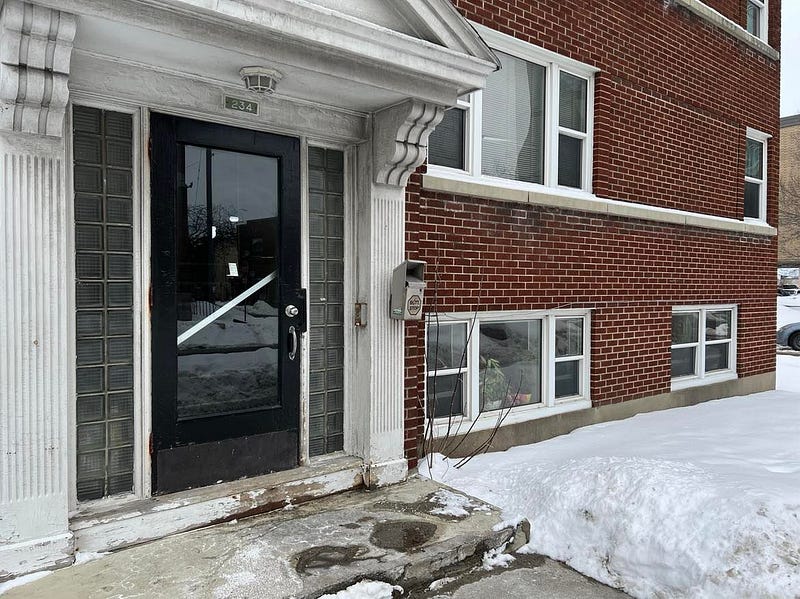
The lease is up. Today is my last day in this heinous apartment.
The first time I stepped into my loathsome abode on Bell Street, I was struck by sadness. So this is my life: four hundred square feet, three quarters below ground, in a neighborhood laced with fentanyl.
“Oh . . .” That’s what people said when I told them my new address.
It was the spring of 2019 when my roommate announced he was moving in with the woman who is now his wife. For the last decade we had shared the second floor of a century old house in a ritzy district. When I told people I lived in ‘The Glebe,’ they didn’t say ‘Oh . . .”, they said: “The Glebe? Look at Mr. Fancy over here.”
I could afford it. I was a young bartender at a busy restaurant with no dependents and a taste for the cheap. Money was spilling out of every pair of pants I owned. I had enough to live comfortably, and to travel, but I also had enough money to get drunk every night.
As so often happens when you drink every night, it wasn’t long before cocaine came into my life.
It was a decade of decadence, with a large thud waiting at the end.
In the spring of 2019 I had just returned from one hundred days in Vietnam. I found myself with a rather unfortunate combination of circumstances: I was penniless, addicted to an expensive drug, and I needed a new place to live.
As I searched for apartments online, I slowly came to realize that I couldn’t afford the lifestyle to which I had become accustomed. Being a bohemian is lovely when you live in a big house on a beautiful street. When I moved to Bell Street North, my bohemia fell to pieces.
On June 1st, 2019, I helped my former roommate move into his picturesque suburban dream house. Then he helped me shove a couch down a half flight of stairs and throw a few boxes on top. Moving the life he had accumulated in our time together took seven hours. We relocated my life in seventeen minutes.
Suddenly, my apartment matched my circumstances. It was all appropriately despicable.
The indignities of living mean slither in single file. The abruptly poor still get to discover the unpleasantries of poverty one by one, until the weight of these everyday grievances eventually amounts to the full experience of squalor.
First, my privacy evaporated. The windows that line the upper third of my apartment are only three feet from the sidewalk. It’s the perfect distance to allow passing strangers a good leer into my narrow world. I have curtains, but curtains only offer an ugly choice. Should I live in total darkness, or let the whole city stop and stare? Would I rather be a cave-dweller, or a caged orangutan at an underfunded zoo?
Dozens of people have put their face against the glass to peer in. Some of them are children, but more than a few have been grown adults, assessing whether or not I’m worth robbing. Dogs have marked their territory against my windows.
Dogs. Plural.
The next indignity is the dirt. Soon after I moved in, I discovered that no matter how hard I scrubbed, no matter what hazardous chemicals I employed, I would never defeat the black mold in the back of my cupboards. I’m tempted to tell you that this stubborn fungus has become my unintentional roommate, but that title properly belongs to the house centipedes; the little bastards who scurry over my floor with such regularity that I began to name them according to size and speed.*
*Hodors are big and slow, Bolts are big and fast, Pescis are small and fast. In the world of house centipedes, if you’re small and slow, you get eaten.
On sweltering summer days, I keep my windows closed to eschew the reek of rotten eggs and soggy sandwich crusts.
My landlord puts the trash cans at the curb two days early, and he picks them back up two days late — apparently he hates visiting this neighborhood too. As a result, every downtown raccoon in this infested city knows where to find flimsy plastic bags full of midnight treats, the kind just begging to be torn open, their contents strewn over the sidewalk.
When I feel brave enough to open a window, the soundtrack that sifts in after the sun goes down is a mix of expletives, sirens, and screaming. My front stoop — two steps of shattered concrete bestrewed with cigarette butts — is a premier venue for the sale of narcotics. The lock on the main entrance is broken. In this neighborhood, a broken lock is an open invitation, all too often accepted by those seeking a warm haven where they might smoke crack with that special friend they just met.
Across the hall, a man named Glenn bellows nonsensical obscenities at his three underfed cats. If he leaves his door open for more than ten seconds, he emits an odor into my life that I have never identified. I suppose it might be what a pot full of motor oil and old underwear would smell like if you left it on the stove over the weekend.
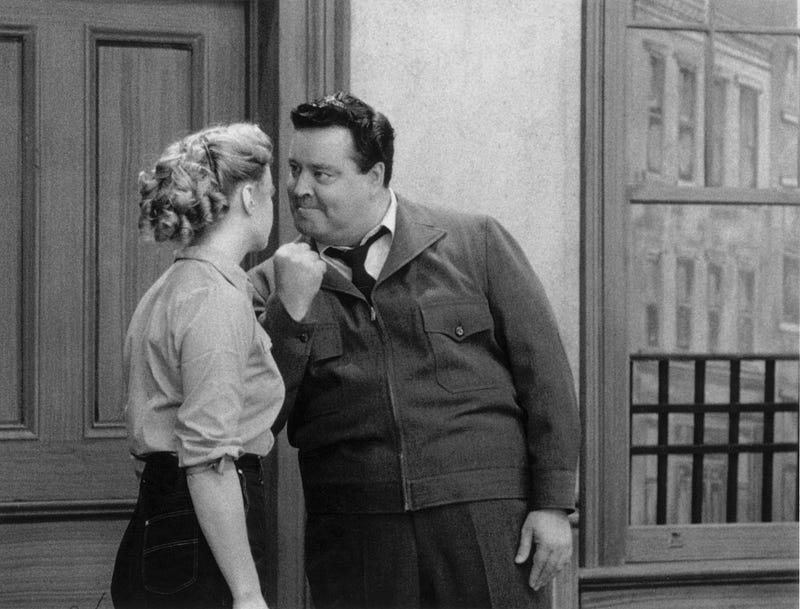
I don’t hate Glenn. The man is unwell and in need of psychiatric care. I reserve my hatred for the two men who live upstairs. The stompers, the party-throwers, the perpetuators of domestic incidents that make Ralph Kramden appear downright adorable.
February 23rd, 2023. 2:33am
“This is the police! Open this door! This is the police! Open this door immediately!” I opened my door, purely to eavesdrop. I could hear the delinquents upstairs finally open their door with the chain still attached. Police: “We’ve had multiple calls that somebody has been screaming for help in here.” Delinquent: “No. Everyone’s fine.” Police: “Okay, why did it take you three minutes to open the door?” Delinquent: “Uh. . . I was asleep.” Police: “Well all your neighbors woke up. Please open the door so we can make sure everyone is alright in there.” Delinquent: “Do you have a warrant?” Police: “We don’t need a warrant if we receive multiple calls that someone inside your apartment has been screaming ‘Help!’. This is going to be much better for you if you cooperate. Take the chain off your door please.”
The delinquent was not criminally charged, although I did get the satisfaction of overhearing the officers outside my window describe my street. ‘Three blocks full of assholes.’
I don’t disagree.
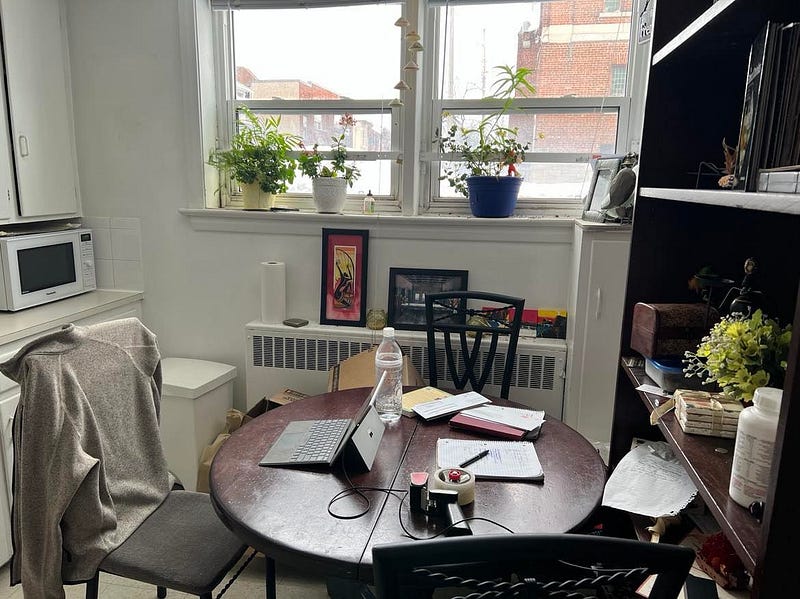
Why the hell did I live here for four years?
In my first year I fit in, just another scoundrel among the ne’er-do-wells. Every second night I stumbled drunk over my stoop. Then I’d play music as if I lived alone in the woods, and start a fire on the stove that set off the smoke detector. I barely cleaned up after myself, I struggled to pay rent, I avoided eye contact with everyone. Twice I even bought drugs outside my front door, just for convenience. When in Rome, snort as the Romans snort.
Then there was a pandemic. Four hundred square feet was a prison sentence when the world was wide open. When gyms, bars, and coffee shops closed their doors, and the winter froze us all in, I was truly trapped. I was devoid of my last luxury. I couldn’t even dress myself up in my old fineries and play pretend with an over-priced pint in a hotel bar.
Poverty might feel poetic, and in my better moments I did evoke George Orwell, imagining myself penning Down and Out in Paris and London inside my depressing tenement. Unfortunately, basking in dilapidation works better on a page than it does in an apartment.
It might have gone on like that forever — and my forever may have ended rather abruptly — if it weren’t for five days before Christmas, 2020. That morning I phoned five close friends, and I told them through tears that I was an alcoholic. One of those friends, a man in his seventies, told me to meet him at a Wild Wing. Over a stale cup of coffee that neither of us drank, he told me the two of us would sit down every day for one hundred days, and talk about what it means to be sober.
Things fall apart, but sometimes, things come back together again.
I cleaned my apartment top to bottom every Tuesday. I took the trash cans in so that the raccoons couldn’t have their way with them. I shoveled the stoop. I asked Glenn if he was okay.
In the tenth month of my sobriety I sat behind the wheel of a Volkswagen Jetta, paid in full with the money I was no longer shoving up my nose. I cleared a space in my four hundred square feet and began to lift weights and practice yoga. I took my vitamins. I ate my spinach.
After 435 days of abstinence, I went to a bar. I walked in, sat down, and ordered a Heineken. As I took my first sip, in walked this girl.
Her name was Claire. This was our first date. My Heineken was non-alcoholic.
God I was anxious the first time I invited Claire to Bell Street. When you date someone, you also date their apartment. However much I had changed, my stoop was still in shambles, my neighbors still unscrupulous.
It was nothing short of a miracle: she never said a word.
Not a single complaint about spending her evenings on a tiny couch in a zoo enclosure. Not a sentence about the house centipedes. Never once did she even insinuate that she didn’t want to spend time in my little tenement. Her silence was the best compliment any soul has ever paid to this ramshackle flat.
We climbed Kilimanjaro together. That’s another story. When we got back — after 48 hours of taxis, terminals, and TSA — I threw my bag on the floor, showered, and fell into bed. Staring up at the ceiling, I had an epiphany. This awful apartment was home.
The story I will tell of about this hole in the ground was no longer solely a tale of squalor. These were the walls that got me sober. This was where I lived when I met my favorite person on this earth. This was the place underneath the earth where I hit rock bottom, and bounced.
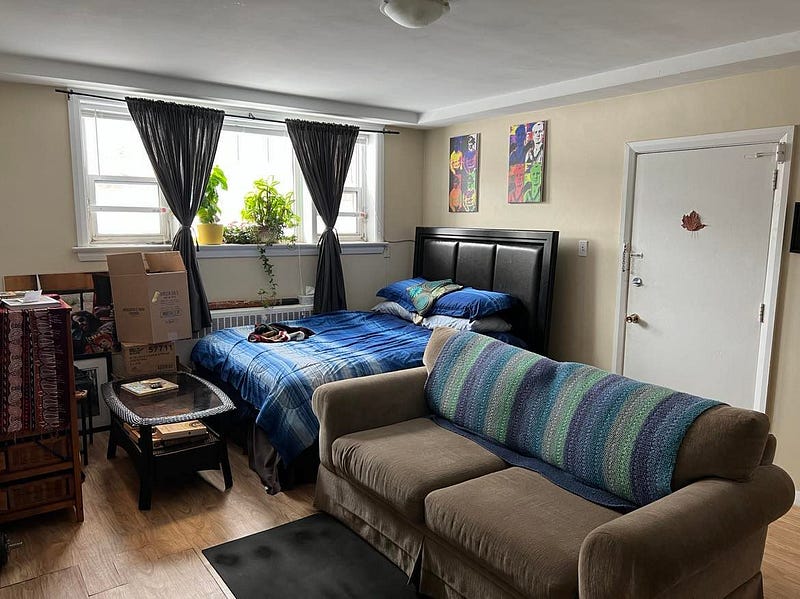
Early into our relationship, Claire and I agreed that we would force ourselves to wait at least a year before we moved in together. As it turns out, we waited one year and a day.
Goodbye
Last night every single drain in the apartment on Bell Street belched. Imagine a gallon of liquid — just the sort of color you never want to see rise up from your shower drain — seeping towards a tower of boxes that contain everything you own on this earth.
I spent a day that should have been focused on service elevators and U-Haul reservations fighting back a brown tide, alternating phone calls with my landlord and a plumber, my windows wide open in the middle of winter because sometimes smell takes precedence over temperature.
It was a fitting goodbye.
‘Remember me as I was. Shit.’
My keys make a clunk as they disappear into my mailbox. I have a peculiar feeling that I will miss this undeniably horrendous apartment. Nostalgia does not belong exclusively to marvelous memories. It isn’t even much use when the world is already wonderful. A piece of vulgar nostalgia for this lowdown dwelling is in me, now and forever.
Still: here’s to no more Hodors.
A fun thing I wrote in that awful apartment:
I hghly recommend this article by Mary Louisa Cappelli, MFA, JD, PhD too:


