
What You Should Learn About Marketing From Taylor Swift
Audience engagement, evolution, and more.
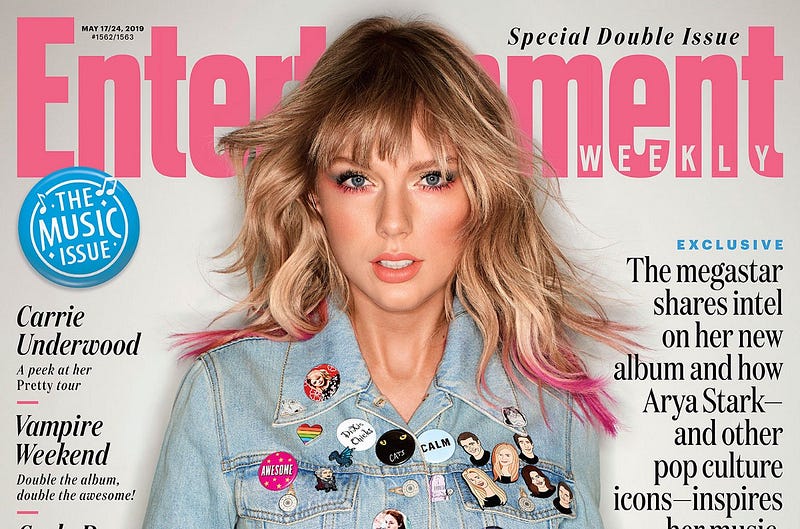
Love her or hate her, Taylor Swift is a damn icon and a big star.
I should tell you right now, I am a Taylor Swift fan. I enjoy some of her music and give her big props for her songwriting and instrument abilities.
That doesn’t mean I don’t see her faults or think she is overhyped sometimes, but I wanted you to know off the bat that I dig her.
What is important is looking at HOW Swift has turned her music and her media into a marketing machine.
Audience Engagement
Swift is the queen of Easter eggs. Even when she isn’t teasing or foreshadowing anything, her fans are rabid and find clues in everything.
Swift herself has said she knows her fans love it and she plans out Easter eggs and hints far in advance.
It started with hiding short messages in her song lyrics in the CD liner notes way back at the start of her music career. Fans loved it and reacted well and Swift kept finding new ways to hide messages, stories, and clues in her music, videos, and even her merch.
This is a classic example of engagement and knowing your audience. Swift has said her fans love the scavenger hunt, so she will continue until they don’t enjoy it anymore.
She revealed a recent unknown reason behind a clue — she posted a picture of 7 palm trees on her Instagram and fans took it to mean her 7th album was coming and started looking for clues in everything. What they didn’t know was that Swift posted that photo on the exact day she finished her 7th album.
That means on February 24th, 2019, Swift fans immediately hyped up and went into overdrive anticipating more music — over 2 months before Swift released the first single on the as-yet-unknown-titled 7th album.
Reputation Marketing
Looking back at Reputation-era Swift, you can see how she used a completely different marketing approach. Instead of going on interviews and dropping hints everywhere she went, Swift wiped her social media, started putting out clips of creepy snakes, and dropped the album with no big fanfare.
In a completely intentional move, Swift did not talk about the meaning behind a lot of those songs and didn’t do any media or magazine covers or TV interviews about it.
Compare that to now with Swift on podcasts, morning shows, the Billboard Music Awards, and covers of magazines talking about her new pastel-and-butterfly chapter.
Swift also attempts to tell her story through her music — both the dark and the light. She has shown she’s not afraid to laugh at herself, with examples like “Blank Space” and “Shake It Off,” another notable evolution. From songs like “Mean” to “End Game,” you can clearly see the evolution from “everyone is mean to me!” to “I know I have a big reputation, deal with it.”
Reinvention
In marketing, it is extremely important to adapt and evolve in changing media landscapes and with your audience.
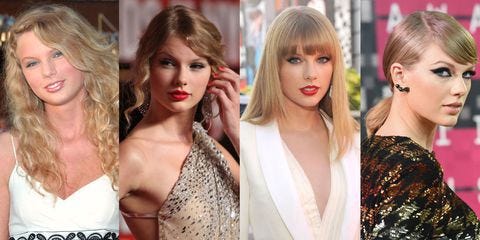
While it is normal to expect a teenager to evolve and change over time, some people have been surprised when Swift changed her sound so much from country to pop, or from more upbeat pop to Reputation-era deeper base with hints of electronica.
Now with butterflies everywhere, some fans are feeling whiplash from the change.
However, from a marketing standpoint, many believe you either adapt — or die. If you cannot evolve with your audience and keep things new and fresh, it is easy for people to forget you and move on. Brands see this happening and will redo logos, come up with new slogans, and start a new phase of advertising.
Reinvention is a common theme in marketing. Major brands make changes all the time. Remember the horrific response to the Hulu redesign? Yet Hulu has over 25 million subscribers and continues to grow. Instagram was originally named Burbn by the creators. Dunkin’ Donuts officially changed their name to Dunkin’ in 2019. Change and evolution are key in marketing across the world.
Stagnant Marketing
Look at how companies have incorporated YouTube, social media, and other content marketing into their strategies. This is because the way we ingest content has changed drastically in the last 10 years and a TV or radio commercial is no longer enough.
There is nothing worse than a company going stagnant.
The dictionary says, “ If something such as a business or society is stagnant, there is little activity or change.”
When there is no activity, there is no growth.
Another example of evolving marketing is the way companies like Wendy’s use of Twitter. The funny and snarky attitude is widely loved and it accomplishes its goal — to get noticed. That attention leads to higher sales.
Marketing 101
Love her or hate her, Taylor Swift is a marketing dream. She engages directly with her audience, changes and evolves over time, and utilizes social media and content marketing to get her message out there.
Looking at her career, you can see how she continuously adapts and makes sure to reach out to her fans both one-on-one and in groups. Every step is planned and meticulous, and while that can sometimes come off as manufactured, it also allows her to control the narrative in a way she never did when she was younger.
These tactics are ones we can all use in our own businesses to market ourselves better and connect more with our audience.
Become a Medium member for only $5 per month and get access to ALL of my posts (and a bunch of other great writers)!
Check out my book Concept to Conclusion: How to Write a Book and learn how to conceptualize, outline, write, publish, and market a nonfiction book. Or check out my newest release, an anxiety journal: But…what if? A Journal For Anxious People.
You can also sign up for my mailing list for (rare) writing and freelancing news and information if you want.
[If you sign up for Medium using my link, I receive a portion of the membership fee as commission.]


