
What You Need, Dear Brand, Is a Point of View
How to make better content decisions and start delighting people already

Points of view are quite simple
A point of view is an opinion or set of opinions about the world. This is a thing your average, friendly neighborhood human understands implicitly.
Your average, friendly neighborhood human also understands that those opinions about the world are informed by their personal experience. The more personal experience the human has, the more pointed the view.
If your human, say, has the experience of paying dramatically unattractive prices for real estate in San Francisco, then that human likely has a strong point of view on land use, gentrification, and large yard bushes.
And if your human has the experience of, say, not ever even once receiving free lunch during work hours, then that that human likely has a strong point of view on office perks as expressed through the medium of organic Brussels sprouts.
This is not an anti-bush, pro-sprout argument, it’s just how points of view work.
The more experience a human has, the more other humans are apt to listen. ¹
As for brands? Same same.
If you make automated factory robots, then you have opinions about artificial intelligence.
If you make cloud document storage solutions, then you have opinions about the future of work.
You experience something and that experience gives you authority, the pedigree, to talk about it, to have a point of view.
What you say when you’re talking about it is the view from which you point.
But brands can be weirdly bad at this.
Brands are beautiful, selfish things.
A brand was founded as an idea about itself, it sells products talking about itself, and it hosts lavish conferences to tell you about its products and, thus, itself.
So brands tend to have an overdeveloped point of view about themselves, but a less developed point of view about anything else.
This is not a value judgement, it’s a business model. We all do what we are rewarded for doing. Brands are rewarded for talking about themselves. ²
A brand always has a POV about itself
A brand has many tools for understanding what it thinks about itself. These tools are great for creating marketing decks and products and banner ads. But, these tools aren’t so great at helping the brand have a POV about topics out in the world.
For example, a brand has a logo, but a POV is different from a logo. A logo is simply a signifier of the brand’s existence — like a hat for a cowboy.
A brand may have brand values, but a POV is different from brand values. Brand values are aspirational adjectives. They’re how you’d like your brand to be known — like a dating profile.
A brand may have guidelines for tone and voice, but POV is different from tone and voice. Tone and voice are are more performative etiquette than personal philosophy — like knowing the Queensbury Rules, but never throwing a punch.
And a brand may have brand guidelines, but POV is different from brand guidelines. Brand guidelines are systems for how to think about the perception of the brand, rather than a way for the brand to perceive the world outside itself.
Every wise person in the world has counseled “know thyself”, and brand guidelines certainly help brands know thyself. They’re useful, but they’re basically optimized solipsism.
A POV is not about you, it’s about the world
A brand wants people to desire its product, but people don’t desire products. People desire feelings that products give them.
A POV is about having an opinion or set of opinions about things that are not your product. Your experience determines your view, but your view is not about yourself.
The more authority you have to espouse those opinions, the more interesting and trenchant those opinions, the more those people will listen. Having a POV allows a brand to better determine the rules of the conversation.
But a POV is not a sales pitch. Not directly. The utility of that point of view is not to capture dollars by selling a thing. The utility of that POV is to capture attention by selling an idea adjacent to that thing.
Having a POV doesn’t mean capturing market territory, it means creating it.
How to create your POV
At the end of the day, a point of view is really only an opinion about two things:
- It’s an opinion about the audience you want to speak with.
- It’s an opinion about a topic that you and your audience have in common
The point of view is simply how you speak about the topic to the audience.
It includes your understanding of who they are, what you think about them, what you think they already know, how much you care for them, and how you communicate those feelings. Or, in other words, a point of view is the attitude and altitude of what you say.
Here’s a triangle-shaped memory device:
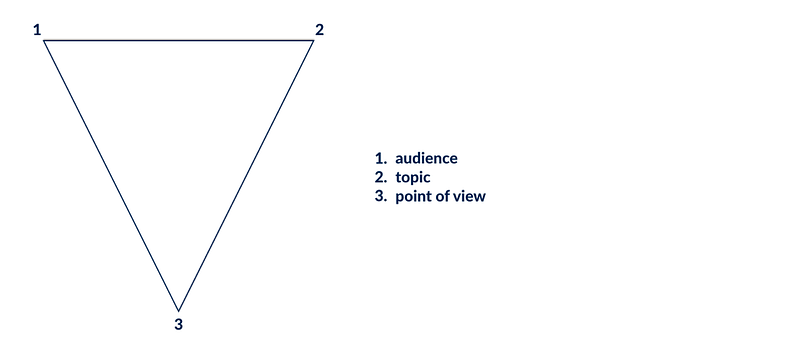
This basic framing device works for any type of content you want to create, whether it’s a magazine or a conference about artificial intelligence and space. But like anybody named Euclid will tell you, you must have all three vertices to form a triangle.
If you have an audience and a point of view, but you don’t have a consistent topic of conversation, you’ll fail with respect to curation. This would be WIRED, if WIRED also covered recipes for creme brûlée.
If you have a topic and a point of view, but you don’t know which audience you want to speak to, you’ll fail with respect to tone. This would be AWS Re:Invent, if AWS Re:Invent were presented entirely in Esperanto.
And if you have a topic and an audience but no point of view, then you’ll fail with respect to being interesting. This would be a whitepaper.
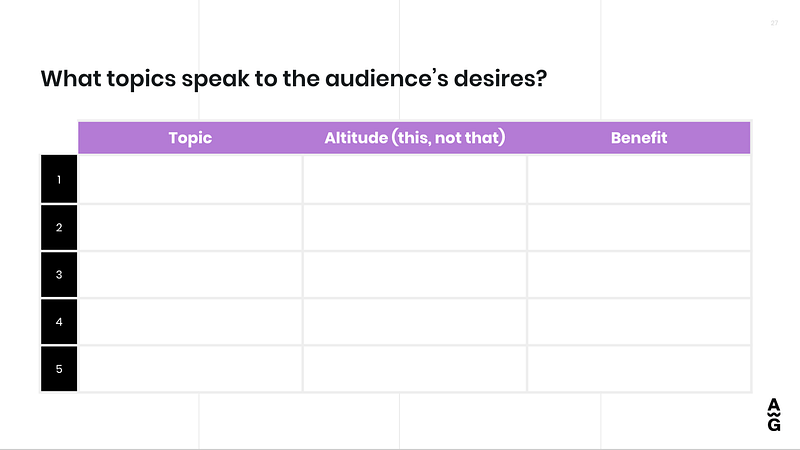
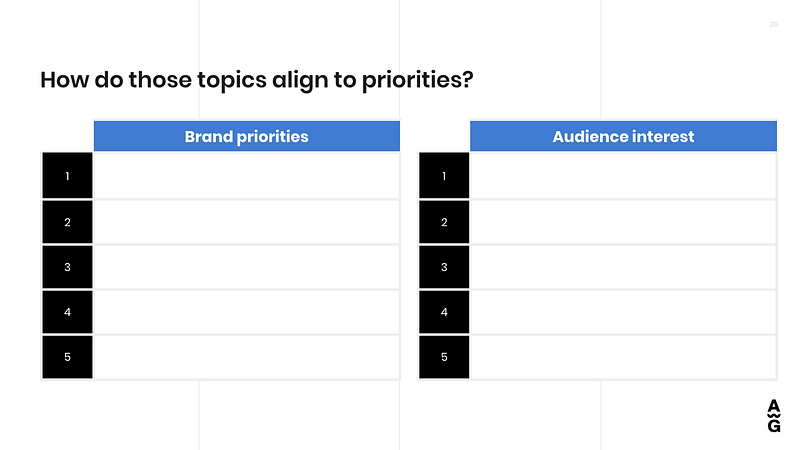
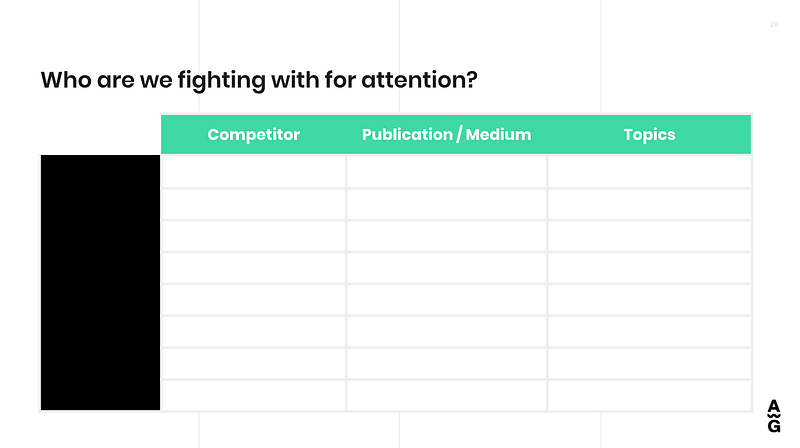
And so, you have to ask yourself some questions
So it’s one thing to understand what a POV is and why a POV can be helpful. It’s quite another to actually create that POV.
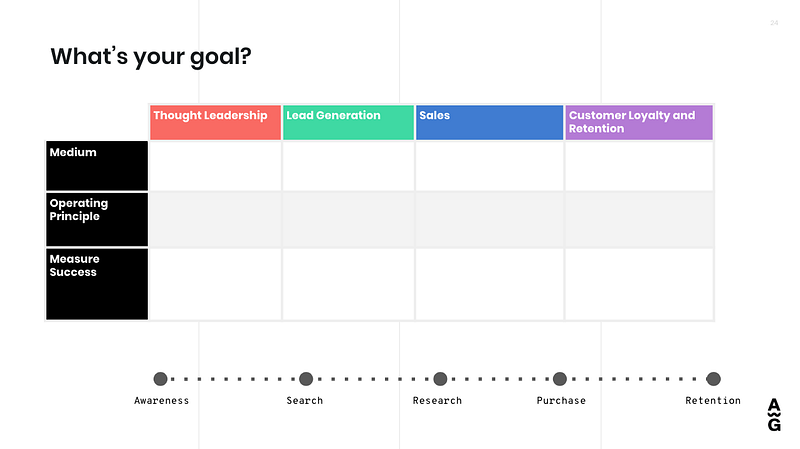
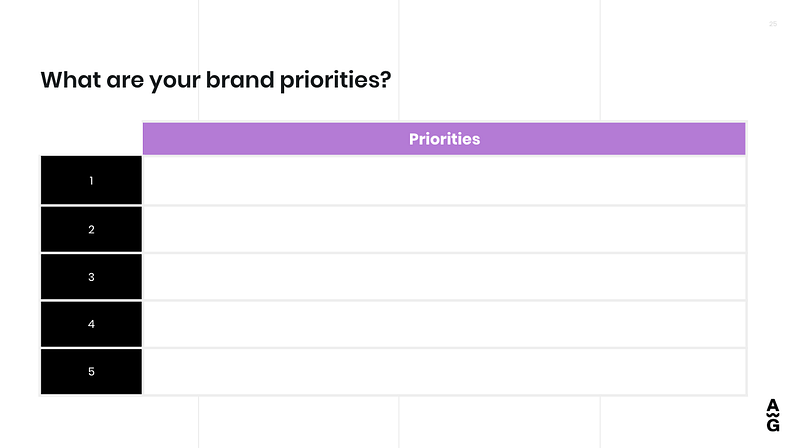
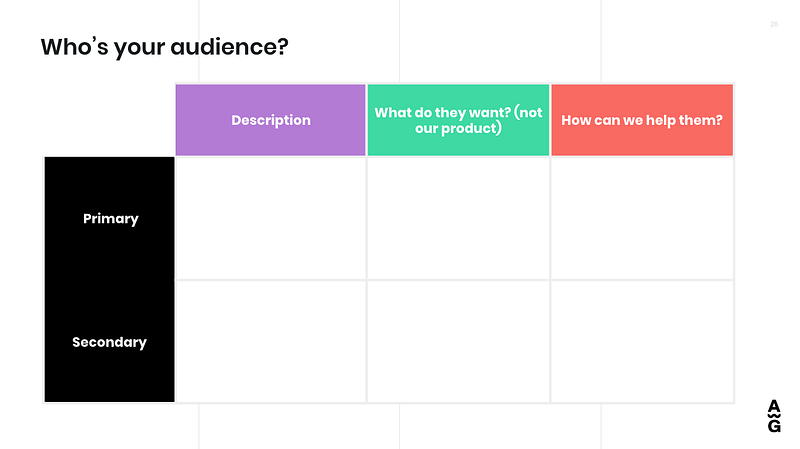
When we work with clients to figure this out, our agency begins with a series of questions. We begin with the brand’s goals, and end with how do those goals align with what the audience wants and needs.
The most difficult part of this process, for the brand, isn’t the questions. Anybody can make pretty tables of questions. The most difficult part is unlearning the habit pattern of brand first and learning, instead, to focus on the audience’s wants and needs. As with everything, the most difficult part is being honest with yourself.
Endnotes
¹ The modern world tends to conflate “influence” for “experience”. Eloquence, charm, a silver tongue or Chiclet-white are unfortunately used as stand-ins for pedigree, as anyone who bought tickets to Fyre Festival knows. Follower counts, too . This is not typically a good thing.
² Clearly, there are many executives who have prescient views about the future of their industries, and use those visions to inform business decisions. This powerful ability, however, doesn’t often translate to an ability to consistently create influential content.
This post is a part of an every-so-often series of stories that explores the ups, downs, and sideways adventures of creative marketing for brands. Each post is based on conversations and consultations with some of the world’s largest brands and publishers, many of which work with our agency, Article Group.
- “People care about what they already care about.” The importance of being relevant to your audience’s interests.
- “You don’t get it. You are not the point.” The surprising reason why your brand sucks at storytelling, and what to do about it.
- “Try helping people be themselves.” How to create inspiring stories for your brand’s adjacent possible.
- “Write for your audience’s audience.” Creating things that help themselves get shared.
- “There are only two ways to tell a story.” A Venn Diagram for brands.
- “How little do I need to care about you to make you care about me?” Renting attention will only get you so far. Here’s how to start to owning it.
- “Make relationships, not things.” You can’t “thing” your way to people caring about you.


