
What You Don’t Know About Magnesium Can Hurt You
Don’t count on your lab work for answers

The Role of Magnesium
Did you know that more than 300 enzyme systems are directly correlated with magnesium that regulates hundreds of reactions in your body?
We are talking about protein synthesis, blood pressure regulation, muscle and nerve function, and blood sugar control.
Magnesium is necessary for energy production within our cells.
It is required for bone development and the synthesis of DNA, RNA, and glutathione (antioxidant).
Magnesium facilitates the transportation of calcium and potassium ions which supports muscle contraction, nerve impulse conduction, and normal heart rhythm.
Low magnesium levels have been linked to migraine headaches and other medical issues listed here.
If magnesium blood levels get too low due to deficiency, the body pulls what it needs from the bones and tissues. So, magnesium is directly correlated with bone mineral density and overall bone health.
Not knowing you are deficient can hurt you!
Risk Factors for Low Levels of Magnesium
Various factors can increase the risk for low magnesium levels.
The list is huge but includes certain medications, consuming too much soda, fat, or sugar. Getting too much or not enough vitamin D, too much calcium, not getting enough salt, etc can cause magnesium depletion. The list is enormous and attached here for your reference.
Because the body regulates serum magnesium levels by pulling what it needs from the bones and tissues, it is difficult to determine magnesium deficiency from a blood test.
Symptoms are usually not present unless there is a considerable deficiency.
Symptoms of Magnesium Deficiency
Less severe symptoms might include anxiety, confusion, muscle cramps, muscle weakness, irritability, tinnitus, vertigo, and many more.
More severe symptoms may be an irregular heartbeat, high blood pressure, coronary heart disease, depression, migraines, osteoporosis, sudden cardiac death, and many more listed here.
Subclinical magnesium deficiency is not easily detected and increases the risk for several types of cardiovascular disease, places a massive burden on our healthcare system, and causes suffering and poor quality of life for a large portion of the population.
Clinicians should be addressing risk factors and potential deficiencies among their patients.
Magnesium Requirements and Dietary Allowance
According to this published review, approximately 50% of Americans consume less than the Estimated Average Requirement (EAR) of Magnesium. It goes on to say that some age groups consume considerably less.
So how much magnesium should you be consuming, and what form should you be getting it from?
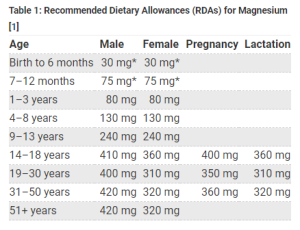
The best form of magnesium should be coming from food rather than magnesium supplements. “Too much magnesium from food does not pose a health risk in healthy individuals because the kidneys eliminate excess amounts in the urine.” but high doses of magnesium from dietary supplements or medications often result in diarrhea that can be accompanied by nausea and abdominal cramping.”
Foods that contain magnesium include leafy greens, legumes, nuts, and whole grains.
Sources of magnesium with the highest levels are:
“very large doses of magnesium-containing laxatives and antacids (typically providing more than 5,000 mg/day magnesium) has been associated with magnesium toxicity,” according to this research paper.
Since the kidneys are responsible for removing excess magnesium, patients with kidney disease need to work with their physician to monitor their magnesium levels and oversee any magnesium supplementation.
What Should You Do?
So now that you know how essential magnesium is to the human body in decreasing potential chronic diseases, you can determine if you are obtaining the necessary amount from your diet.
Adding a handful of pumpkin seeds to your salad, a cup of spinach in your smoothie, and a few almonds for a snack can support your daily food intake of this amazing mineral.
Here is a great recipe for spinach salad. Replace the walnuts with pumpkin seeds for an added magnesium boost.
Spinach Salad with Walnuts, Apples, Cranberries, and Feta Cheese — Plan to Eat
Or this mayo-free broccoli bacon salad with toasted pumpkin seeds. Recipe here.
Reap the benefits of magnesium and ensure you get the micronutrients your body needs to function by eating clean, whole, natural food so you get the micronutrients your body needs to function at its best.
I am not an MD or nutritionist and am not providing nutrition or medical advice. The information discussed in this article is my interpretation of information solely based on my research. Please discuss any supplements or dietary changes with your healthcare provider.
Feel free to subscribe to me so you will receive a notification whenever I post something new. Also, if you’re not yet a Medium Member, you can join by using my referral link. For only $5/month, you’ll get unlimited platform-wide access to thousands of writers, including me, and, at no extra cost to you, I’ll receive a portion of your monthly fee.
Originally published at https://www.thehealthytomato.com on February 26, 2022.