What Writing a Book About Death and Dying Taught Me About Life and Living
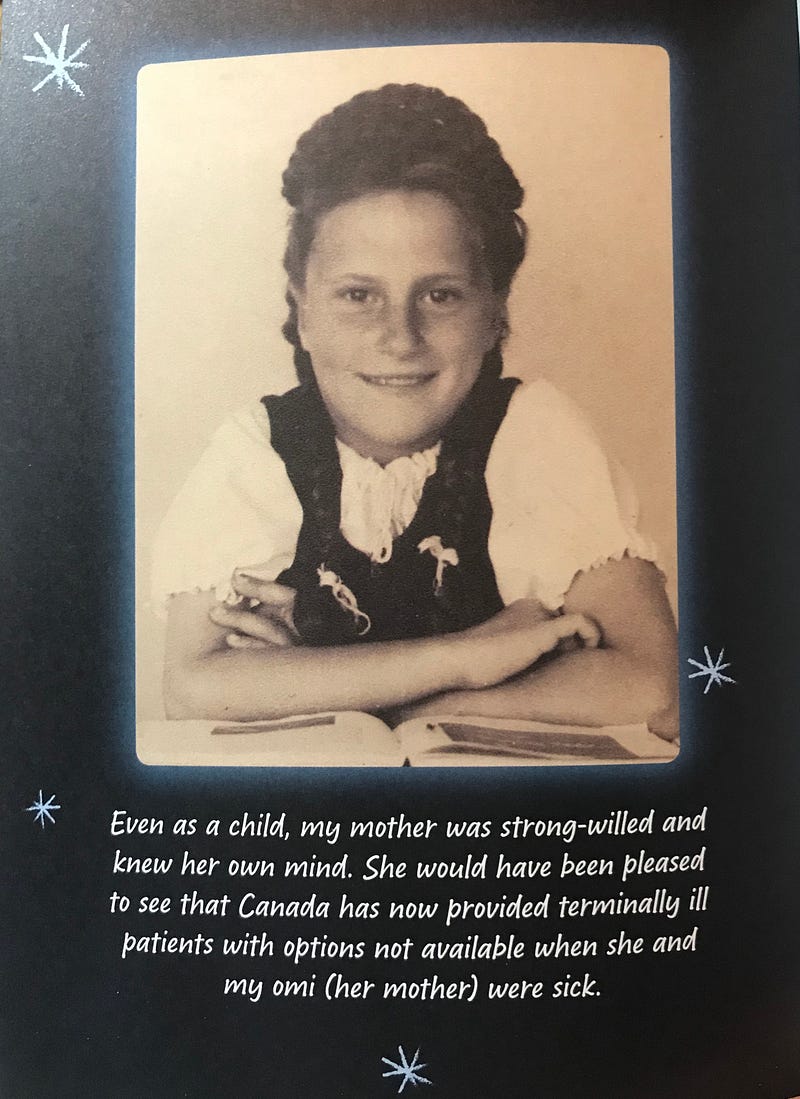
My mother died before her time. She was young — sick, already, at the age I am now. Dead before her 65th birthday. Outspoken, opinionated, fierce, loyal, and stubborn, my mother told me many times, “If I ever get dementia, take me out back and shoot me.”
And then she did — develop a type of early-onset dementia that impacts the frontal lobes. And, I didn’t — take her out back and shoot her.
Life, Death, and the Whole Damned Thing
I remember once, early on in my development as a writer (in my early twenties) when I had a case of writer’s block. I asked Mom, “What should I write about?”
“Life and death and the whole damned thing,” she replied.
It was decades later, after she’d been gone for more than a dozen years that I finally wrote a book about life and death and the whole damned thing.
It was a terrible experience.
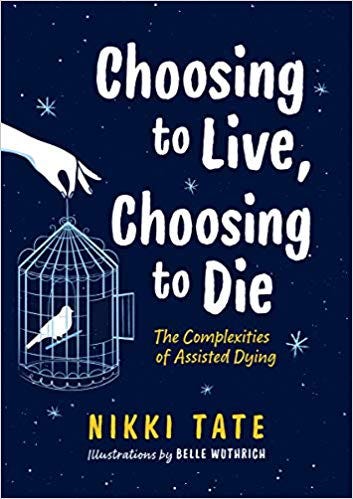
Yes, Choosing to Live, Choosing to Die: The Complexities of Assisted Dying was awful to write. Every page had my mother’s unfulfilled wish embedded just beneath the words I struggled long and hard to craft.
I remember standing in the kitchen when she was ill. I was her primary caregiver at the time and she was still living at home. By this point, she was incoherent, confused, depressed, frustrated, and hallucinating. She appeared in the kitchen doorway as I was counting out her evening meds. “I want to fall on my sword!” she said, miming running herself through with a sword. Then she turned and stalked back into her bedroom, cackling hysterically.
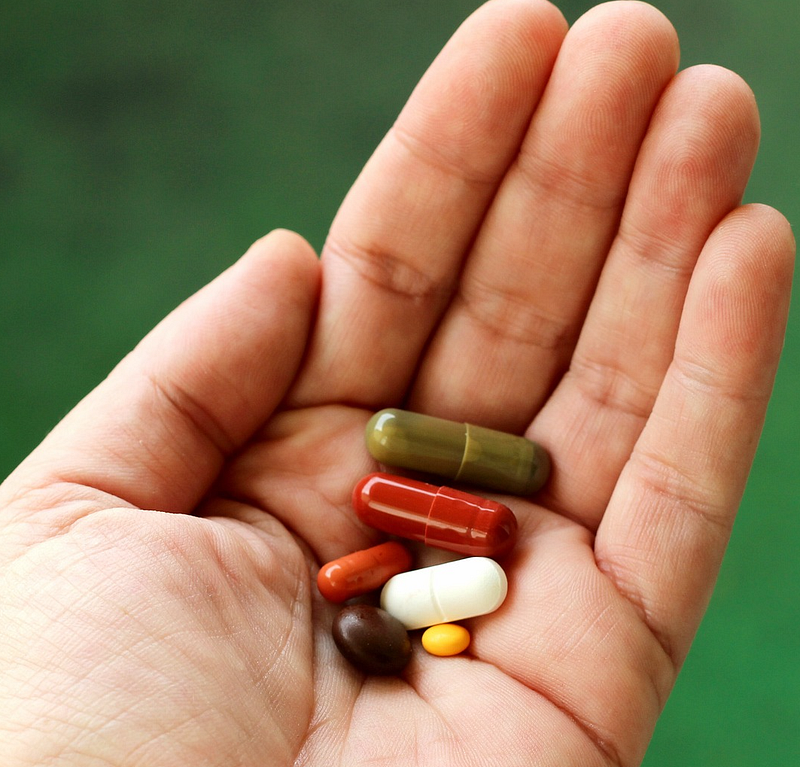
I had a palmful of pills and a bowl of chocolate pudding on front of me on the kitchen counter. Mom couldn’t swallow pills so I ground them up and added them to the pudding, which she ate happily, like a little kid, licking her lips and grinning. It would have been easy to slip her more than the prescribed dose. Finding a lethal combination would have been the less messy equivalent to taking her out back and shooting her.
Canada’s Medical Assistance in Dying Laws Still Need Work
Back then, medical assistance in dying (MAiD) was not legal in Canada. It is now. Sort of. The current laws wouldn’t actually have helped much as you need to be of sound mind at the moment of accepting the assistance and by the time we knew what was going on with Mom, it would have been too late. No ethical doctor would have agreed she was in sound mind.
Earlier on that same day when I stood at the kitchen counter debating whether or not to slip her an overdose, she had emptied an entire box of tissues while sitting in the living room. One at a time she removed a tissue, rolled it into a ball, taped it up and added it to a growing heap on a dinner plate. This bizarre activity kept her occupied and as I was trying to get some writing done, I let her be.
Until I smelled smoke. She had found some matches somewhere and set the pile of white balls alight. Sound mind? Not a chance.
Struggling With a Dilemma? Write a Book About It
Legal assistance in dying has fascinated me for a long time, even before my mother could have used a helping hand in her final journey. So, when I had the chance to write the book for a series intended to foster critical thinking in teens, I jumped at the chance. Finally, I thought, I could explore the subject from all angles, perhaps exorcise some demons. Maybe even diminish the guilt I felt for not having been brave enough to take action when I know that’s what my mother would have preferred.
The research and the reading gutted me. I waded through story after story of families making decisions for those who couldn’t — accident victims on life support, elderly patients so weak they could no longer eat, children too young to understand death. There were stories of those who knew all too well what they were facing and who decided they would rather take matters into their own hands — cancer patients, the elderly, ALS sufferers… oh, so much suffering.
I wept. Often. For all those losses. For my own loss. For the pain my family suffered as we watched my mother’s decline, unable to stop it, unable to end it, unable to help her. The helplessness. And then, feeling equally impotent when it came to helping each other.
Many times, after hours at my desk, I retreated into the bedroom, pulled the covers over my head and wished I had never embarked on such a grueling project.
As I researched, I came across relatively straightforward cases where someone critically ill lay virtually lifeless in a vegetative state. In situations like that, it was easier, somehow, to imagine pulling a plug. Removing life support. Refusing tube feeding when someone was so far gone it was just a matter of time, of deciding how long to let them suffer.
But the other cases — the young people suffering debilitating and unrelenting depression (should severe mental illness be included in the list of approved reasons for accepting/providing assistance in death?), mature minors whose choices were not the same as those of their parents, elderly couples who had been together so long and who simply wished to go quietly, together… those were the cases where the decision-making really got difficult. I couldn’t help it. I inserted myself into every hospital room, asking myself ‘what would I do in this situation?’
The personal stories were heart-wrenching and they were everywhere. Parents of dying children. Children of dying parents. The losses of lovers, siblings, grandparents, friends… There was no shortage of case studies to choose from.

Who Decides When it’s Time to Die (or, How)?
On the other side were all the considerations we grapple with when considering what it means to choose to end a life. Under what circumstances? Who decides? How should it be done? Should it ever be acceptable to help someone die? What laws do we put in place to protect abuses? How do we reconcile faith? Or the differences between faiths? What about when family members don’t agree on what should happen? Do we need new rituals? What are death doulas? Death cafés? Is a euthanist a thing? Should it be? Why aren’t we having these conversations? Aren’t we all going to die? Aren’t we all going to know someone — many someones — who will die?
The Obstacle is the Way
Slowly, slowly my feelings toward the project began to change. After reading about so much dying, so many deaths, I began to realize that the stories were often about those who were left behind. The living. The decision-makers before — and after. Those who were facing death had perspectives that sometimes differed from those who were not. Not yet, that is.
Death Comes to Every Single One of Us
We are all dying. That was a truth I eventually came around to fully accepting. Not as a theoretical construct but as a reality. And not even a harsh reality. Dying is as natural, after all, as being born. It’s just in our western culture we’ve hidden death away. Unless things change in our society, most of us can expect to die in a hospital or nursing home surrounded by machines and strangers.
I kept reading. Watching documentaries. Listening to radio interviews. Thinking. Questioning. I’ve never written a book in which I’ve asked so many questions and wound up with so few answers.
The last chapter is called; A Good Death. When I started writing, I didn’t think there was such a thing. Death is something we should avoid at all costs, right? The thing is, death is unavoidable. So, how do we deal with the reality of what awaits us all?
The secret of dealing with death lies in the way we live the lives we’ve been given. Long, short, robust or fragile — we can control only the way we choose to be in this moment. To be alive. Now. I am still here. Still breathing. Still thinking. Still writing. For now.
Each breath is that much more precious now that I’ve fully accepted that each breath also takes me closer to the end of my time here.
I fall asleep each night grateful to be falling asleep. I have let go of expectations that I will necessarily wake up again. That changes things. It changes the way I move through my days. I’m calmer. I’m kinder. The small things have truly become inconsequential and I’ve realized there are, actually, only a small handful of big things that are worth worrying about.
I love those I love, harder. And, I’ve opened my heart to welcome in as many people as care to squeeze inside.
Stuff just doesn’t bother me the way it used to.
By spending all that time considering so many ways to die I found that the only way to deal with that wall of grief was to walk through it and accept whatever I might find on the other side.
So, thanks, Mom. Your greatest gift to me has been to make me think. To seek understanding. And in the end, to fully appreciate the life I have been blessed to live.


