
What Writers Can Learn From 3 Low-Budget Horror Films
Some advice on how to look at your work from a different perspective.
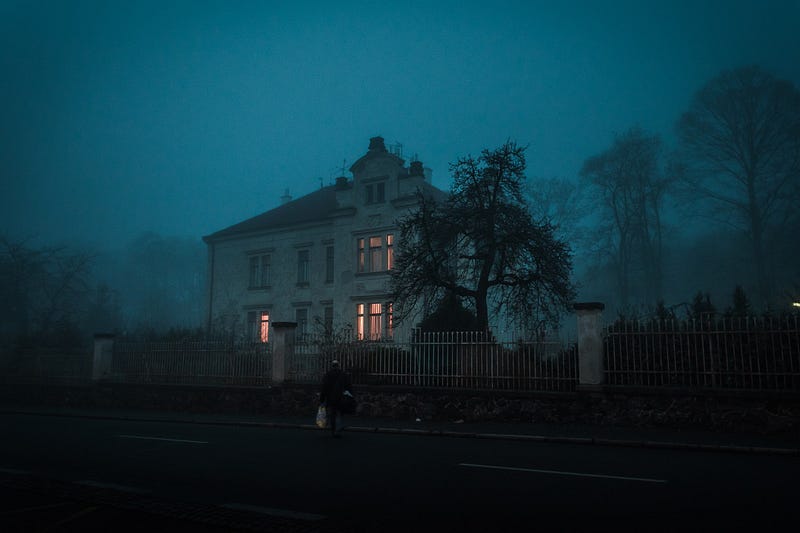
I ndependent filmmakers collectively make for an appropriate comparison to writers of all genres, because both creators work from almost nothing. Horror movies in particular carry a heavy creative burden, because they don’t just capture reality; they’re often also trying to induce an artifice of the supernatural.
As a writer, you’ve got words on a page, and that’s it. You’re trying to achieve the nigh impossible — and with what? A computer, maybe paper and a pen, sometimes just a phone?
So I thought it would be fun to take a look at a few wildly successful horror films, which broke records at the box office with their modest production values. And then I tried to learn from them as a writer.
I’ll go over how much these movies made versus their budget, then delve into some of the reasons they were so successful. Finally, most important of all, I’ll talk about some takeaway lessons for writers.
Warning:
There are some spoilers included in the below discussion of these films, for anyone who hasn’t seen them and may wish to do so. I’m totally advocating to lose readers here, if it means I save ruining something bigger for them.
Consider skipping to the next item on the list, if you want to avoid spoilers altogether.
1. The Blair Witch Project (1999)
Budget: $500,000. Box office: 250 million. Sequels: 4.
It’s a mockumentary about a group of young(ish) adults who go looking for a witch in the woods. It doesn’t sound all that scary. Many would argue that it really isn’t that scary. However, it was a great idea for a cheaply-made movie, and the number of people who went to see this in theaters was staggering.
What can writers learn? An original idea may go a long way. It doesn’t need to be extremely complicated or fancy, but it’s hard to put a price on a simple, efficient, unique conceit.
No need to worry too much about technical virtuosity either. Whatever bare bones skills you have, provided you’re creative enough, can be made to work wonders for you. BWP proved that intentionally sloppy filmmaking can be used to create the illusion of authenticity.
The end result was that some audiences actually believed it was real. A scam? Not really, just creative marketing. It was realistic enough that people suspected it could’ve been true, which exploited their underlying fears of the supernatural, and drew them in more.
Some audiences walked out in the middle of it. People were even reported to have vomited during it — but they had already paid. Furthermore, their walking out and vomiting only generated more attention, to propagate the thought in potential viewers, of: “Okay, now I really need to see what this is all about”.
Shock value and polarization can be big hype/publicity machines that work in your favor, as long as they fit the intended aesthetic of your product. Don’t fear over being somewhat controversial.
Another lesson: you don’t always have to deliver a big payoff. The movie has a famously anti-climactic ending, and we never even see the witch. Her presence is entirely inferred by how the other characters behave, and the camera work.
A great deal of being a successful writer is getting people to read your work. They might not get what they expect, but the act of discovering that can be enough.
One trick is sometimes to make the expectations a little ambiguous. The Blair Witch Project just sounds vague yet ominous, without really telling you anything all that specific in the title.
Make your readers wonder what’s behind the cover or the headline, without having to make any audacious promises.
2. The Texas Chainsaw Massacre (1974)
Budget: $140,000. Box office: 30 million. Sequels: 8.
A group of friends get lost on a road trip, and stumble into the clutches of evil itself: a house inhabited by a family of deranged cannibals, living out in the middle of nowhere.
This one is a completely different animal. The technical handiwork is very professional, and the movie was inspired by real events. And it doesn’t skimp on the graphic scares. You get to see the eponymous massacre. It’s very in-your-face, raw, and delivering on its promises.
That being said, the setup is well-paced. We don’t see any real violence for a while. We expect it, know it’s likely on its way, and it is foreshadowed relentlessly; but we are forced to wait. When it does arrive, it comes on like a buzz-saw, literally.
In fact, The Texas Chainsaw Massacre turns out a whole lot more violent and horrible than expected. As bad as it sounds, the way it is executed is even more demented and grisly. The killers themselves are deranged beyond belief, and it challenges even the most stone-hearted viewers not to flinch.
There’s one big lesson for writers: it often does pay to deliver the goods. There’s nothing like following through on a promise you make to the customer. Not only that; if you can go above and beyond an already enticing conjecture, that can clinch your success.
Remember, writers make miracles happen on the page using nothing but words. If you set out to do something big with your piece, do what’s necessary to make that effective, no excuses.
3. Halloween (1978)
Budget: $300,000. Box office: 70 million. Sequels: 10.
Halloween is a masterpiece in the art of suspense. It’s a landmark of economic and superb filmmaking, through and through. It starts with a lurid murder and some nudity. Then, about an hour passes with no real action.
We get to see a masked killer stalking people, we hear a lot of creepy music, and follow the characters around their mundane lives for a day. There’s more sex. Then the action approaches a crescendo, and there are more murders, followed by a showdown.
The lessons from Halloween are mostly formal and relate to how the film was paced. Writers can do well to follow a similar formula, if all else fails. Start with something strong and gripping — engage the reader. Then pull back.
Don’t give it everything you have; instead, back off and develop interest. Build gradually to a conclusion. If the opening was strong, the finish should be cataclysmic.
Otherwise, if your reader is even getting through your whole piece, they might be disappointed by the ending, and they’re unlikely to come back for more.
Don’t peak too soon. Too much frontloading will discourage full engagement.
These horror pictures all have in common brevity and simplicity. They’re ~80–90 minutes, and you can sum up the plot in one or two straightforward sentences. This is probably because they rely so heavily on this ever-important aspect of suspense to carry audiences through.
If you can keep people wondering, you don’t need as much raw material in the first place. You can deprive them of satisfaction for quite a while, and still get away with it — if you’re tightening your grip on the tension, and creating intrigue as you do it.
All of these horror films are successful in different ways. I’d rank them in the order listed, worst to best. Despite The Blair Witch Project being the biggest moneymaker, it started the smallest franchise. Halloween had the most sequels and was the most popular overall.
Notice the accelerating sequel count as you go down the list. All of these movies had an ending that was itself suspenseful. The door was left open for more, and audiences came back.
Do this with your writing too. You want to leave the reader wondering what’s next, even when they reach the end. Give them resolution and closure, but not too much.
Sources
- Wikipedia articles on the The Blair Witch Project, The Texas Chainsaw Massacre, and Halloween
Thank you for reading! I hope you enjoyed my story. You can sign up for a paid Medium membership today ($5/month or $50/year), to have full access to all this site has to offer, through the following referral link:
Sign up for Medium Today (using this personalized link will directly support me as a writer)