
What Would You Buy If You Only Had $18.00 for Groceries This Week?
What I learned about poverty while participating in the Welfare Food Challenge
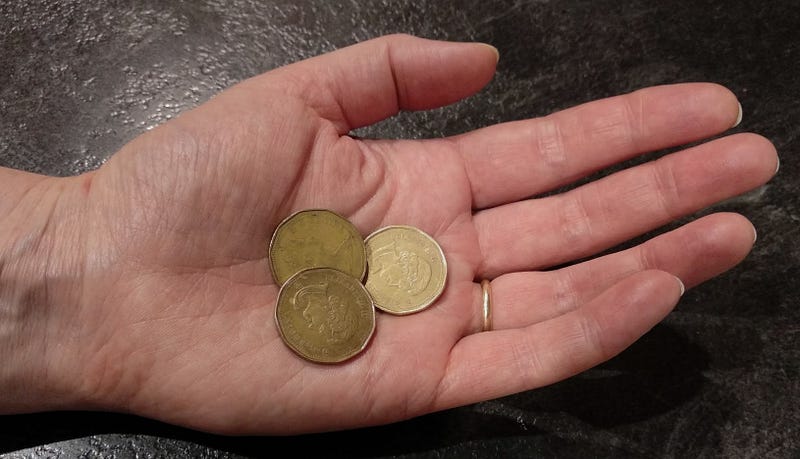
$18.00 a week is less than $3.00 a day. Could you live on that?
It’s easy to judge those living in poverty — homeless people on the streets and hungry families lining up at the food bank. The truth is life can throw curveballs, and poverty and homelessness can happen to any of us. People are often on income assistance programs due to misfortune: a serious accident, long-term physical or mental health problems, an abusive family situation, or unemployment.
We need to educate ourselves about poverty and homelessness, not only to help avoid these situations ourselves but to help those less fortunate.
Participating in the Welfare Food Challenge
A friend invited me to participate in the Welfare Food Challenge. The purpose of the challenge is to give people a glimpse into the life of a person struggling to make ends meet, living on an income well below the poverty line.
This annual event in BC, Canada, is sponsored by Raise the Rates, a coalition of community organizations that advocates for those on income assistance. The group campaigns to find solutions to poverty and encourage the government to raise welfare and disability rates.
I participated to gain insight into poverty and posted my diary to increase public awareness about the issue. When I took part in the challenge in October 2016, people on welfare in my province had approximately $18.00 per person to spend on food per week. In contrast, the average Canadian family was spending $56.00 per person per week.
With your allotted amount (in my case, $18.00), you go to the grocery store, buy your food/drinks for the week, and try to carry on with your everyday life as best you can.
In the event that you have to go to a business meeting or family gathering where there’s food or drink — too bad. You either refrain from eating and drinking or bring snacks from your small supply at home.
A strict budget means no money for luxuries.
You wouldn’t believe how difficult it is to buy a week’s worth of food for under $18.00. In Superstore, I tried to stick to my list but ended up putting several things back on the shelves. I had to weigh my produce and calculate my bill before going to the check-out.
I usually buy free-range eggs, but these were not within my budget. I felt guilty putting regular eggs in my cart, but needed to include some protein, and any kind of meat was too expensive.
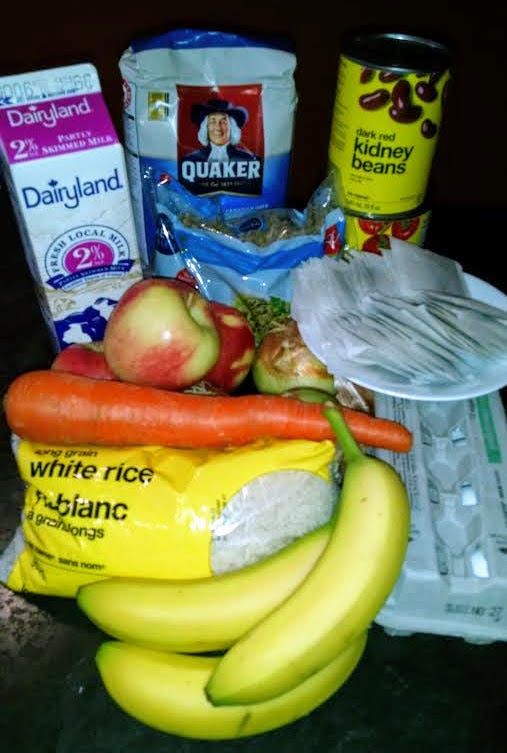
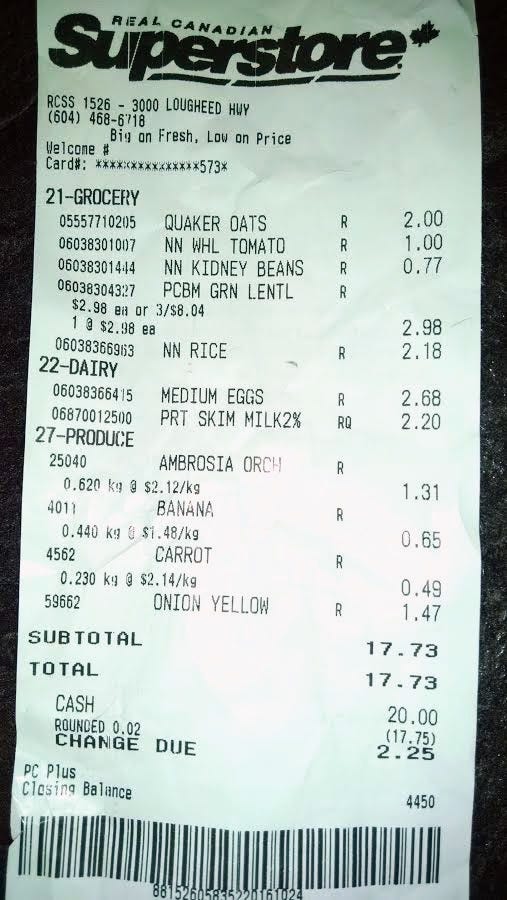
Coffee was suddenly out of my price range, as was wine. Even the cheapest bottle would’ve blown half my budget, so it wasn’t even a consideration. Fancy sauces, spices, pickles, chips, and other little luxuries were also out of the question.
At the cash register, my bill was a little over the $18.00 limit. I had to ask the check-out person to remove a banana, two apples, and a carrot.
People in line were watching me. It was humiliating, and I felt sad thinking about how many people feel like this every time they shop.
People on welfare don’t get a break from poverty.
I’d planned to start this challenge a week earlier, but I had a streaming cold and couldn’t face doing it while sick. People on welfare don’t have the luxury of choosing when they do this challenge — they’re on it all the time, including when they’re sick and under stress.
I once spoke to a homeless man who told me his welfare cheque didn’t even cover rent, let alone food or anything else. Because of this, he lives in a tent near the river.
After purchasing a week’s worth of groceries with my $18.00 allowance, I was ready to begin my week. I decided to document my experience to see if I could gain some insights into poverty.
What follows is my seven-day Welfare Food Challenge recap.
Day 1: Bland Food
I woke up feeling nervous about how the week would go. My breakfast of oatmeal with water and a splash of milk tasted like wallpaper paste, but I felt grateful — at least I had breakfast. I’ve discovered that the tea in no-name tea bags is about as tasty as dust but better than nothing. It certainly made me appreciate my brand name favourites.
I printed a recipe for the lentil soup I was planning to cook but only had a few of the listed ingredients, so I made a more basic version. Dinner was rice and a plain omelette. It seemed strange to have an evening meal with no vegetables. My plate of food looked bland and unappetizing.
Day 2: Brain Fog
I run a first aid training business. We presented a workshop this morning to a group of at-risk youths. I felt lightheaded and spaced out. Thank goodness I wasn’t the one teaching CPR — I might have fallen over.
Driving home, a route I know very well, I lost my concentration, took a wrong turn, and added an extra 15 minutes to my journey. I tried to do invoicing in the afternoon but kept making mistakes and ended up crashing out for a couple of hours.
Day 3: Caffeine Withdrawal and a Handout
On this morning, I woke up with a nasty headache — probably caffeine withdrawal. At my dentist appointment, I felt lightheaded when the hygienist lowered the chair back and she asked if I was OK. I mentioned I was doing the Welfare Challenge, and my blood sugar might be a bit low. She said she’d give me a mandarin on the way out. I thanked her and said to save it for someone who needed it more, but she stuffed the mandarin in my pocket anyway.
Her kindness made me tearful. On the way home, all I could think about was how delicious that mandarin would taste. I couldn’t bring myself to eat it, though, as it felt like cheating, so I put it in the fridge and left it there.
Day 4: Social Isolation
I spent the day making treats for my teenage son’s Halloween party (hotdog mummies, spider cupcakes, and witch cookies). Before I started baking, I ate a bowl of oatmeal so I wouldn’t feel tempted. I had another hideous headache and felt lightheaded in the evening.
We were invited to my sister-in-law’s for a sushi dinner. I brought food from home — rice and vegetarian chilli. My in-laws felt sorry for me and kept offering me food (which smelled delicious). I had to keep refusing, and I could tell everyone felt awkward. It’s humiliating when people look at you with pity.
Day 5: Days Dragging
My brain was foggy again, and I felt tired all the time. I was dizzy after my gym workout and had to sit on the mat for a few minutes before I felt safe to drive home. All I wanted to do was sleep. I was dragging myself through the days and couldn’t wait to go to bed, so I didn’t have to think about food. The end of the week couldn’t come soon enough.
When you’re hungry and can’t eat what you want, when you want, the colour drains out of life.
I didn’t realize the significant role food plays and how dull life is when you have to eat the same plain foods every day.
Day 6: The End in Sight (For Me, Not Others)
I had a business meeting in a couple of days. I was worried I was going to make a fool of myself because I couldn’t think straight at the moment. I wasn’t sure what I was missing in my diet, but I didn’t feel right. I woke up at 3:30 a.m. with a growling stomach and couldn’t get back to sleep. It’s hard to concentrate and work when you are hungry.
Imagine feeling like this every day.
Day 7: Halloween Through a Different Lens
On this day, people were posting photos on Facebook of their costumes and all the delicious, fun snacks they were making. I was thinking about how different Halloween, Christmas, and other holidays must look to a person on welfare.
Like other calendar events, Halloween is not something to look forward to — it’s the cause of additional stress. Other people are enjoying themselves — you and your family are not. You can’t afford to make Halloween fun for your kids by buying the costumes and treats other children have. Your poor diet doesn’t leave you with the creative energy to whip up costumes out of cardboard and duct tape.
The average Canadian spends about $40.00 on Halloween candy alone, about double the weekly food allowance for a person on welfare. In past years, I hadn’t thought twice about buying candy for trick-or-treaters, party food, costumes, and pumpkins — but I will now.
Every day is scary when you’re living on welfare. Seeing Halloween through the lens of poverty was another eye-opening experience. When I woke up the next morning, I would be able to eat what I wanted, when I wanted. My “challenge” would be over. This was not the case for many others.
Food Banks, Bills, and Constant Stress
According to Stats Canada, the latest poverty statistics posted in 2020 show 8.7% of Canadians live below Canada’s official poverty line. Figures for 2019 in The United States Census show the official poverty rate in the U.S. was 10.5%. The most vulnerable populations are children living in single-parent households, seniors, and people living with disabilities.
“The consequences of poverty are far-reaching, from the devastating realities of children growing up in poverty, low literacy rates, to cycles of violence being perpetuated against vulnerable communities, to billions of dollars spent (wasted) on incarcerating people for living outside/survival activities as well as crimes of desperation, higher hospital bills, lower life expectancy for low-income people, and expensive fast fixes to issues of homelessness. The cost of poverty is too high.”
What can we do about poverty?
According to the Food and Agriculture Organization of the United Nations, 820 million people in the world are hungry, and an estimated one-third of all food produced globally goes to waste. Although this seems like an insurmountable problem, there are things we can all do to help.
- Become educated about poverty and advocate for the less fortunate.
- Shop and eat locally. Buy food at local farmers’ markets and grow vegetables and herbs at home.
- Stop wasting food. Reducing food loss is a critical step in creating a zero-hunger world.
- Support local initiatives like school breakfast clubs and backpack food programs.
Be grateful for what you have.
Be grateful for every meal, treat, snack, or drink you have. Be thankful for fresh fruits and vegetables, good coffee and tea, wine, cheese, fried chicken, brand-name cereals, sauces, spices, baked goods, and treats. Appreciate the many things people living in poverty can’t afford to buy regularly.
Participating in the Welfare Food Challenge gave me a glimpse into a life I hope I’ll never have to experience. I will not take my good fortune for granted again and will do my part to help those living in poverty in my community.
©Gill McCulloch, March 2021

Thanks for reading! If you’d like to get an email when I publish, please subscribe here.


