
What Working With David Bowie Taught Me About Imperfection
Ken Scott worked with some iconic artists — including The Beatles, David Bowie and Duran Duran — and he learned a valuable lesson from them
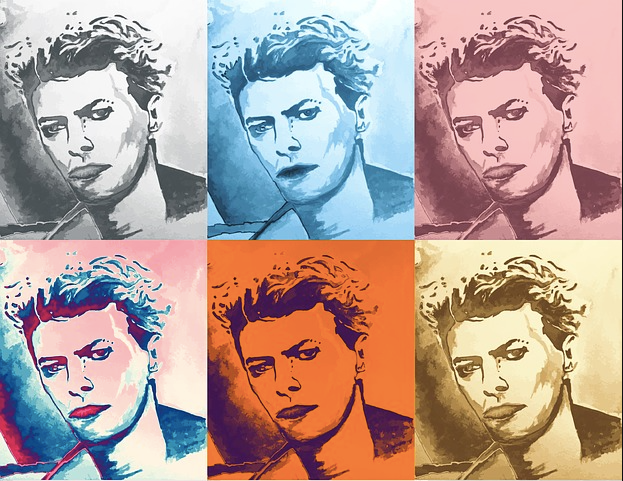
“Great creativity comes from mistakes,” says Ken Scott, legendary engineer of The Beatles and producer of David Bowie. “That’s the way it should be.”
Regarded by many as one of the most significant recording industry figures in the past five decades, Scott worked with some of the biggest artists ever. The impressive list of his collaborations reads like the Rock & Roll Hall of Fame: Pink Floyd, Elton John, Supertramp, Jeff Beck, George Harrison, Procol Harum, Devo, Lou Reed, Frank Zappa and more.
He worked with Sir George Martin on some of The Beatles albums in Abbey Road before taking a job at Trident Studios where he worked on David Bowie’s early albums, including The Man Who Sold The World, Hunky Dory and The Rise And Fall Of Ziggy Stardust And The Spiders From Mars. He wrote a book about it all called Abbey Road To Ziggy Stardust.
In 2016, I went to see a talk he did with Guardian journalist Dave Simpson at Headrow House in Leeds. Here’s what he had to say about the value of mistakes, what music has lost as a result of the development of technology, and who he feels is responsible for the decline in the music industry. He starts with telling the story of when he accidentally deleted the snare drum on “Glass Onion” from The Beatles 1968 double album The Beatles.
“So many of the great recording artists of the past would never get signed today. Supertramp would never have happened today, David Bowie would never have happened.”–Ken Scott
When I Accidentally Erased the Snares on Glass Onion
Ken Scott: Today, it would just be a case of copy and paste and move forward. But back then we’d lost the snares, that was it. I thought ‘that’s it, I’m out of here. Bye folks’.
But John [Lennon] was by the side of me and he said, “you know what, let me hear it again”. So I played it for him again and he said: “You know what? Nobody would ever have thought of having the smallest part of the song immediately after the biggest part of the song. I like it, we’ll keep it.”
So from now on whenever you hear that bit of Glass Onion you’ll know it had nothing to do with The Beatles, it was just my fuck up. That’s the way it should be, but not these days.
I co-produced four albums with David [Bowie] and 95 per cent of the vocals we did on those albums were done in one take. The first take; beginning to end. No auto-tune. No moving around. He just performed every single time and it worked. A world away from what we see now: Unfortunately, we’ve reached the point today that if we turned those vocals into a major label they’d reject them. They’d say, ‘you’ve got to auto-tune, you’ve got to put them in time’.
They are not perfect, they are human. They come from down here [gestures towards the heart] which, to me, is what is lacking so much in today’s music. Major labels these days are like ‘well, everything has to be auto-tuned’. Is it because the general public have become so aware of pitch now that if it’s out of tune they can’t listen to it? Yeah, right.
The Phone Ringing at the End of Life on Mars
I wasn’t one of those people who wanted to keep lots and lots of multi-track tapes. If we like the tape we’d go back to the beginning and record over it. On this occasion it came down to this one take that was going really well.
In the studio, next to the piano, there was a door. Behind that door was a phone for session musicians so they could call their booker to find out what session they had in the afternoon. Nobody every called ‘in’ on it, no-one was ever given the number. So we were in the middle of this take and suddenly someone called in with a wrong number. We thought ‘we’ve got to keep that’.
So many of the great recording artists of the past would never get signed today. Supertramp would never have happened today, David Bowie would never have happened.
Who is To Blame for the Decline of the Music Business?
I hear a lot about how TV shows — like American Idol, Pop Idol, and all that — have ruined the music business. I disagree with that completely. They certainly haven’t helped, but there’s one person (and it’s not Simon Cowell) to blame for the fall of the music business.
His name is Andy Hildebrand, he was a computer programmer, and he worked for the oil company Exxon. He developed some software for interpreting seismic data to help find oil. Well, one day someone took this piece of software and used it in a completely different way. They used it to create this… [plays ‘Believe’ by Cher]. Yes, it was used for auto-tune. […] As far as I’m concerned, his software has done more damage than anything else possible.
The Record Company Formula
We have reached the point where complete and utter non-talents feel they can make music and record companies believe they can make music. Record companies have formulated what they need from recording artists. As far as females go, they need to be thin, they need to dance, they need to look good. They don’t need to perform; they’re only going to lip-sync on stage.
Luckily, just recently, there is someone who has proved record companies 110 percent incorrect. Her name is Adele. Here we have someone who is not stick thin, she’s certainly attractive but I wouldn’t call her stunning, she actually sings live on stage, she doesn’t dance, and she outsells everyone else that’s been out for God knows how long.
One of the reasons is that she didn’t allow it to be streamed. We have to stop streaming it’s killing the industry just as much as Andy Hildebrand. Artists, producers, and engineers aren’t getting paid these days. The only ones making money are the streaming companies and record companies because there are backhanded deals done between them — the money never finds its way to the people it should.
What’s going to happen is that people are not going to be able to afford to make music, so music will die. It will be artificial intelligence that will be making everything you hear. We have to stop that; we need to get back to performances; we need to get back to in here [gestures towards his heart].
[Plays David Bowie singing ‘Five Years’.]


