What Were Medieval Taverns Actually Like?
Uncovering the truth about one of fantasy’s most enduring symbols
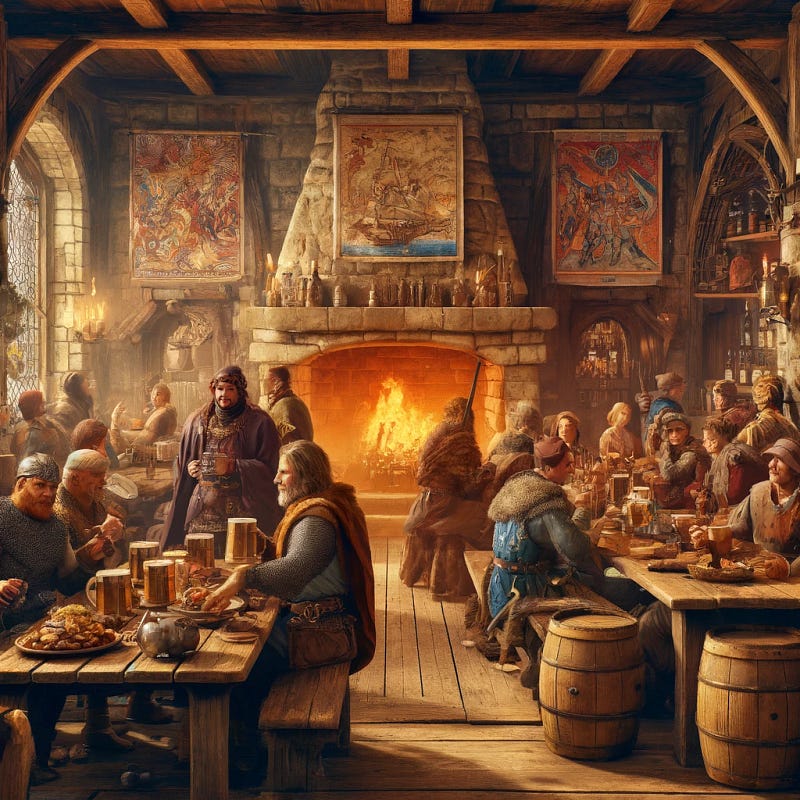
There is perhaps no image more enduring in modern fiction than that of a Medieval tavern. Taverns are portrayed as cozy places were adventurers share a pint near a roaring fire. They are usually tended to by a buxom and friendly bar maid. Coin and rumors flow freely. The air is typically warm and smokey. It is an appealing image. But is it real? What were Medieval taverns actually like?
Taverns were extremely common in the Medieval Period, so there is plenty of literature to pull from regarding what these institutions looked like and how they operated. On the one hand, they are in many ways similar to the idea of the fantasy tavern that appears in fiction. On the other hand, they were also incredibly mundane, taking up the same space as a motor lodge does today. (And indeed, motor lodges also get romanticized in modern fiction.)
Here is what Medieval taverns were actually like in their heyday.
The Outside
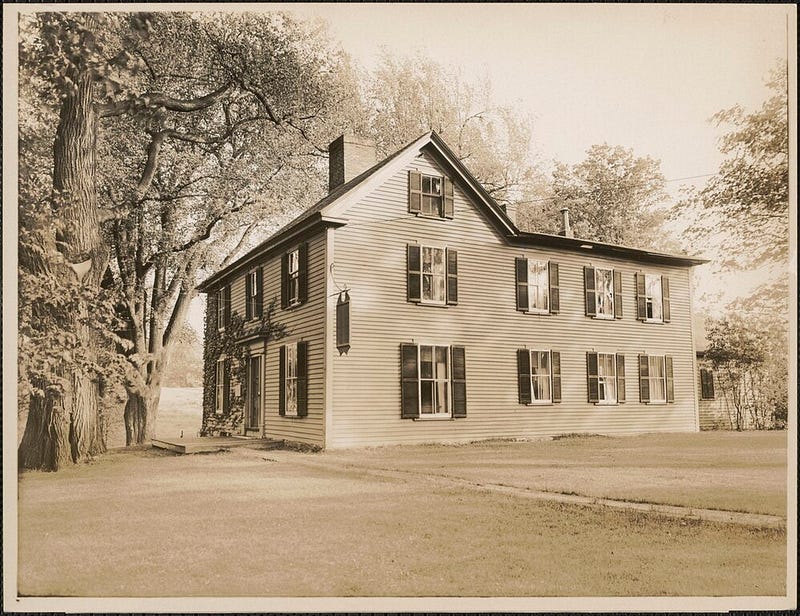
Taverns were often large buildings. Most taverns stood two to three stories tall. In many villages, the tavern would have been the largest building and would have immediately stood out to people passing by. Taverns looked a lot like oversized houses with a large front and multiple windows.
Taverns advertised themselves in a variety of different ways. Most taverns had vines growing over the door and on the front facade. These vines were called the bush, and they advertised that the tavern had wine for sale. (If you look closely at the image above, you can see the bush growing over this tavern’s door in a typical fashion.) Other taverns would have had ale poles, a type of flag pole that could be erected when there was fresh ale chilling in the cellar.
Taverns also boasted signs that would hang out front advertising their services. The signs were simple and made of wood. They would have contained the tavern name or a symbol or image connected to the tavern's name. Three Roses Tavern, for example, might have had a sign that featured three roses without any text. Many Medieval travelers were illiterate and would not have benefited from text on signs (though the tavern buildings were instantly recognizable in most places.)
Taverns were a staple of the Medieval landscape. Even the smallest villages typically contained at a single humble tavern. Larger towns could contain two or three. Cities could have ten or more taverns within their walls. Many of these institutions were located near the gatehouses of the cities where travelers could easily locate them. Taverns were also built at strategic crossroads or along well-traveled routes. Many taverns were located roughly 20 miles from the larger towns nearby, about a day’s walk. This allowed travelers going between different places to have a convenient place to stay after walking all day.
The Layout
The layout of a typical tavern was very similar wherever they were found. There was often a large common area on the first floor where people could relax, eat, drink, and socialize. Any good tavern also would have had an expansive cellar where they stored ale, beer, and wine. Not all taverns had a kitchen. In fact, most taverns served only basic food provided from a cooking fire usually kept outside.
Rooms were often located on the second floor. Some taverns had common rooms where everyone would sleep together like a hostel. As time went on, locked and private rooms became more popular. Accomodations were simple, containing a simple bed a stool and a table.
The tavern owner typically lived on site, usually in a small detached house on the property but sometimes in the tavern itself. There were also stables outside for people to tie their horses. The stables would have had basic fodder and water for the horses of patrons.
The Food
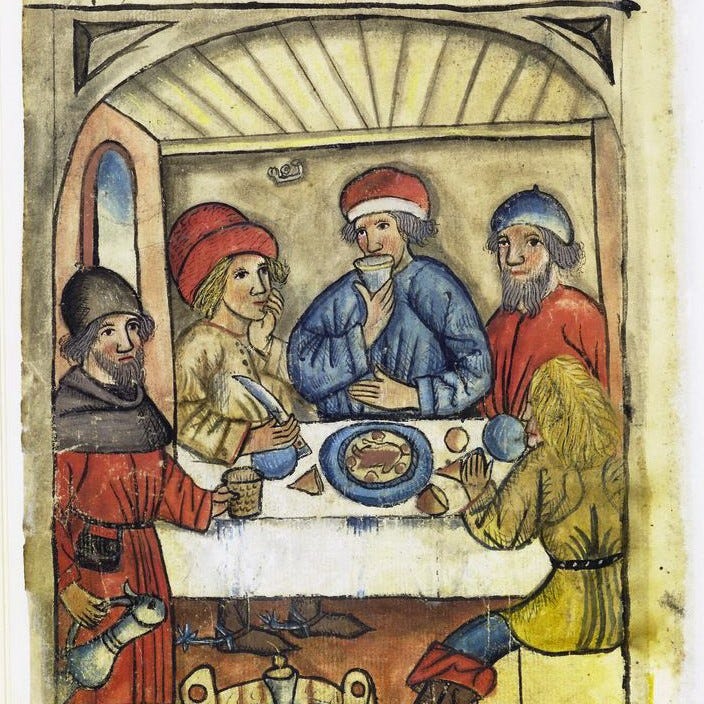
Taverns often only provided basic foods. Some inns would provide better meals to tenants who were staying the night. Taverns were not like restaurants where you went in expecting good food and good service. Food often consisted of salted meat, like bacon, that could be quickly cooked over an open flame. Most taverns also provided basics like bread or sausage. In areas near the water, many taverns would serve fish (still a staple in many English pubs today.) Food in taverns was seen as a necessity rather than a luxury. Most people did not look forward to eating tavern food.
The food was often overcooked, stale and unseasoned. Seasoning was expensive so your meal would consist of simple boiled or salted meat with no flavoring. Many patrons preferred to bring their own food or eat on the road and drink in the tavern. Tavern food also costed extra (unless you paid for a room with a meal) adding to the expense.
The Drink

Now, we get to the good stuff. Taverns were primarily establishments focused on selling drinks. Taverns typically served beer, ale, or wine. Beer was the cheapest. Tavern owners in Medieval Europe could buy kegs of beer for mere pennies. Serving drinks was incredibly lucrative, and there was always a strong demand for beer.
During the Medieval Period, clean water was not very common. Most places served beer because beer was unlikely to ever make someone sick. Medieval patrons drank beer constantly (though the beer of the age was weaker than the beer typically consumed today.) Most beer was brewed locally. Every town often had one or two people (often more) who would brew beer to sell to the taverns.
Beer was kept in casks and kegs in the cellar, where it was kept cool. Servers would fill pitchers, typically made from clay or stone, from the cellar and bring them up to the common area. From there, they would pour the beer into mugs, typically made from hewn wood.
Wine was the most expensive. Wine typically cost three to four times more than beer and was often served at middle class or high class establishments. (Lower class taverns were called alehouses and typically only served cheap beer.) Since wine was so expensive, it was common courtesy to allow patrons into the cellar to inspect the wine casks. Serving counterfeit, sour or watered down wine was a crime in most places. If the constable found that a tavern owner was selling fake wine they could be put in the stocks and irate customers were allowed to dump the offending liquid over the tavern owner’s head.
The idea that the tavern was a place where alcohol flowed freely is accurate. Taverns were known for heavy drinking and were frequented by locals and travelers alike.
The Atmosphere
So far, the idea of the Medieval tavern lines up fairly well with reality. The one way that fictional taverns differ from the taverns of yore is in the atmosphere. Taverns are often portrayed as calm, cozy places when, in fact, they were often loud, rowdy, and uncouth. Taverns were often filled with drunks, and bouts of bawdy singing by out-of-tune miscreants were common. Brawls broke out nightly, and offenders were thrown out into the muddy streets or escorted to the stocks by the local nightwatchman.
Certainly, there were rumors, idle chats by the fireside, and business dealings taking place within the tavern, but most nights, the tavern was a loud and crowded place. There were no limits on serving, and patrons had to consider their own drinks and maintain personal responsibility. (This is where the phrase mind your Ps and Qs comes from. Ps and Qs means pints and quarts. You had to manage your own alcohol intake.)
Violence was common. Arguments over gambling or personal grievances often erupted after a number of mugs of beer. There were also a number of accidents. If you dig into some of the local records in England, which are still available, you will find rolls containing information about drunken mishaps. Men would fall off their horses in the stables and hit their heads. Men would stumble out of the doors, trip down the stairs, and break their necks. Drowning was also common. Nearby wells and ponds often claimed unsuspecting victims after a long night of hard drinking.
One record records a man leaving a tavern saying:
[The man was] drunk and disgustingly over-fed, after an evening in Bedford, fell and struck a stone breaking the whole of his head.
Women also drank in taverns, sometimes to excess. In one particularly sad tale, a mother drunkenly fell asleep near the fire with an infant in her lap. The baby fell into a nearby pan of hot milk and died.
If you like rowdy crowds of drunken merriment, you likely would have enjoyed the Medieval tavern scene. If you wanted to talk quietly in a corner and be left to yourself, you would be sorely disappointed. Busy taverns often existed in a flurry of shouting, singing, fighting, stabbing and falling.
Verdict
The general look and layout of the Medieval tavern is well known. The large common area, the big fireplace, the ale. It was all there. Where fiction deviates most heavily from reality is in the depiction of the atmosphere. Taverns were rowdy places filled with violence, gambling and shouting. People would often drink themselves into a stupor and stumbled out into the night and get into violent, sometimes fatal, accidents.
There were quieter inns and wine cellars, often owned by vintners, that catered to travelers rather than drinkers. These places were more akin to B&Bs than the typical dive bar. At one point in time, there was a big difference between the alehouse, the tavern, and the inn, and each catered to a specific clientele. But over time, from the late 14th century onwards, these places merged together and these terms became interchangeable. Eventually, in England, all of these words were combined into the word public house, which is where we get our word pub from.