
What We Talk About When We Talk About Racism
6 things to do so we don’t let our children down.
With apologies — or perhaps in homage — to Raymond Carver’s story collection (What We Talk About When We Talk About Love)…
Below a picture of her grandson — he’s two — my daughter-in-law writes:
“You see my Hammy, he will be judged the rest of his life based on the color of his skin! Not by how smart, intelligent or beautiful he is. But I promse him one thing — I will fight until my last breath on this earth to protect him and all people of color because all lives matter and black lives matter! Racism is real America. Yes, there are good cops, but there are bad cops, too. We need to stand up and use our voice to stop this #georgefloyd, or any other unarmed black man, black female or child who died from a cop. They didn’t deserve this. Stay awake America and protect us!”
My grandson — he’s seven — tells me:
“We had to leave (the restaurant) because the man ‘said racism’ to my dad.”
Seven. Should he have to witness this? Have it explained to him that a family dinner wasn’t going to happen because his dad is black?
A new neighbor comes by for a visit and sees my grandson’s photo on the refrigerator. “It’s good for him he doesn’t look black,” she says. I’m shocked, and angry. How dare she? She knows nothing about him, about our family. I take her words as an insult to my African American son. Is she saying he doesn’t matter? I take a breath. I think maybe she’s right. My grandson’s light skin and soft curls may one day be what saves him. This happened more than a year ago; I think about it every minute now. I remind myself her son — he’s a teen now), adopted from Central America, is dark skinned, brown. Of course. She has her own fears for his safety and acceptance.
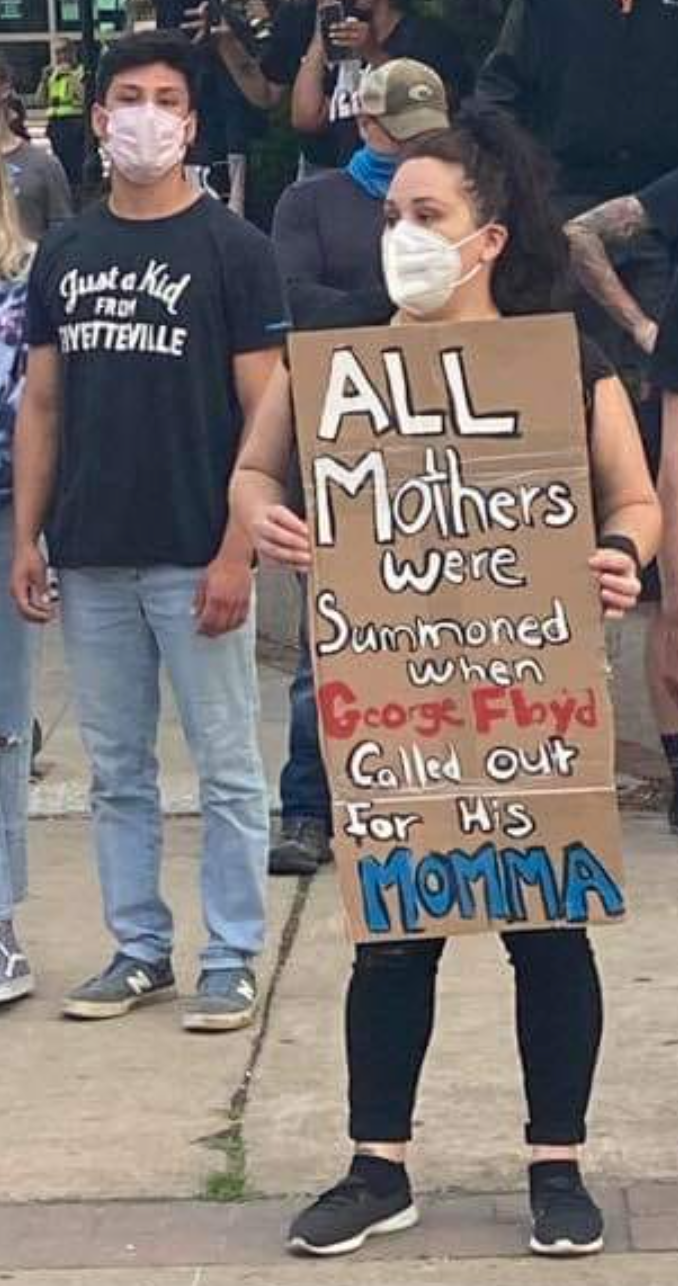
Dozens of voices of anguished mothers, wives, girlfriends flood social media, pleading with the world to see their sons and daughters, husbands, lovers, friends as the people they are not merely the color of their skin:
“Among the first thoughts out of my head when my son was born, was that one day this sweet beautiful ball of perfection could someday be considered dangerous and threatening just for having brown skin and curly hair.”
Van Jones is interviewed on CNN:
“There are 40 million African Americans in this country. Forty million. Everyone of us heartbroken, everyone of us just destroyed because we don’t know what to tell our children now.
“The reason this is different is there’s nothing you can tell your child that will protect them from this outcome …Don’t run, don’t talk back, don’t have drugs on you, don’t have a weapon on you…None of that would have saved this man. None of this would have saved our child. That’s why you see this heartbreak.”
Two young Oakland men do more than talk. Akil Riley, a student at UCLA, and Xavier Brown, a student at Howard University — they’re both 19 — mobilized 15,000 peaceful protesters on the streets of Oakland.
“I think it gave people hope that the youth have the power to organize,” says Brown.
“Young people are underrated. We’re some of the smartest people in the world,” says Riley.
Yes, Xavier Brown, you give us hope. Together with Akil Riley and other young people across the country, you are rising to the challenge. You, the youth we should be protecting, are what President Obama was talking about when he said to a virtual town hall held June 3 with young people:
“I’ve been hearing a little bit of chatter on the internet about voting versus protest. Politics and participation versus civil disobedience and direct action. This is not an either/or. This is both/and. To bring about real change we both have to highlight a problem and make people in power uncomfortable. But we also have to translante that into practical solutions and laws that can be implemented and we can monitor and make sure we’re following up on.”
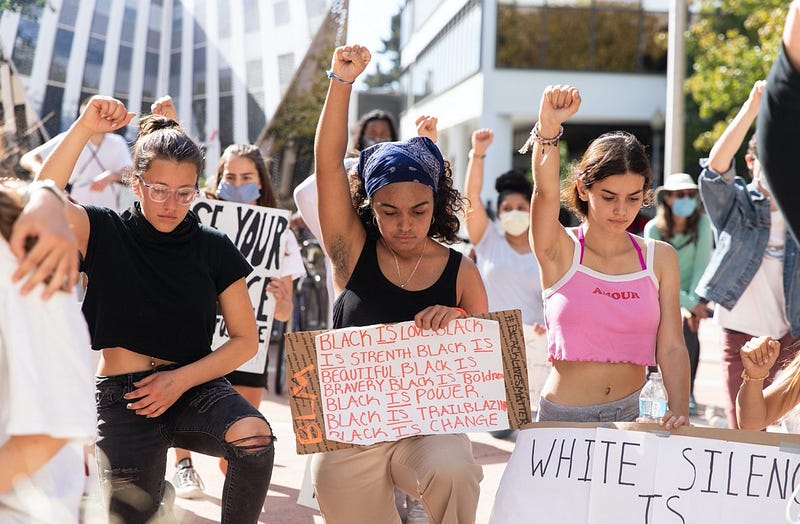
It’s a big ticket, but young men like Akil Riley and Xavier Brown, and give us cause for hope. They are our children. We can’t let them down.
6 Things we can do to make it better for our children
Just a note about the crisis we’re in. Right now, because of the shocking murder of George Floyd at the hands of the police on the streets of Minneapolis, most of us are focused on the need to reform police policies and procedures. But don’t let the other issues that these times bring to light — the ongoing struggle for better education for all of our children, an improved health care system that doesn’t leave black and brown and elderly people at greater risk when there is a pandemic, homelessness, hunger, the list goes on. So if policing isn’t your thing, apply the following suggestions to what you can do about the issues that are the most urgent to you.
- Talk. Silence isn’t necessarily golden.
I started this piece off with a reference to talking. Simple. We all do it. Talk to one another. Talking to friends and family and neighbors and our local leaders about public safety and how our local police go about doing their job can be powerful. What’s working? What needs to change? What can we do to help?
And we can talk to our children. Even young children need to talk about what’s going on. Reassure them that you are there to keep them safe. Let them ask questions. Keep your responses age-appropriate — even toddlers can understand what’s fair and what is not.
2. Don’t stay on the sidelines.
This one is a little harder for some, especially in the midst of social distancing and a reluctance to attend public gatherings. But there are opportunities in every town and city to attend, even if “virtually,” a public forum on policing or a meeting of your police oversight committee. You don’t have to take on the world. Your local community is a start.
3. Educate yourself. Gather information.
Shy about speaking out? Do the research and share with others who may be more comfortable being out front. Count up how times the police in your community stop people for allegedly suspicious behavior; tally the number of searches and arrests; keep track of reported uses of force, complaints and other issues.
Need to better understand the issues? Read with intellectual curiosity. There are numerous books and articles on racism that can help us understand the underlying issues protests call to our attention. Listen with an open, but critical mind. There are countless discussions taking place online, on televison and the radio, on podcasts.
4. Share your opinion.
Tell your your story and share your opinion and what you’ve learned. Write a letter to the editor of your local newspaper, testify at a public forum, join the conversation online through social media — be prepared to hear dissenting views and always be respectful — and support online campaigns for increased police accountability.
5. Organize.
Join an existing organization, coalition, or campaign — or start a new one!
6. Vote!
With tears flowing,Terrence Floyd, exhorted those protesting his brother George Floyd’s death:
“So let’s do this another way. Let’s stop thinking that our votes don’t matter and vote. Not just vote for the president but for the preliminaries, vote for everybody. Educate yourself. Don’t wait for somebody else to tell you who’s who. Educate yourself and know who you are voting for.”