
What We Know About Sex in the Victorian Age Is Absolutely Wrong
They Definitely Weren’t Prudes
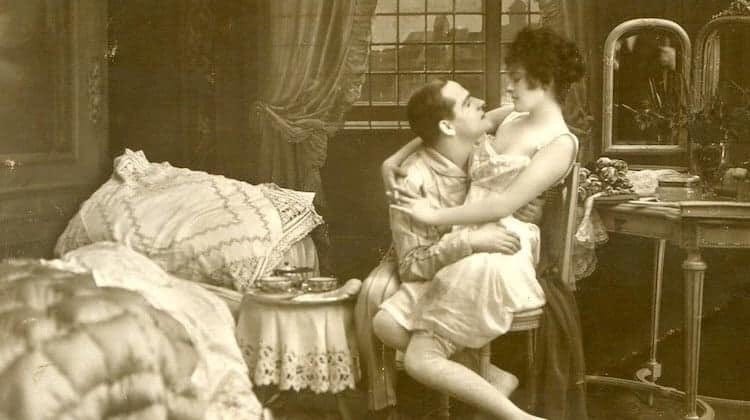
The Victorian era was the time period covering the reign of Queen Victoria of England, who was queen from June 20, 1837 to January 22, 1901. When most people today think of the Victorian era, they don’t think about the queen herself, though she is the United Kingdom’s second-longest reigning monarch after Queen Elizabeth II. They don’t think about Charles Dickens, the second-greatest figure of that time who began writing the year before Victoria’s coronation and was a literary superstar for the next three decades (and well beyond). The first thing that comes to mind for the vast majority is sex, or rather the lack of it; we all know the Victorians were big-time prudes.
We are all spectacularly wrong. While we are more open about sex and intimacy today (some would say too open), the Victorians were not nearly as sexually repressed as the history books would have you believe. It is true that, officially at least, people of the time were warned to confine sex to the purpose of procreation. That worked about as well then as abstinence-only appeals do today.
At least in the mid to late 19th century, there were a couple of good reasons for the attempt to limit sex somewhat. First, syphilis was rampant and incurable, usually leading to insanity and death. Second, and even more tragic, the number of women who died in childbirth was extremely high. In fact, during that period 1 out of every 200 women in England died in childbirth or from resulting complications. Today that number is 9 out of every 100,000.
Even a cursory look at the facts of the time shatter the sexual repression myth pretty quickly. One key statistic proving this regards prostitution. Prostitution was widespread in Victorian England, especially in large cities like London and Liverpool. It is estimated that there may have been close to 80,000 prostitutes in London alone in the 1890s, at a time when the city’s population was 5.5 million. Assuming a roughly 50/50 male to female ratio, that is 1 prostitute for every 34 men in the city. Today estimates show roughly that same number of sex workers (72,800) in the entire United Kingdom. Using that same 50/50, male/female split, the number now stands at 1 prostitute for every 906 men. All other factors notwithstanding, if the Victorians were as prudish as we portray them, those numbers should really be flipped.
Queen Victoria herself is often used as the poster child of the supposed sexual repression of the age that bears her name. A quote often attributed to her as advice to wives regarding sex is “Close your eyes and think of England.” But Victoria never said this. The first recorded instance of the phrase comes from the journal of Lady Hillingdon about sex with her husband; it was written in 1912, eleven years after Victoria died.
In reality, Victoria was neither a prude nor as humorless as we’ve been told. She and her husband, Prince Albert, had nine children over the course of their 21-year marriage, and she wrote of her wedding night that “I have never, never, spent such an evening” and “that to press my lips to his is heavenly bliss.”
The image of her as both a prudish and humorless figure stems in large part from this passionate love for Albert. When he died tragically of typhoid fever in December 1861, Victoria was consumed with grief that lasted until her own death 40 years later. She wore only black during those four decades, and as photography did not come into wide usage until the latter part of her reign, those images of a dour woman in black are what we remember her by.
Finally, and somewhat surprisingly, pornography was widespread in Victorian times. Holywell Street in London was well known for its many pornographic bookshops, and the 1857 Obscene Publications Act did little to halt business, simply driving it underground. There were two basic categories into which the erotica of the time fell: works where sexual desire was implied (as with Oscar Wilde and even some of Dickens’ writings) and explicit works that we would consider pornographic even today.
Some catchy book titles from the time include “The Romance of Lust,” “My Secret Life,” and “Venus in Furs.” And it wasn’t just books. The advent of photography saw the immediate depiction of both artistic nudity (as in other types of art like painting) and more explicit images as well. Many of these erotic prints were sold on Holywell Street alongside the erotic literature for a sexy one-two punch.
There are some outlandish myths about the sexuality of the Victorians, such as the idea that they covered piano legs because they were sexually suggestive and that Prince Albert had a genital piercing; both of these are patently false. Perhaps the best counter to the notion of Victorian repression comes from “A Victorian Lady’s Guide to Life,” a best-selling book of the time by Elspeth Marr. Here are a few notable quotes:
“Your nakedness is the work of God the Creator. Let men admire it — and grow religious between the sheets.”
And:
“Sex is like bread. What would life be without it? A dull business indeed.”
That sums it up better than I ever could.


