
What We Get & What Happens to Us: Field Notes on Human Inheritance
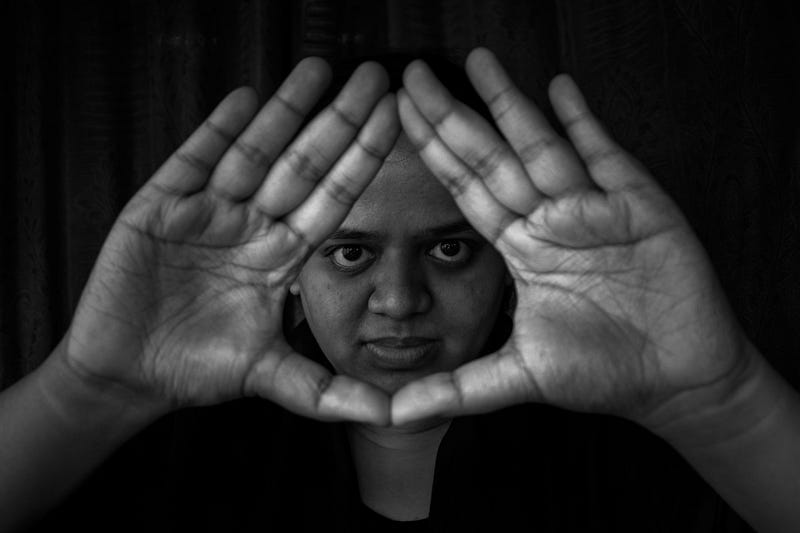
What comes first? What is Inheritance in the most original sense? In part, it’s our coming into being. It’s consciousness itself.
Body meets soul. Soul fills body. Attached, for a while.
Born into this strange new world, we find ourselves with a collection of circumstances. Ones we’ll come to learn are advantages and disadvantages. Things that make Earth School easier…or harder.
The lens on these seemingly straightforward marks for and against is distorted, of course. Altered by what we’re told and what we see. Transfigured by what we experience around us, inside of us, and from others.
It’s usual to think, viewed through this lens, that one inheritance is “bad” and another “good.” Here and now, knowing that things are not as they seem gets uncomfortable.
Suggesting it gets you cancelled.
So, let’s start with the simple view, seeing in the way we’re taught to see. Experiencing in the way we’re told to experience.
Here, gifts bequeathed to us include the very existence of body and mind. Also, perhaps, having a neurotypical brain and typically abled form. These allow us to move through space less aware. These allow us to find natural what some bodies and brains consider a project.
Maybe we win above-average intelligence on double-verified, agreed upon scales. Maybe we’re granted limbs capable of moving in remarkable, cheer-worthy ways.
Perhaps our outer shell and shape place high in beauty rankings of the moment. How we’re decorated makes a difference, on Earth School.
Then there’s the colour of our skin. And the small matter of socio-economic status and geographical landing place, on this planet. Also, biological sex. Also, gender.
All this positions us. All this tells others how to receive and how to treat us. At least lots-too-much of the time.
Our race and ethnicity. Our culture, religion, and community of birth. Our Homeland in all ways — including those we accept and those we reject.
Through the lens of everyday distortion, inheritance is unequal and cutthroat. Through the lens of the most obvious narratives and the most obvious powers that be, we are not the same.
You know this most of all if your lot differs from the prototype. If, handed the usual boxes to check, you are inconceivable.
If that’s you — in ways big or small — I’d like to propose a small, important thing.
Maybe, just maybe, refusal to be boxed and disadvantages in the Ledger of What Matters are a wellspring.
The inheritance that seemed less…is more. From it, issue our greatest gifts and our greatest strengths. From it, we show up and connect more fully.
I won’t minimize the struggle and sacrifice in that. I won’t tell you it’s just or just the way it is. It is not. It cries out for changing.
But I also won’t forsake the beauty and the power of your wholeness. I refuse to pretend your original inheritance isn’t equally precious — whatever that inheritance and whomever you breathed into being.
All of us are human here. All of us exceptional.
And, that’s barely the beginning.
Here’s a next thing: We didn’t materialize out of nothingness, disconnected from all that came before.
We are a merger of others in the physical and the experiential. Our lines reach on forever. At least, through the forever of humanness.
This gets lost in today’s world, amidst obsession with me and mine. Amidst insistence on defining, proclaiming, and defending the Territory of the Self.
Against all odds, we somehow imagine we’re the first. We somehow imagine we’re especially and originally important.
No. We are an extension and we come with. We carry and convey the memory of all that passed before.
This memory is stored in every cell and, also, someplace else. Someplace beyond the physical and beyond transitory imaginings.
We don’t need to stretch much to see this.
All it takes is looking at our place within several generations. Our parents. Our grandparents. What did they inherit? What did they experience? What did they perpetuate?
People don’t get how they are for no reason. They too, came to be in context.
If you are human, you have beyond a doubt inherited loss, grief, hardship, and resilience.
Panning out further — setting aside our unfortunate tendency to centre our own species at the expense of all else — let’s consider a grander whole.
Inheritance emerges from the Earth, Universe, and Source. From whatever it is that holds all of this and all of us.
We do not exist in Nature; we are Nature. We do not exist within that which we cannot name and cannot know. We are that.
This partaking is inheritance at its most essential.
It is also inescapable.
However much you insist you are different, no, you are not.
We are here, included. A hologram of the whole.
What Happens to Us
So, we arrive. We come into form and place as part of the whole but positioned thusly, with our own brand of suchness.
Then, from our first breath to our last, things happen to us. These too, play a part in our being. These too, shape our continuous becoming.
Perhaps we are blessed with caring, present parents. Perhaps we arrived in this realm already showered with unconditional love.
Maybe we learned, from an early age, that people were safe, predictable, dependable. That they would take care of us.
And, when challenges arose as challenges do, our caretakers modelled how to show up fully, honestly, kindly.
They taught us how to be still, look within, and have hard conversations. They taught us it’s okay to make mistakes and important to make amends.
They taught us how to stand for truth and when to hold one’s ground. They taught us the deep, quiet power of softening, yielding, surrender.
They taught us, most of all, we are enough.
And by enough, I mean wholly. Not passing as some agreed upon default. Not presenting as more of the same.
Or, maybe, it didn’t go that way. Maybe your inheritance didn’t position you quite so.
Instead, your first steps into world and self were less hospitable, less held, less home.
Upon arrival, your caretakers were somehow…absent. Seeking answers, guidance, and grace, you returned…alone.
Depending on specifics, each story unfolds differently. Behind one door, a child is protected, curious, free. Behind another, a child masters hyper-vigilance.
Always scanning situations and faces. Always eyeing the door and listening for the slightest change in voice. Always worrying whether it’s safe.
This becomes instinctual but is not instinctual, originally. The inheritance of our childhood happens to us but, in a rather short eventually, becomes our way of being.
It’s not just childhood we accumulate and take with. There’s also the inheritance of teen years, middle age, and each phase of life, carried into what’s next.
All our memories, wounds, patterns, addictions, and stories. All that we remember, and all that we forget. The beliefs and identities we receive and recreate.
In this, the role of other people looms large. So does story.
This is true if you stick close to measures, standards, and narratives of the moment — those declared true by this week’s masses.
It’s equally true if you do not. If your life and your very being defy homogenization.
The line here, the partitioning off of “what we get” and “what happens to us,” is made up.
There is no line.
Just all we are and all that came before. Just all that ever will be.
Our light is thus refracted.
Same Source
In the end, all that we inherit and all we pass along shares a single origin. Gifts and wounds — same source.
This doesn’t mean we deserve the bad things that happen to us. Nor does it absolve those who do them.
This doesn’t mean we should be grateful for hard lots in life — appreciating all manner of injustices that make us stronger.
Or that we should welcome with open arms the pain of trauma, abuse, heartbreak, and loss.
No.
But it does offer hope in the darkness.
It does offer the possibility of conjuring our way out of despair and back into the brutal, beautiful humanity of it all. Of all of us.
And it helps us, perhaps, connect more deeply with others.
Here too, just across the way, scanning for hope on a shared horizon.
Thank you for reading. I’m a doctor of Chinese Medicine and write about sobriety and soulful living. Find all my links here:


